Intercom Fin: AI Agent for Customer Support Automation
Learn how Intercom Fin uses AI to automate customer support, integrate knowledge bases, and reduce resolution costs for businesses.
What Is Intercom Fin and Why It Matters
Customer support has always been a challenge for businesses. People need quick answers, but support teams often get overwhelmed. This results in increased wait times and frustrated customers. This is where AI customer service tools like Intercom Fin come in. Intercom Fin is an AI agent built specifically for customer support automation, leveraging OpenAI’s GPT-4 technology to provide accurate and trustworthy answers to customer inquiries. It handles customer inquiries without human intervention in many cases, thanks to its ability to connect to your existing knowledge base and support content. It provides instant answers to common questions. For software developers and small business owners, this results in fewer support tickets to handle manually. Marketing professionals and content teams can then focus on strategy instead of repetitive questions. Its main features include autonomous resolution of customer queries, integration with existing knowledge bases, multi-language support, and detailed analytics on customer exchanges. Intercom Fin aims to reduce support costs while maintaining or improving customer satisfaction scores, with an average resolution rate of 66% across all customers, increasing by 1% each month.
Understanding Intercom Fin as an AI Support Tool
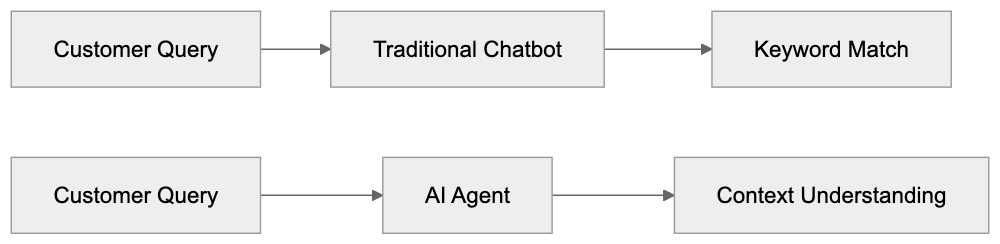
Intercom Fin is not just another support chatbot; it’s an AI agent that works within the Intercom platform. The tool utilizes large language models to understand customer questions and generate accurate responses. When a customer asks a question, Fin searches through your company’s knowledge base, help articles, and documentation. It then formulates an answer in natural language. The system can handle complex queries that traditional chatbots struggle with. Unlike traditional chatbots, which rely on predetermined decision trees and keyword matching, Fin uses AI to understand context and intent, allowing it to process variations in customer queries. The tool also learns from your content updates. So, when you add new help articles or update existing ones, Fin incorporates that information automatically. For web developers integrating this into their support workflow, Fin offers API access and webhooks. The setup involves connecting your knowledge base sources and configuring response behaviors, including setting confidence thresholds for when Fin should answer versus escalate to a human agent.
Why Intercom Fin Exists and Its Core Purpose
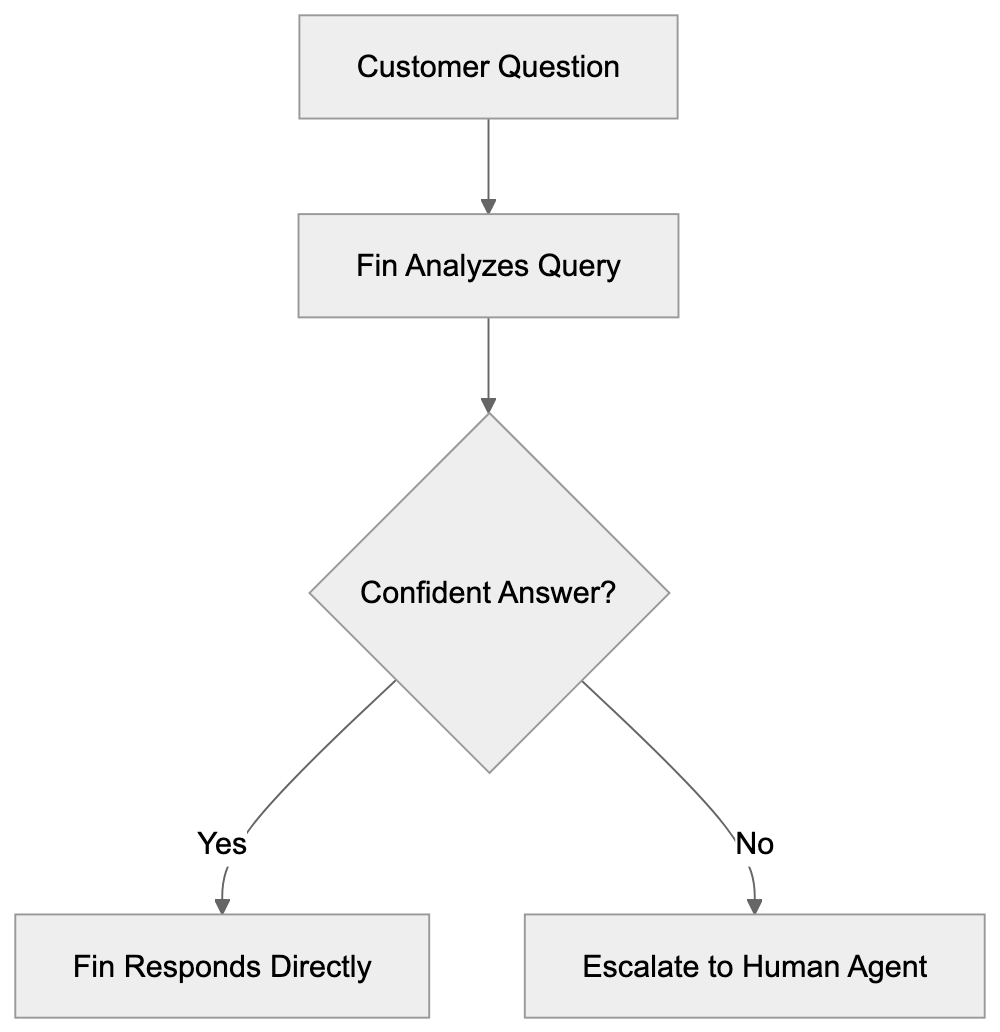
Intercom Fin Query Resolution Process:
The purpose behind Intercom Fin is straightforward. Customer support teams spend significant time answering the same questions repeatedly. According to industry research, up to 70% of support tickets are repetitive queries that could be automated. This leads to increased support costs, slower response times during peak periods, and burnout among human agents who become bogged down with basic questions. Intercom developed Fin to solve these specific pain points. The tool provides instant answers to common questions 24/7, reducing the workload on human support teams and improving customer experience through faster response times. For small business owners, this means you don’t need to hire additional support staff as you scale. SEO experts and content marketers benefit because the tool encourages maintaining high-quality documentation, which is crucial not only for effective AI operation but also for SEO.
How Businesses Actually Use Intercom Fin
Businesses deploy Intercom Fin in various ways depending on their specific needs. SaaS companies use it to answer product questions and troubleshoot common technical issues. E-commerce businesses utilize it for order status inquiries, return policies, and shipping questions. The typical setup begins by connecting existing knowledge bases, such as help centers, FAQs, product documentation, and internal wikis. Fin indexes all this content and makes it searchable via natural language queries. When a customer contacts support, Fin attempts to resolve the query first. If it finds a confident answer, it responds directly. Otherwise, it escalates the query to a human agent, providing them with full context. Some companies configure Fin to propose its answers to agents before sending them to customers, allowing for review and edits if needed. Marketing professionals use Fin’s conversation data to identify content gaps. If Fin frequently cannot answer certain questions, that indicates missing documentation. Web developers can integrate Fin with their existing tech stack through APIs, with common integrations including Slack for internal notifications and Salesforce for CRM data.
Traditional Chatbot vs AI Agent Approach:
Intercom Fin Performance and Key Facts
Intercom reports that Fin can resolve up to 50% of customer queries autonomously, depending on the quality of your knowledge base and the types of questions received. The tool supports over 40 languages. Response time is typically under 2 seconds for most queries, and Fin maintains conversation context across multiple messages in a single chat session. The accuracy rate is heavily dependent on the quality of your source content. Companies with complete, well-organized documentation see better results. Intercom provides a confidence score with each response, allowing configuration of minimum thresholds for auto-responses, usually set between 85-95% to balance automation and accuracy. Intercom Fin’s pricing model is based on resolutions, charging per resolution handled, which is significantly lower than the cost of human-handled tickets. For software developers, detailed logs and analytics are available, helping improve the knowledge base over time.
Comparing Intercom Fin with Alternative Solutions
Several AI customer service tools compete in this space, each with different strengths and approaches. Here’s how Intercom Fin compares to major alternatives:
| Feature | Intercom Fin | Zendesk AI | Freshdesk Freddy AI | Ada | Ultimate.ai |
|---|---|---|---|---|---|
| Autonomous Resolution | Yes, up to 50% | Yes, varies | Yes, up to 40% | Yes, up to 70% | Yes, up to 60% |
| Knowledge Base Integration | Native to Intercom | Native to Zendesk | Native to Freshdesk | Multi-platform | Multi-platform |
| Language Support | 40+ languages | 30+ languages | 33 languages | 100+ languages | 100+ languages |
| Pricing Model | Per resolution | Per agent seat | Per agent seat | Per resolution | Per conversation |
| API Access | Yes | Yes | Yes | Yes | Yes |
| Setup Complexity | Medium | Medium | Low | Low | Medium |
| Best For | Existing Intercom users | Enterprise Zendesk users | Budget-conscious teams | High automation needs | E-commerce |
Intercom Fin works best for existing Intercom platform users, offering seamless integration as a native feature. Meanwhile, Zendesk AI offers similar capabilities but requires a subscription per agent seat. Freshdesk Freddy AI is more affordable for smaller teams, though it has lower reported resolution rates. Ada and Ultimate.ai are standalone platforms that support multiple helpdesk systems, offering greater flexibility but requiring more integration work. For small business owners starting with AI support, Freshdesk Freddy AI or Intercom Fin offer easier onboarding. Enterprise teams with complex needs may prefer Ada or Ultimate.ai. SEO experts and content marketers should note that all these tools require quality documentation for optimal performance.
Technical Implementation Considerations
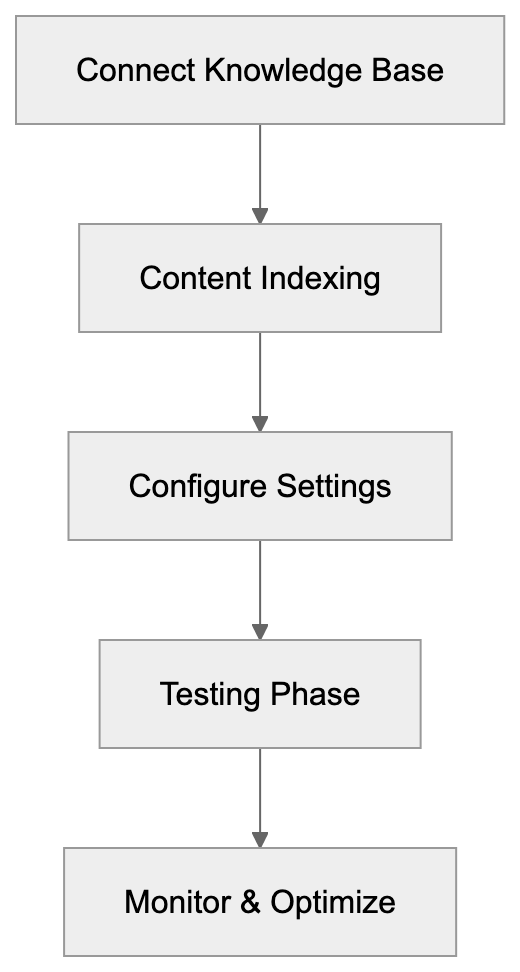
Implementing Intercom Fin involves several technical steps. An active Intercom account with the appropriate plan level is needed, as Fin is an add-on to Intercom subscriptions. Connect your knowledge sources, such as your Intercom help center, external documentation sites, and other content repositories. For web developers, Fin supports custom integrations through APIs, allowing connection to proprietary databases or internal tools. The setup process includes content indexing, which can take several hours for large knowledge bases. After indexing, configure behavioral settings, including confidence thresholds, escalation rules, and response templates. Testing is crucial before full deployment. Intercom provides a testing environment to simulate customer conversations, enabling you to test with real questions from your support history. Monitor how Fin responds and adjust your knowledge base or settings as needed. Some companies begin with a hybrid approach where Fin suggests answers to agents before responding directly to customers. This helps build confidence in the system before full automation. For ongoing maintenance, keep your knowledge base updated when product features or policies change to ensure Fin provides accurate answers. Analytics monitoring is essential, tracking resolution rates, escalation patterns, and customer satisfaction scores to identify areas for improvement.
Data Privacy and Usage Considerations
When using AI customer service tools like Intercom Fin, data handling is crucial. Customer conversations often contain sensitive information, so it’s important to understand how this data is processed and stored. Intercom Fin processes messages to generate responses, and these are stored on Intercom’s servers to help improve performance over time. The company’s privacy policy outlines how customer data is managed. For businesses in regulated industries, compliance is vital. Fin supports data residency options for specific requirements and offers GDPR compliance features like data deletion requests and data export capabilities. Software developers should review Intercom’s data processing agreements to ensure they align with company privacy requirements. Some businesses choose not to have their data used for AI training, with settings available to control this. For those handling sensitive information, consider added security measures, such as restricting content sources Fin can access. Customer consent is another consideration; some regions require disclosure when AI is involved in customer interactions. Fin can be configured to identify itself as an AI agent at the start of conversations. Marketing professionals should be transparent about AI usage in privacy policies and terms of service.
Measuring Success with Intercom Fin
Tracking the right metrics is vital to determine if Intercom Fin delivers value. The primary metric is the autonomous resolution rate, targeting a 40-60% resolution without human intervention. Customer satisfaction scores also matter, as a high resolution rate is meaningless if customers are unhappy with the answers. Intercom provides CSAT surveys post-Fin exchanges, and these scores should be tracked separately from human-handled conversations. Response time is another key metric, with Fin typically responding in under 2 seconds; compare this to average human response times to illustrate speed improvements for customers. Cost per resolution aids in calculating ROI—divide your monthly Fin costs by the number of resolutions handled and compare this to human-handled ticket costs. Escalation patterns can highlight content gaps, indicating where better documentation is needed. Monthly reviews of escalation data can identify improvement areas. For web developers and technical teams, API response times and system uptime are crucial; monitoring these ensures Fin maintains performance. Agent productivity benefits indirectly as Fin handles routine questions, allowing agents to focus on complex issues, improving average handle time and tickets per agent.
End and Key Takeaways
Intercom Fin represents a practical approach to AI customer service automation, serving as a tool for handling routine queries effectively rather than replacing human support teams. It operates by connecting to your existing knowledge base and utilizing AI to comprehend and answer customer questions. For small business owners and software developers, the main benefits include reduced support costs and faster response times. The tool requires quality documentation to function effectively, thus encouraging companies to maintain better help content, benefiting both SEO efforts and customer experience. Compared to alternatives like Zendesk AI and Freshdesk Freddy AI, Intercom Fin offers smooth integration for existing Intercom users. Standalone options like Ada and Ultimate.ai provide more flexibility but necessitate additional integration work. Success with Fin depends on thorough setup, continuous content maintenance, and regular performance monitoring. Achieving autonomous resolution rates of 40-50% is possible with proper setup and documentation. Data privacy considerations are crucial, particularly for regulated industries; review Intercom’s data handling policies and configure security settings to suit your needs. Overall, Intercom Fin and similar AI customer service tools have become standard in modern support operations, handling repetitive tasks so human agents can focus on complex problems requiring empathy and creative solutions.
Intercom Fin Implementation Workflow:
Frequently Asked Questions
What kind of businesses can benefit from using Intercom Fin?
Intercom Fin is suitable for a variety of businesses, particularly SaaS companies that need assistance with product-related inquiries and troubleshooting. E-commerce businesses can also benefit by automating responses related to order status, returns, and shipping policies. Essentially, any business looking to streamline customer support can utilize this AI tool.
How does Intercom Fin ensure accuracy in its responses?
The accuracy of Intercom Fin’s responses largely depends on the quality of the knowledge base it is connected to. It utilizes existing help articles and documentation, learning from updates and new content added to these sources. Intercom also provides a confidence score with each response, allowing businesses to set thresholds for when Fin should respond or escalate inquiries.
Can I customize how Intercom Fin interacts with customers?
Yes, Intercom Fin allows for customization of response behaviors and escalation rules. Businesses can configure how Fin should respond based on the confidence score and even enable it to suggest answers to human agents for review before sending them to customers.
What kind of data can I track to measure Intercom Fin's performance?
Key metrics to track include the autonomous resolution rate, customer satisfaction scores, response time, and cost per resolution. Analyzing escalation patterns can also highlight areas needing improvement in the knowledge base, while monthly reviews can help identify any shifts in performance metrics.
Is data privacy a concern when using Intercom Fin?
Yes, data privacy is an important consideration. Intercom Fin processes and stores customer conversations to improve response quality, and businesses should adhere to relevant privacy regulations. Fin offers options for data residency, GDPR compliance features, and settings to control the use of data for AI training.
How long does it take to set up Intercom Fin?
The setup time for Intercom Fin can vary depending on the size of your knowledge base; indexing may take several hours. The process involves connecting knowledge sources, configuring response behaviors, and thorough testing to ensure it meets business needs before going live.
What are the main differences between Intercom Fin and other AI customer service tools?
Intercom Fin is designed for seamless integration with existing Intercom users, providing smooth access to its features. In contrast, other tools like Zendesk AI or Freshdesk Freddy AI may require separate subscriptions or configurations for existing systems. Each platform has its unique strengths, such as language support and pricing models, which should be considered based on your specific needs.
Track Your AI Visibility
See how AI chatbots like ChatGPT, Claude, and Perplexity discover and recommend your brand.