Meta AI Guide: Facebook & Instagram's Virtual Assistant
Learn about Meta AI's integration across Facebook, Instagram, and WhatsApp. Explore Llama 4 model features, Imagine image generation, and free access.
What is Meta AI
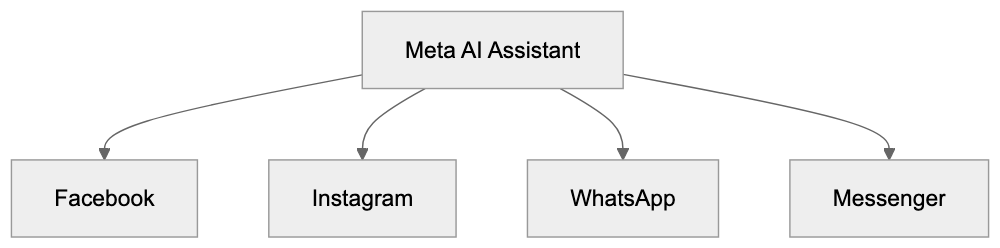
Meta AI is a virtual assistant built by Meta, the company that owns Facebook, Instagram, and WhatsApp. The assistant, known as Meta AI, is powered by Meta’s own large language model called Llama. Currently, it runs on Llama 3.2, the latest version at the time of release. This Meta virtual assistant is directly integrated into Facebook Messenger, Instagram DMs, WhatsApp, and even the main Facebook feed, thus becoming a central part of Meta Platforms’ AI strategy.
The Llama chatbot offers a range of functionalities. You can ask it questions, generate images, get recommendations, and perform various tasks without leaving these apps. The service is completely free and doesn’t require a separate subscription. Starting in 2023, Meta rolled out this AI chatbot to billions of users across its platforms and continues expanding its capabilities. While it’s similar to standalone chatbots like ChatGPT and Google Gemini, Meta AI differentiates itself by embedding within existing social platforms.
Meta AI Platform Integration:
Why Meta AI Exists and Its Purpose
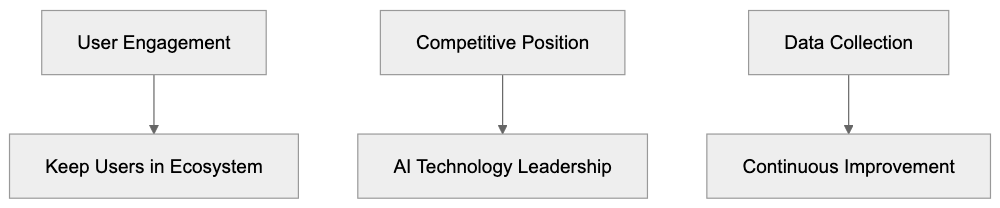
Meta developed this AI assistant to keep users engaged within its ecosystem of apps. Traditionally, when people need information or wish to create content, they often leave Facebook or Instagram to use search engines or other AI tools. Meta AI aims to solve that challenge by providing these capabilities directly within the apps. This reduces the friction of switching between different services.
Another purpose for Meta AI is competitive positioning within the AI space. Companies like Google, Microsoft, and OpenAI have their own AI technology, and Meta needed a comparable offering. By integrating AI into platforms with billions of active users, Meta instantly created massive distribution for its virtual assistant that standalone chatbots can’t match. Additionally, the tool helps Meta gather data about how users interact with AI, allowing for continuous improvement.
For businesses, Meta AI can assist with customer service, content creation, and engagement, keeping them invested in Meta’s advertising ecosystem.
How Users and Businesses Use Meta AI
Meta AI Strategic Objectives:
Regular users interact with Meta AI in various ways. On Facebook, this Meta virtual assistant appears in news feeds, Messenger chats, and group conversations. Users ask it about current events, seek recipe ideas, or get help planning trips. It can even participate in group chats where multiple individuals interact simultaneously.
On Instagram, the assistant is available in DMs for shopping recommendations, caption ideas, or product inquiries. WhatsApp users can chat with Meta AI or add it to group conversations for quick information lookups.
A standout feature is Imagine AI, which lets users generate images by typing text descriptions. You can create custom stickers or profile pictures and experiment with AI art. This feature is available across all Meta platforms where the AI is integrated.
Businesses use Meta AI differently. Small business owners leverage it for content ideas on Facebook pages or Instagram accounts. Marketing professionals experiment with ad copy generation and audience research. Companies test Meta AI in customer service scenarios through Messenger chatbots, handling basic inquiries before routing complex questions to human agents. Content marketers use the image generation features to create visual assets without needing designers. Commercial use cases are still emerging as Meta AI, like Llama 4, evolves.
Key Features and Capabilities
User Interaction Flow:

Meta AI operates on Llama 3.2, Meta’s proprietary large language model. Trained on public data, it handles conversations in multiple languages, though it may struggle with specialized queries. The AI accesses real-time information through search engine integration, providing answers on current events and offering an edge over models with knowledge cut-off dates.
The Imagine AI feature employs Meta’s text-to-image model. Users type descriptions, and the AI generates four image options in seconds. While simple requests yield better results, more complex prompts may require adjustments for improved accuracy. The generated images are watermarked, and the feature is free, unlike some competitors with usage limits.
Meta AI is available in over 20 countries as of early 2024. It supports several languages, including English, Spanish, and Portuguese. Meta continues expanding access, though availability varies by region due to regulatory requirements.
Meta AI vs. Alternative Chatbots
Meta AI faces competition from other AI chatbots but stands out with its unique distribution. Here’s how it compares to major alternatives:
- Cost: Free, unlike others with paid tiers.
- Platform Combining: Integrated within Facebook, Instagram, WhatsApp, whereas rivals are standalone.
- Image Generation: The Imagine AI feature is a notable strength.
- Real-Time Info: Offers real-time data access, compared to limited access in some paid alternatives.
Meta AI’s broad integration means a wider user base, exceeding 500 million users. It appeals to casual users seeking quick answers while browsing Facebook and doesn’t require additional downloads. While ChatGPT and Claude may provide higher quality responses for complex tasks and professional work, the platform integration of Meta AI outweighs these in routine use.
Privacy and Data Usage Considerations
Meta collects interactions and generated images for improving AI models and training future versions. Although its privacy policy outlines data handling, you cannot opt-out of data collection while using Meta AI. Unregistered users’ queries are still logged with IP address and device data.
AI-generated images can be used by Meta for research and must comply with Meta’s content policies. For those concerned with data privacy, this may pose challenges. Sensitive information shared with Meta AI could potentially be retained.
Meta AI vs Competitors Comparison:

Limitations and Known Issues
Meta AI has limitations compared to standalone chatbots. It may produce incorrect information or exhibit over-cautious safety filters. Users note it is less effective for coding questions than competitors like ChatGPT or Claude. Image quality can vary, with simpler prompts performing better than complex scenarios. Regions may face accessibility issues, and feature availability is not uniform across platforms.
Future Development and Updates
Meta is committed to frequent updates and enhancing capabilities, expecting Llama 4 in the near future. With a focus on integrating AI deeper into Meta’s ecosystem, future enhancements might include voice interaction, video generation, and improved model efficiencies.
User feedback and massive interaction datasets are central to refining the technology for global scalability and improvement.
Meta AI’s integration advantage needs constant technological development to remain competitive. It’s designed for casual usage, taking advantage of existing app reach, though standalone alternatives may be necessary for professional applications.
End
Meta AI employs the Llama 3.2 model to bring artificial intelligence directly into apps like Facebook, Instagram, and WhatsApp. It’s designed for convenience and accessibility, being completely free and not requiring extra downloads. While it offers notable advantages, particularly for casual users, it faces quality limitations, privacy challenges, and feature variability compared to dedicated chatbots. The tool is suited for quick interactions within social media, although professional needs might favor standalone applications.
Frequently Asked Questions
How can I access Meta AI?
Meta AI is integrated into Facebook Messenger, Instagram DMs, WhatsApp, and the main Facebook feed. Simply use any of these apps and start interacting with the Meta AI virtual assistant at no cost.
What types of tasks can Meta AI assist me with?
Meta AI can answer questions, generate images, provide recommendations, and assist with tasks like trip planning and recipe ideas. Users can also engage with it for shopping queries on Instagram or customer service through Messenger.
Is Meta AI free to use, and are there subscription options?
Yes, Meta AI is completely free to use, with no additional subscription fees required. Users can access its features directly through Meta's social networking platforms without incurring any costs.
What should I know about privacy when using Meta AI?
Meta collects data from interactions with Meta AI to improve its models. Users cannot opt-out of this data collection, and queries from unregistered users are still logged. Be cautious about sharing sensitive information.
How does Meta AI compare with other chatbots?
Unlike many standalone chatbots, Meta AI is embedded within widely-used social media platforms, making it more accessible for casual users. While it is free and utilizes real-time information, it may not perform as well on complex queries compared to others like ChatGPT.
What are the limitations of Meta AI?
Meta AI may struggle with complex queries and coding-related questions, yielding less accurate results compared to specialized chatbots. Additionally, image quality varies depending on prompt complexity, and access may be limited in certain regions.
What future updates can we expect for Meta AI?
Meta plans to enhance Meta AI with frequent updates, expecting the release of Llama 4 soon. Future improvements may include voice interactions, better model efficiencies, and potentially new features tailored for deeper integration within Meta’s ecosystem.
Track Your AI Visibility
See how AI chatbots like ChatGPT, Claude, and Perplexity discover and recommend your brand.