Writesonic Guide: AI Writing and Chatbot Features
Complete guide to Writesonic with Chatsonic, GPT-4 integration, content generation tools, pricing details, and SEO optimization features.
What is Writesonic
Writesonic is a leading AI content generation platform launched in 2021. The tool facilitates businesses and content creators in generating written content using artificial intelligence, significantly aiding tasks such as blog posts, marketing copy, product descriptions, and social media content. The platform’s standout features include Chatsonic, an AI chatbot powered by GPT-4, GPT-3.5, and proprietary models, along with Photosonic for AI image generation. This service caters to marketing professionals, content marketers, SEO experts, and small business owners who need rapid content production. With millions of users across various industries, Writesonic supports over 25 languages and integrates with tools like WordPress, Zapier, and browser extensions. Its mission is to minimize content creation time while ensuring quality standards and SEO optimization.
Why Writesonic Exists and Its Core Purpose
Writesonic Core Components:
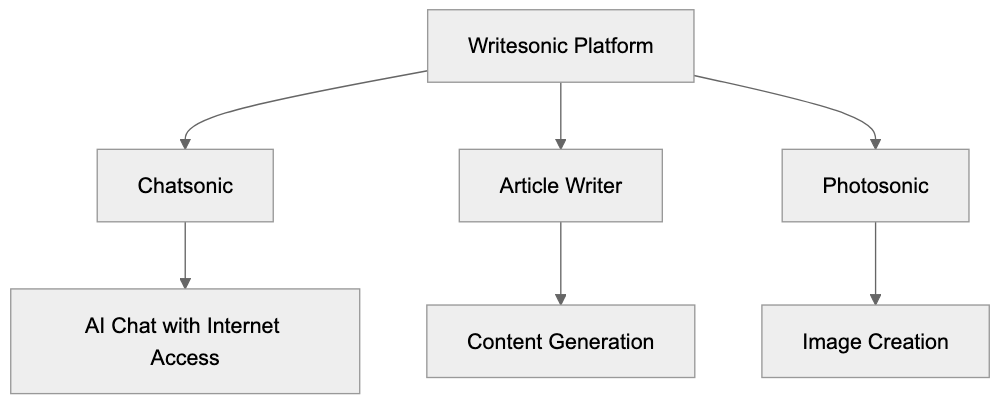
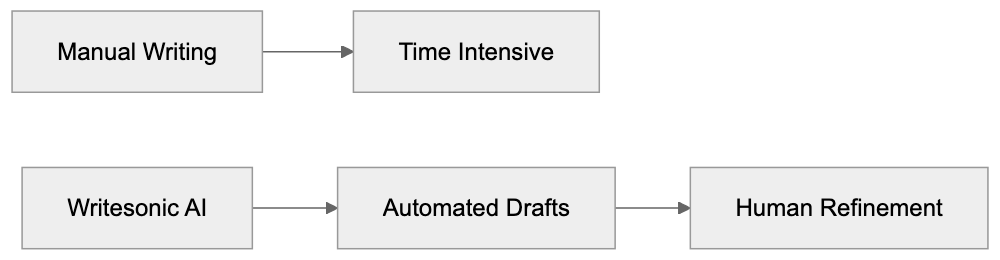
Creating content demands significant time and resources for businesses. Marketing teams often struggle to meet the high demand for content across numerous channels. Tasks like researching, writing, and editing a single blog post can consume hours, with additional workloads from social media posts, email campaigns, and product descriptions. Writesonic addresses this productivity challenge by automating repetitive writing tasks, allowing teams to focus more on strategy and creativity. Small businesses benefit immensely, gaining access to AI writing tools without needing additional hires. Writesonic generates initial drafts that writers can refine, enhancing the overall content production process. Built-in SEO improvement tools help content rank better in search engines, positioning Writesonic as a bridge between manual writing and fully automated content creation.
How Businesses and Users Work with Writesonic
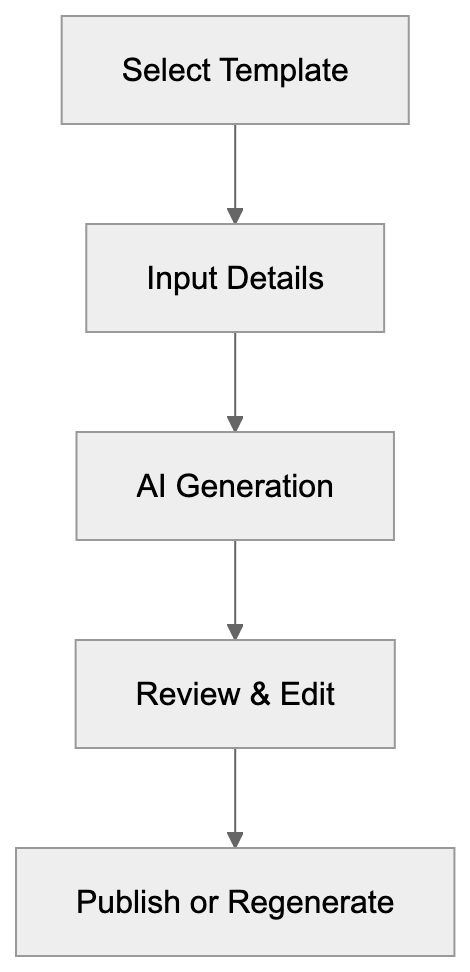
Users begin by selecting a content type from over 100 templates, such as blog posts, landing pages, Facebook ads, Google ads, product descriptions, and email subject lines. After choosing a template, users input basic information like topic, keywords, and tone of voice. The AI quickly generates multiple content variations, which users can edit, regenerate, or combine. Chatsonic offers a unique advantage by functioning like ChatGPT with internet access, allowing real-time information retrieval and source citation, useful for research, brainstorming, and quick content drafts. Photosonic aids in visual content needs by generating images from text descriptions. Teams can integrate Writesonic into existing workflows via API access or browser extensions. The Chrome extension allows direct content generation within Google Docs or other web applications, and bulk generation features enable simultaneous creation of multiple content pieces.
Content Creation Process:
Key Features and Pricing Structure
Writesonic offers several pricing tiers based on word credits. A free trial provides 10,000 words with limited features. Paid plans begin at $16 per month (annually billed) for the Small plan, while the Unlimited plan costs $59 per month (annually billed), offering unlimited words with faster models. The Business plan, at $29 per month when billed annually, includes GPT-4 access and priority support, with enterprise plans available for custom pricing. Writesonic plans include Chatsonic pricing starting at $16 per month for the Small plan. The platform allows brand voice customization, enabling users to train the AI on specific writing styles. SEO tools encompass keyword combining, meta description generation, and content scoring. The Article Writer 5.0 can create full articles up to 5,000 words with a single click, while the Sonic Editor offers a Google Docs-like interface with AI assistance. API access is available for developers wishing to integrate Writesonic into their applications.
Comparing Writesonic to Alternative AI Writing Tools
Writesonic Workflow:
Several AI writing platforms compete in this space, including Copy.ai, Jasper, Rytr, and ContentBot. Each offers unique functionalities and pricing models:
| Feature | Writesonic | Jasper | Copy.ai | Rytr | ContentBot |
|---|---|---|---|---|---|
| Starting Price | $16/month | $49/month | $49/month | $9/month | $29/month |
| GPT-4 Access | Yes | Yes | Yes | No | Yes |
| Free Plan Words | 10,000 | 0 | 2,000 | 10,000 monthly | 0 |
| Image Generation | Yes (Photosonic) | Yes (Jasper Art) | No | No | No |
| ChatGPT Alternative | Chatsonic | Jasper Chat | Chat by Copy.ai | Chat | No |
| Browser Extension | Yes | Yes | Yes | Yes | Yes |
| API Access | Yes | Yes | Yes | Yes | Yes |
| Languages Supported | 25+ | 30+ | 95+ | 40+ | 40+ |
| SEO Features | Advanced | Advanced | Basic | Basic | Advanced |
| Team Collaboration | Yes | Yes | Limited | No | Yes |
Jasper positions itself as a premium choice with advanced brand voice features, costing more but offering extensive templates and superior collaboration tools. Copy.ai specializes in marketing copy and short-form content with an intuitive interface, suitable for non-technical users. Rytr’s affordable pricing is attractive to freelancers and solopreneurs, although it lacks GPT-4 access and advanced SEO capabilities. ContentBot focuses on bulk content generation and automation, while Writesonic balances competitive pricing with robust features. Chatsonic’s internet access and Photosonic’s image generation are key differentiators, as most alternatives lack these capabilities.
Content Quality and SEO Optimization
Writesonic generates content requiring human review and potential editing. The quality of AI writing depends on input prompts and the selected model, with GPT-4 outputs generally more consistent than those of GPT-3.5. Articles may require fact-checking, especially for technical topics. The platform excels in generating outlines, first drafts, and variations of existing content. SEO enhancement features include keyword density tracking, readability scores, and meta tag generation, alongside suggested related keywords based on search volume and competition data. Content scoring helps users assess alignment with SEO best practices, although search engines prioritize human-friendly, helpful content over keyword stuffing. Writesonic content should be edited to incorporate unique ideas, personal experience, and accurate information, as AI-generated material may contain outdated facts or incorrect assumptions. Web developers and SEO experts utilize Writesonic to expedite content production but must verify accuracy before publishing.
Data Privacy and Usage Policies
Writesonic collects user inputs and generated outputs for service enhancement. The privacy policy specifies that data may contribute to AI model improvements. Users concerned about data privacy should scrutinize the terms carefully. Enterprise plans offer greater data handling control with customizable agreements. The platform uses third-party AI providers, such as OpenAI, which have their own data policies. Content generated on the free plan has limited privacy protections compared to paid tiers. Sensitive business information should not be inputted without understanding data retention policies. Some competitors provide opt-out features for AI model training, which Writesonic does not clearly advertise. Users can delete their accounts and request data removal, although this process is not automated. GDPR compliance is mentioned for European users. For businesses managing confidential data, API access with self-hosted options might be preferable.
Integration Capabilities and Workflow Automation
Writesonic integrates seamlessly with popular marketing and productivity tools. The WordPress plugin facilitates direct publishing of generated content, while Zapier connectivity links Writesonic to over 5,000 apps for automated workflows. Users can set up triggers, such as new RSS feed items, to automatically generate corresponding social media posts. The Chrome extension functions across platforms like Gmail, Google Docs, and LinkedIn. Developers can access the API to build custom applications or integrate content generation into existing systems, with documentation offering examples in common programming languages. Rate limits apply depending on the subscription tier. Bulk processing features allow users to upload CSV files with multiple content requests, with the system returning completed content in batches. This feature saves time for agencies managing multiple clients. The Sonic Editor supports real-time collaboration, enabling team members to simultaneously edit documents, with version history tracing changes and allowing reversion to previous drafts.
Photosonic Image Generation Features
Photosonic, Writesonic’s AI image generator, allows users to describe desired images using text prompts. The AI creates original images based on these descriptions, competing with tools like DALL-E, Midjourney, and Stable Diffusion. Image generation enables content creators to produce visuals without relying on stock photo subscriptions or graphic designers. Image quality depends on prompt specificity and complexity, with simple concepts performing better than abstract ideas. Users can specify art styles, colors, composition, and mood. Generated images are royalty-free for commercial use according to the terms of service, with resolution options ranging from standard to high definition. Each image generation consumes word credits from the user’s account. The tool is ideal for blog headers, social media graphics, and marketing materials, though complex branding projects may still require professional design expertise. Photosonic accelerates the ideation phase by rapidly visualizing concepts, helping marketing professionals create multiple ad variations for A/B testing.
Chatsonic Capabilities and Use Cases
Chatsonic, Writesonic’s AI chatbot, utilizes GPT-4 and Claude models with real-time internet access, providing current information unlike standard ChatGPT, which has a knowledge cutoff. Users can ask questions and receive responses with cited sources. Chatsonic can browse websites, summarize articles, and retrieve statistics, making it valuable for content marketers conducting research before writing articles. It can generate content outlines, suggest headlines, and provide keyword ideas. The voice command feature supports hands-free interaction through speech input. Image understanding allows users to upload pictures and query them. Personality modes adjust the chatbot’s tone from professional to casual or creative dialogue. The chat history feature saves all interactions for future reference, while API access permits embedding Chatsonic into customer service applications or internal tools. Developers can build chatbots for websites using Chatsonic’s infrastructure. Limitations include occasional inaccuracies in cited information and slower response times during peak usage. The tool excels in general research and content ideation rather than specialized technical queries.
Performance Metrics and User Feedback
Writesonic boasts millions of users worldwide, having generated billions of words since its launch. Customer reviews on platforms like G2 and Trustpilot provide mixed ratings, with positive feedback highlighting the speed of content generation and the wide array of templates available. Users commend the affordability of Writesonic compared to premium options like Jasper. Negative reviews cite repetitive outputs and the need for extensive editing, with some users noting a lack of depth and original ideas in generated content. SEO experts emphasize the necessity of human oversight for AI-generated content to meet quality standards. Writesonic’s response time averages under 10 seconds for most content types, with longer articles taking 30-60 seconds. The platform’s system uptime is generally reliable, though there are occasional maintenance windows. Customer support response times vary based on the plan tier, with free users relying on community forums and paid subscribers receiving email support. Enterprise customers benefit from dedicated account management, and the company regularly updates features based on user feedback and AI model improvements.
Integration Ecosystem:

Conclusion
Writesonic provides AI content generation tools for businesses and content creators. The platform features the Chatsonic chatbot with GPT-4, article generation, marketing copy templates, and Photosonic image creation. Pricing begins at $16 per month, with a free trial available. Writesonic assists marketing professionals, SEO experts, and small business owners in producing content faster. When compared to alternatives like Jasper and Copy.ai, Writesonic offers competitive pricing and robust features. The tool serves best as a content assistant rather than a full replacement for human writers. Users are encouraged to verify accuracy and incorporate unique ideas before publishing. Integration options, including WordPress, Zapier, and API access, enhance workflow flexibility. However, data privacy considerations need careful attention as inputs may be employed for AI training. Overall, Writesonic is a practical solution for scaling content production while maintaining reasonable quality standards.
Frequently Asked Questions
What types of content can I create with Writesonic?
Writesonic offers over 100 templates for various content types, including blog posts, marketing copy, product descriptions, landing pages, and social media content. Users can select a specific template and provide essential information to generate content tailored to their needs.
How does Writesonic improve content quality for SEO?
Writesonic includes built-in SEO tools that track keyword density, provide readability scores, and suggest related keywords based on search volume. Users can utilize content scoring features to ensure their writing aligns with SEO best practices, promoting better search engine ranking.
Is there a free trial available for Writesonic?
Yes, Writesonic offers a free trial that includes 10,000 words with limited features. This allows potential users to explore the platform's capabilities before committing to a paid subscription.
What are the privacy considerations when using Writesonic?
Writesonic collects user inputs and generated outputs to improve its services, and users should be aware that this data can contribute to AI model enhancements. For sensitive data, users may consider the enterprise options that provide more control over data handling.
How does the integration with other tools work?
Writesonic seamlessly integrates with popular platforms such as WordPress and Zapier for automated workflows. Additionally, it offers a Chrome extension that allows users to generate content directly within applications like Google Docs and Gmail.
Can I customize the tone of voice in Writesonic?
Yes, Writesonic allows users to customize the brand voice, enabling the AI to generate content that aligns with specific writing styles and tones. This feature is particularly beneficial for businesses looking to maintain a consistent voice in their content.
How does Chatsonic enhance the content creation process?
Chatsonic, Writesonic's AI chatbot, provides real-time internet access to deliver current information, making it useful for research and content brainstorming. It can generate outlines, suggest headlines, and even accept voice commands for hands-free interaction.
Track Your AI Visibility
See how AI chatbots like ChatGPT, Claude, and Perplexity discover and recommend your brand.