Yi by 01.AI: Bilingual LLM Model Overview & Comparison
Explore Yi by 01.AI, the bilingual LLM optimized for English and Chinese. Performance benchmarks, model variants, and comparisons included.
Introduction
Yi is a family of large language models developed by 01.AI, founded by Kai-Fu Lee in 2023. These models, known as Yi AI, handle both English and Chinese languages with notable performance. The Yi model family focuses on bilingual LLM optimization, setting it apart by aiming for English-Chinese optimization rather than a multilingual approach, as detailed in 01.AI’s official announcement. This focus enhances tasks in both languages and provides businesses with high-quality Chinese AI models suited for Asian markets. Key features include various model sizes, strong benchmark scores, and open-source availability for certain versions. Companies use Yi for chatbots, content generation, translation, and customer service applications.
What is Yi AI
Yi is a series of large language models created by 01.AI. The models vary in size, from the smallest at 6 billion parameters to the largest at 34 billion parameters. Parameters are the internal values that enable text understanding and generation. More parameters generally lead to better performance but require more computing power. The Yi AI models employ a transformer architecture, the standard for modern language models. Unlike many competitors that support multiple languages, Yi focuses solely on English and Chinese, yielding improved results in both. These models can write text, answer questions, summarize documents, and handle other language tasks. Some versions are open source, allowing developers to download and modify them.
Purpose and Development Background
Yi Model Architecture Overview:
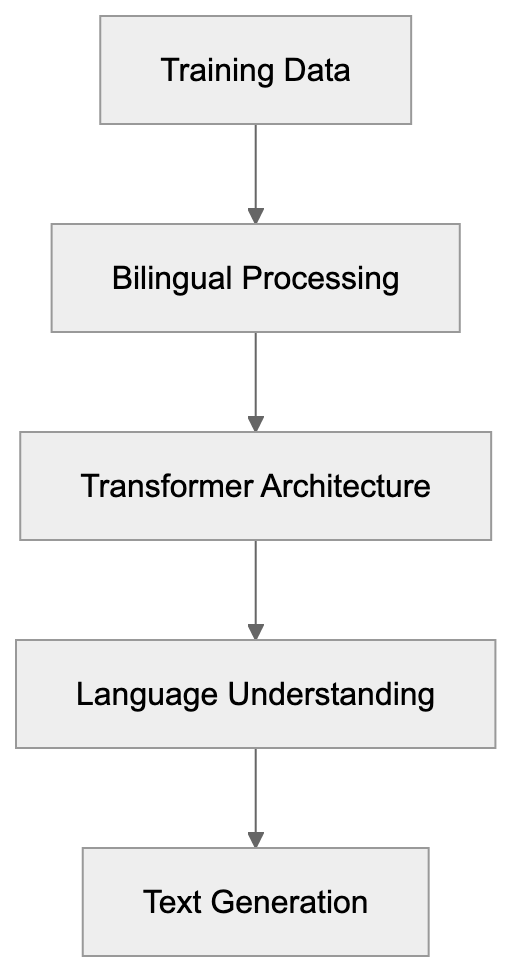
Kai-Fu Lee founded 01.AI to create AI models specifically for Chinese-speaking markets while maintaining strong English capabilities. Many existing models predominantly train on English text, adding other languages afterward, often resulting in weaker non-English performance. The Yi project started with bilingual training data, amassing high-quality text in both languages. This strategy helps the model grasp cultural context and language nuances, serving businesses in China or those dealing with Chinese content. International companies needing both English and Chinese support benefit significantly. Benchmark scores illustrate Yi’s performance against major language models, and some versions are open-source to encourage widespread use, as reported by TechCrunch.
How Yi AI is Used
01.AI has released the Yi models for commercial and research applications. Companies integrate these models via APIs or by hosting the open-source versions themselves. Common use cases include customer service chatbots for both English and Chinese queries, e-commerce platforms for product descriptions, and content creation teams for bilingual marketing material. While Yi isn’t primarily a translation tool, its bilingual capabilities enhance translation services by understanding context better than basic word-for-word conversion. Developers use Yi for generating code and technical documentation, and the open-source versions allow fine-tuning for specialized tasks. Research institutions utilize Yi to explore bilingual language processing.
Yi Model Variants and Specifications
Yi Model Family Structure:
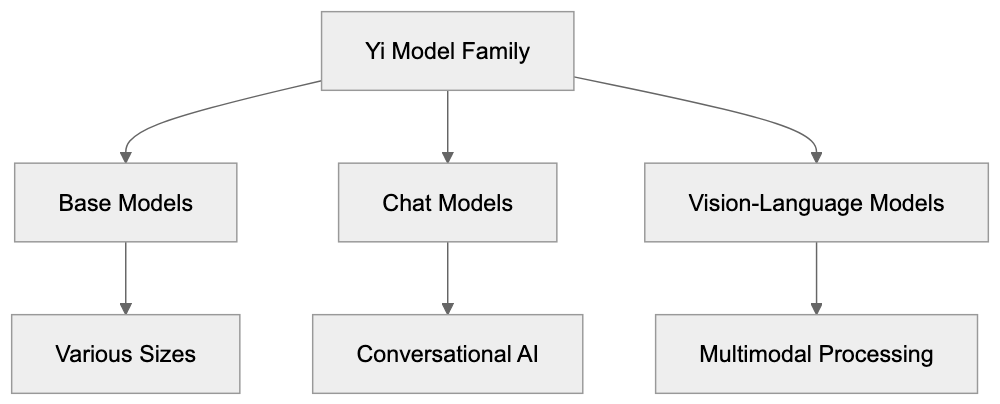
The Yi family includes various models with distinct capabilities. Yi-6B, the smallest version, has 6 billion parameters and requires less powerful hardware while performing basic tasks effectively. Yi-34B, with 34 billion parameters, excels at complex tasks. Yi-34B-Chat is optimized for conversational applications, trained for generating natural and helpful dialogues. Yi-VL models add vision capabilities, processing images alongside text for tasks such as answering questions about pictures or generating captions. Yi-9B offers a mid-size option, balancing performance and resource needs. Open-source versions come with extensive documentation, covering training data, model architecture, and performance benchmarks.
Performance Benchmarks and Comparisons
Yi models perform well on standard language model benchmarks, assessing skills like reading comprehension, reasoning, and general knowledge. Yi-34B scores on MMLU are comparable to models like Llama 2 70B, despite having fewer parameters. For Chinese tasks, Yi consistently outshines most international models. The C-Eval benchmark rates Yi among the top Chinese models, while English performance rivals leading English-focused models. Yi AI’s bilingual improvement ensures balanced performance in both languages without sacrificing one for the other. While its code generation is strong, it’s not on par with specialized coding models. Vision-language variants compete effectively on image understanding tasks. Here’s how Yi compares to other major models:
| Model | Parameters | Languages | Open Source | Strong Points |
|---|---|---|---|---|
| Yi-34B | 34B | English, Chinese | Yes | Bilingual improvement, strong Chinese performance |
| Llama 2 70B | 70B | Multilingual | Yes | General performance, large community |
| GPT-3.5 | Unknown | Multilingual | No | Broad capabilities, API access |
| Qwen-72B | 72B | Multilingual | Yes | Chinese focus, many languages supported |
| Baichuan 2 | 13B | English, Chinese | Yes | Effective Chinese processing |
Typical Yi Implementation Flow:

Comparison with Chinese AI Labs
China hosts several major AI labs developing large language models. Alibaba’s Qwen series supports more languages than Yi but lacks focused bilingual improvement. Baidu’s ERNIE models integrate knowledge graphs for data accuracy. Baichuan’s models share Yi’s bilingual focus. Tencent’s AI teams work on various language models, each with unique strengths and market targets. Yi stands out through Kai-Fu Lee’s influence and startup agility compared to big tech backing. Its open-source vs. proprietary approach aligns with Alibaba’s and Baichuan’s strategies, differing from Baidu’s ERNIE, which is mainly commercial. Yi ranks in the top tier for Chinese models, bridging the gap for international applications, whereas broader language support may be provided by others.
Technical Details and Access
Yi models utilize transformer architecture optimized for bilingual processing, training on high-quality web text and books in both languages. Although dataset sizes are undisclosed, models trained on trillions of tokens. Tokens are text pieces like words or parts of words. The context window size varies, from 4K to 32K or more, for processing longer documents. Models use attention mechanisms and layer normalization. Developers can access open-source Yi models on platforms like Hugging Face and GitHub. Commercial API access through 01.AI’s platform offers faster processing and support. Fine-tuning on open-source versions allows task customization, and hardware needs vary with model size. Quantization reduces memory use, trading off some accuracy.
Use Cases and Applications
Developers integrate Yi into applications needing bilingual processing. Customer service platforms use Yi-Chat for English and Chinese support tickets. Marketing teams generate content for both Western and Chinese audiences. E-commerce sites leverage Yi for bilingual product descriptions, and educational apps use it for language learning tools. Translation services incorporate Yi, though dedicated models may outperform it. Content moderation systems detect problematic content in both languages. Research teams study bilingual processing, and small businesses use API access to add AI features. SEO experts generate search-optimized content. Web developers create chatbots and interactive features using Yi’s conversational abilities. The open-source nature allows experimentation, with self-hosting for handling sensitive data.
Limitations and Considerations
Yi models excel in English and Chinese but aren’t ideal for other languages. The largest models require substantial computing resources. Smaller organizations might prefer API access to self-hosting. As with any AI, incorrect information may be confidently generated—users should verify important facts. Models can reflect biases from training data, necessitating testing and monitoring in production. Response times vary with model size and hardware; chat-optimized versions suit conversations best. Fine-tuning demands machine learning expertise. API pricing can add up for high use, and open-source options lack commercial support. Updates might require code changes for compatibility, and specialized domains may require dedicated models.
Data Privacy and Usage Policies
Using 01.AI’s commercial API entails potential data collection. Terms of service outline data usage policies, and data might improve models unless opted out. Check privacy settings in your 01.AI dashboard for data retention control. Self-hosted open-source versions ensure complete data oversight, crucial for sensitive information. Review license terms for any restrictions on open-source Yi models for commercial use. API terms usually prohibit harmful use, such as generating spam or misinformation. Adhere to data protection laws like GDPR, especially with external API use. For marketers and web developers, anonymize or aggregate data before processing and implement proper data handling in applications using Yi.
Conclusion
Yi AI by 01.AI is a robust solution for bilingual English-Chinese language processing, offering various sizes for performance-resource balance. Founded by Kai-Fu Lee, the company focused on two languages rather than many, achieving competitive benchmark results. Open-source versions and commercial API access provide flexibility for diverse applications, allowing developers, businesses, and researchers to choose self-hosting or managed services. Yi stands strong among Chinese AI products while excelling in English tasks. The models are ideal for content generation, customer service, translation, and other applications, with limitations in language support and resource requirements. Data privacy considerations are crucial for commercial APIs, but overall, Yi offers significant value for English and Chinese content projects, thanks to its performance and accessibility.
Frequently Asked Questions
What are the key advantages of using Yi AI for businesses?
Yi AI offers a robust bilingual capability, allowing businesses to effectively handle English and Chinese communication tasks. Its optimized design for these languages ensures better performance compared to models that support multiple languages, making it particularly suited for companies operating in Chinese-speaking markets.
How can I access and implement Yi AI in my application?
You can access Yi AI through commercial API services provided by 01.AI or download the open-source versions from platforms like Hugging Face and GitHub. Depending on your needs, you can choose to integrate the API for managed services or self-host the models for greater control over data privacy.
What are the hardware requirements for running Yi AI models?
The hardware requirements vary based on the model size; the larger models like Yi-34B require more powerful GPUs for optimal performance. Smaller models, such as Yi-6B, can perform adequately on less powerful hardware, making them more accessible for smaller organizations.
Are there any known limitations when using Yi AI?
While Yi AI excels in English and Chinese, it may not perform well with other languages. Additionally, the largest models require significant computational resources, and users should be aware of potential biases in output due to training data.
Can I fine-tune the open-source Yi AI models for specific tasks?
Yes, the open-source versions of Yi AI are designed to allow developers to fine-tune the models for specialized tasks. Adequate machine learning expertise is recommended for effective customization.
What should I consider regarding data privacy while using Yi AI?
When using the commercial API, be aware of data collection and retention policies outlined in the terms of service. Self-hosting the open-source version provides complete control over your data, which is crucial for sensitive information handling.
How does Yi AI compare to other language models in terms of performance?
Yi AI performs competitively on various benchmarks, particularly in bilingual applications. For tasks in Chinese, it surpasses many international models, while its English performance is comparable to leading models, providing a balanced output across both languages.
Track Your AI Visibility
See how AI chatbots like ChatGPT, Claude, and Perplexity discover and recommend your brand.