Comprehensive Guide to 360Spider: The Qihoo Search Crawler
Explore 360Spider's role in Qihoo's search engine for indexing the Chinese web. Includes features, versions, and security integration options.
Table of Contents
- What is 360Spider and Why It Matters
- Understanding Qihoo 360 and Its Search Engine
- How 360Spider Actually Works
- 360Spider User-Agent Strings You’ll See
- Controlling 360Spider Access to Your Website
- Why Businesses Allow or Block 360Spider
- Comparing 360Spider to Other Major Search Crawlers
- Security Considerations and Integration
- Traffic Patterns and Crawl Behavior
- Market Share and Impact on SEO Strategy
- Conclusion
- What is 360Spider and Why It Matters
- Understanding Qihoo 360 and Its Search Engine
- How 360Spider Actually Works
- 360Spider User-Agent Strings You’ll See
- Controlling 360Spider Access to Your Website
- Why Businesses Allow or Block 360Spider
- Comparing 360Spider to Other Major Search Crawlers
- Security Considerations and Integration
- Traffic Patterns and Crawl Behavior
- Market Share and Impact on SEO Strategy
- Conclusion
What is 360Spider and Why It Matters
360Spider is the web crawler employed by Qihoo 360 to index websites for their search engine at so.com. As a key contender in the Chinese market, competing with Baidu and Sogou, Qihoo operates one of China’s largest search engines. The Chinese search bot systematically visits websites across the internet to collect data and index content for search results. If you manage a website and check your server logs, you might notice requests from 360Spider, the Qihoo crawler, scanning your pages.
This bot is crucial for anyone targeting Chinese audiences or managing web traffic from China. Specifically designed for the Chinese web ecosystem, it integrates with Qihoo’s broader security software products. Understanding how 360Spider works can help you control your site’s visibility in the so.com index and manage server resources effectively.
Understanding Qihoo 360 and Its Search Engine
Qihoo 360 Technology Co. Ltd is a prominent Chinese internet security company that launched its search engine in 2012, becoming the third-largest internet company in China by user base. Starting with antivirus and security software, the company later expanded into search. Their platform at so.com rapidly gained market share, becoming the second-largest search provider in China after Baidu. The 360Spider crawler forms the foundation for this search platform, discovering and indexing web content, and is integrated with Qihoo’s broader security software products.
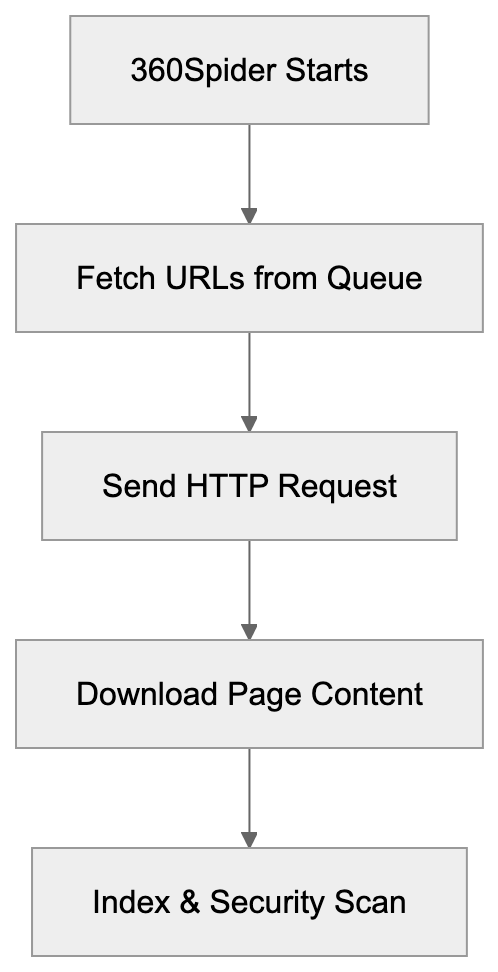
Web Crawler Operation:
Designed to handle both simplified and traditional Chinese content, it also indexes international websites. The search engine integrates directly with Qihoo’s security software suite, which provides a unique distribution advantage. Millions of Chinese users access the 360 search engine through browser toolbars and security software interfaces. This combination means 360Spider actively crawls sites significant to Chinese internet users and businesses.
How 360Spider Actually Works
360Spider works like most web crawlers by following links and downloading page content for analysis. It starts with known URLs and discovers new pages by following hyperlinks. When visiting your website, it sends HTTP requests with a specific user-agent string identifying itself. The crawler respects the robots.txt protocol, allowing you to control which parts of your site it accesses.
360Spider downloads HTML content, processes text and metadata, then stores this information in Qihoo’s search index. It runs continuously, revisiting pages at varying intervals based on content freshness and site importance. High-quality sites with frequently updated content get crawled more often than static pages. The bot analyzes page structure, keywords, links, and other ranking signals similarly to Google’s bot but places particular emphasis on content relevant to Chinese users and the local market. Additionally, it checks sites for security threats as part of Qihoo’s broader search engine security mission.
360Spider User-Agent Strings You’ll See
360Spider identifies itself through specific user-agent strings in HTTP requests. The most common version you might see is:
Mozilla/5.0 (compatible; MSIE 9.0; Windows NT 6.1; 360Spider)
Some variations include additional version information or specific crawler types. You might also see:
360Spider (http://www.so.com/help/help_3_2.html)
Or the mobile version:
Mozilla/5.0 (iPhone; CPU iPhone OS 7_0 like Mac OS X) AppleWebKit/537.51.1 (KHTML, like Gecko) Version/7.0 Mobile/11A465 Safari/9537.53 (compatible; 360Spider)
These user-agent strings help you identify 360Spider traffic in your server logs and analytics tools. Understanding these patterns lets you track crawl frequency and distinguish legitimate bot traffic from potential scrapers. They also allow you to create specific rules in your robots.txt file or server configuration to manage or block 360Spider if necessary.
Controlling 360Spider Access to Your Website
You have several options for managing how 360Spider crawls your site. The robots.txt file provides the standard method for controlling crawler behavior. To block 360Spider completely, add these lines to your robots.txt:
User-agent: 360Spider
Disallow: /
To allow access but restrict certain directories:
User-agent: 360Spider
Disallow: /private/
Disallow: /admin/
You can also use server-level blocking through .htaccess files or nginx configuration. For Apache servers, add this to your .htaccess:
RewriteEngine On
RewriteCond %{HTTP_USER_AGENT} 360Spider [NC]
RewriteRule .* - [F,L]
For nginx, use this configuration:
if ($http_user_agent ~* (360Spider)) {
return 403;
}
Crawler Access Control Methods:
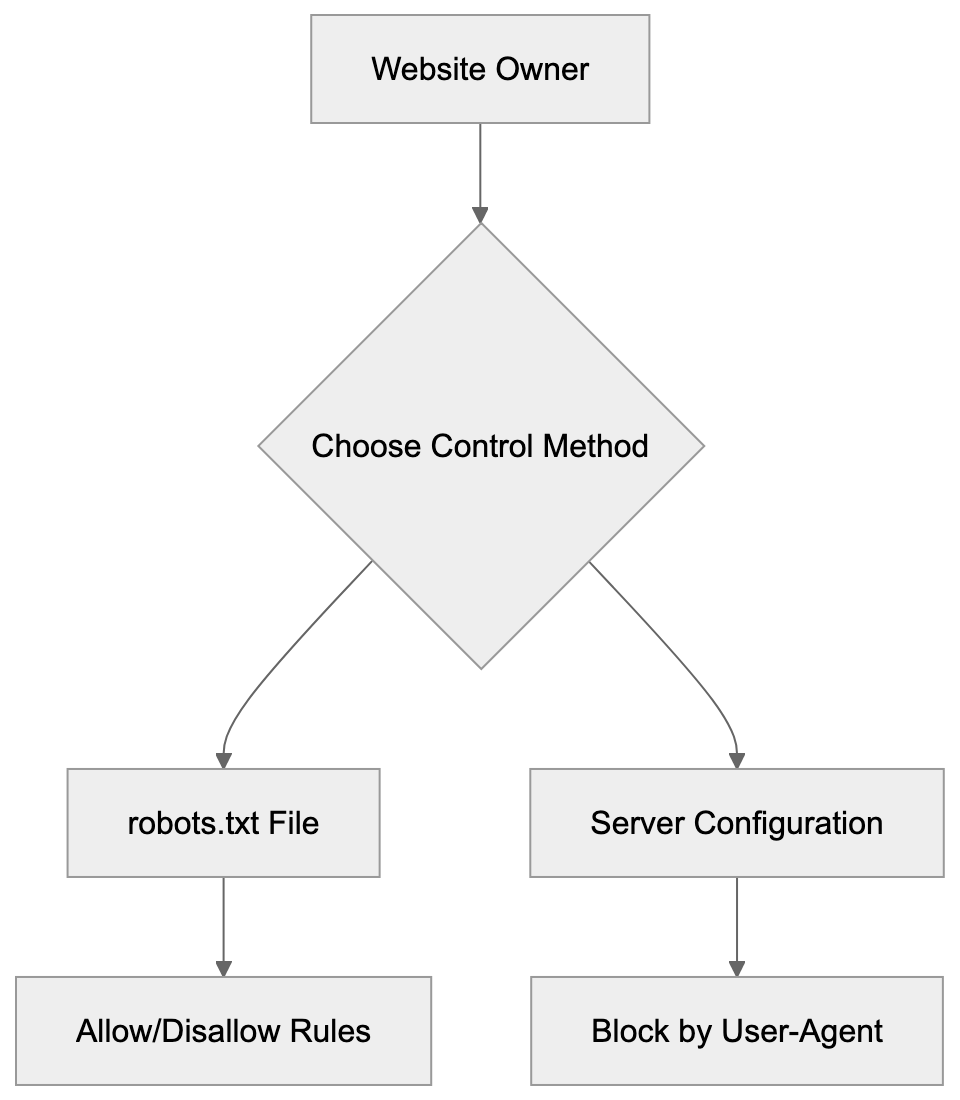
These methods give you precise control over crawler access without affecting other search bots. Consider your business needs before blocking completely. If you serve Chinese customers or want visibility in the so.com index, allowing 360Spider makes sense. Blocking might be appropriate if you don’t target China or want to reduce server load.
Why Businesses Allow or Block 360Spider
Companies make different decisions about blocking 360Spider based on their target markets and resources. Businesses focused on Chinese customers typically allow full access to increase search visibility. E-commerce sites selling to China need 360 indexing to reach potential customers through so.com.
However, some companies choose to block 360Spider for various reasons. Sites with limited server resources might restrict crawlers that don’t serve their core markets. Companies concerned about data collection or intellectual property sometimes block non-needed bots. Others block it simply because they receive no meaningful traffic from so.com.
Security-focused organizations may restrict access from any Chinese origin crawlers as a policy. The decision depends on weighing potential Chinese market reach against server costs and data policies. Small sites with no Chinese audience rarely benefit from allowing the crawler.
Comparing 360Spider to Other Major Search Crawlers
Here’s how 360Spider compares to other major search engine crawlers:
| Crawler | Search Engine | Market Focus | Crawl Frequency | Robots.txt Support | Special Features |
|---|---|---|---|---|---|
| 360Spider | Qihoo 360 (so.com) | China | Moderate | Yes | Security and Chinese content focus |
| Googlebot | Global | High | Yes | Most advanced AI, mobile-first indexing | |
| Bingbot | Microsoft Bing | Global, strong in US | Moderate-High | Yes | Powers multiple search engines |
| Baiduspider | Baidu | China (dominant) | High | Yes | Best Chinese language understanding |
| Sogou Spider | Sogou | China | Moderate | Yes | WeChat content combining |
| Yandex Bot | Yandex | Russia, Eastern Europe | Moderate | Yes | Cyrillic language expertise |
Market Position Comparison:
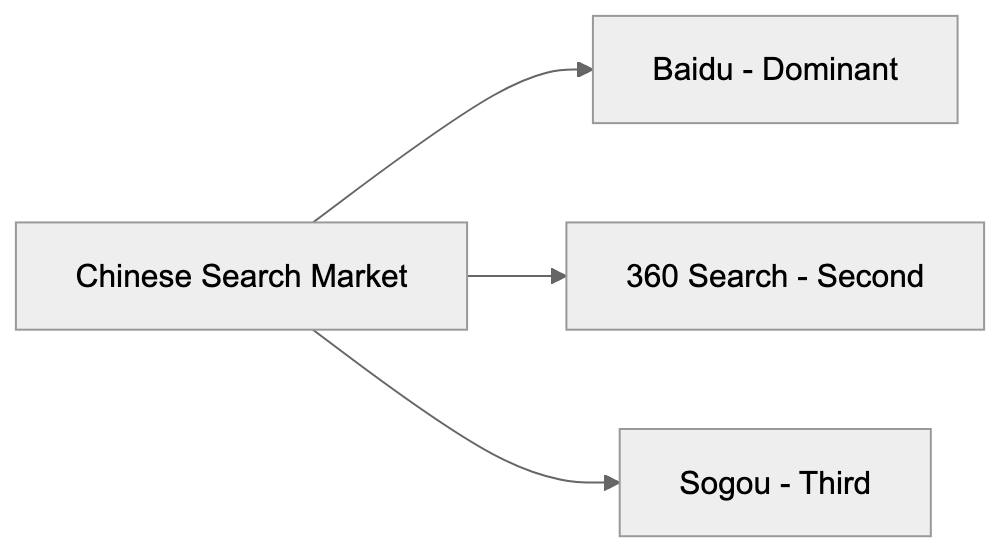
360Spider sits in the middle tier for crawl frequency compared to giants like Googlebot and Baiduspider. Its main advantage lies in its combination with Qihoo’s security software ecosystem. Unlike pure search crawlers, 360Spider serves security scanning functions for the parent company.
It handles Chinese content well but doesn’t match Baidu’s linguistic sophistication. For international sites, Googlebot and Bingbot remain more critical than 360Spider, but for China-focused operations, allowing both Baiduspider and 360Spider provides better search coverage than either alone.
Security Considerations and Integration
Qihoo 360’s background as a security company influences how 360Spider operates. The crawler doesn’t just index content for search; it also scans for malware and security threats. This dual purpose means 360Spider may analyze your site more thoroughly than pure search crawlers.
Qihoo uses crawl data to warn users about potentially dangerous websites through their security software. Sites flagged for security issues may see reduced visibility in 360 Search results. The company positions this as protecting Chinese internet users from threats. Webmasters should ensure their sites meet basic security standards to avoid negative flags. Using HTTPS, keeping software updated, and avoiding malicious code will help maintain good standing.
Some security researchers have noted that 360Spider’s behavior sometimes resembles aggressive scanning rather than typical crawling. The crawler may probe more deeply than necessary for simple indexing purposes. Organizations with strict security policies should monitor 360Spider activity closely. Consider whether the trade-off between Chinese search visibility and detailed site scanning matches your security posture.
Traffic Patterns and Crawl Behavior
360Spider typically crawls sites less aggressively than Googlebot or Baiduspider. Most webmasters report moderate crawl rates that don’t significantly impact server performance. The bot generally respects crawl-delay directives in robots.txt files when specified.
Crawl frequency heavily depends on your site’s relevance to Chinese users and content update patterns. News sites and frequently updated content see more regular visits. Static corporate sites might only get crawled weekly or monthly. The crawler tends to focus on text content rather than heavy resource files. It downloads HTML, CSS, and some JavaScript, but may skip large media files.
Mobile page versions receive attention as mobile usage dominates in China. The bot doesn’t always render JavaScript-heavy applications fully, similar to older versions of Googlebot. Sites built with modern JavaScript frameworks should ensure server-side rendering for proper indexing.
Peak crawl times often match with Chinese business hours, though the bot operates continuously. You can reduce crawl impact by improving your site’s technical performance and using appropriate caching headers.
Market Share and Impact on SEO Strategy
Qihoo 360 Search holds roughly 2-5% of the Chinese search market, depending on measurement methodology. While Baidu dominates with over 70% share, 360 remains the clear second player. This market position makes 360Spider relevant, but not crucial for most international businesses.
Companies serious about Chinese SEO should optimize for both Baidu and the 360 search engine. The effort required isn’t dramatically different since both crawlers favor similar quality signals. Good Chinese language content, fast loading times, and mobile improvements benefit both platforms, but 360 has some unique ranking factors tied to its security focus.
Sites with poor security reputations face steeper penalties in 360 results than elsewhere. The search engine also seems to favor content from sources it deems trustworthy through its security network. Building presence on Chinese platforms that 360 trusts can improve rankings.
For businesses only targeting China casually, focusing solely on Baidu makes more sense. The additional effort to optimize specifically for 360 rarely justifies the return for smaller operations. Larger enterprises with dedicated Chinese market strategies should include 360 in their comprehensive approach.
Conclusion
360Spider is the web crawler for Qihoo 360’s search engine, the second-largest search platform in China. The bot indexes web content for so.com while performing security scans as part of Qihoo’s broader mission. Understanding 360Spider matters for businesses targeting Chinese users, though it’s less crucial than optimizing for Baidu or global search engines.
You can control the crawler through standard methods like robots.txt files or server-level blocking. The decision to allow or block 360Spider depends on your target market, server resources, and security policies. Companies focused on China should generally allow the crawler to increase search visibility. Those without Chinese market interests can safely block it to reduce unnecessary server load.
360Spider represents a unique hybrid of search indexing and security scanning, reflecting Qihoo’s dual identity as both a search provider and security company. As Chinese internet usage continues to grow, keeping informed about major local crawlers like 360Spider helps you make smart decisions about your web presence and traffic management strategies.
Frequently Asked Questions
What is the primary purpose of 360Spider?
360Spider is used primarily for indexing websites for Qihoo 360's search engine, so.com. It helps discover and catalog web content, making it essential for sites targeting Chinese users.
How can I identify 360Spider traffic on my website?
You can identify traffic from 360Spider by checking your server logs for its specific user-agent strings, such as "Mozilla/5.0 (compatible; MSIE 9.0; Windows NT 6.1; 360Spider)". Monitoring these helps you understand how often the bot visits your site.
What should I include in my robots.txt file for 360Spider?
In your robots.txt file, you can specifically allow or disallow 360Spider by using directives such as "User-agent: 360Spider" followed by your desired permissions. For instance, to block it completely, use "Disallow: /"; to allow certain directories, specify which to disallow.
Why might I choose to block 360Spider from my website?
You might block 360Spider if your site doesn't target Chinese audiences or if you're concerned about server load. Additionally, sites with sensitive data or limited resources may prefer to minimize unnecessary crawling.
How does 360Spider's crawl frequency compare to other crawlers?
360Spider generally has a moderate crawl frequency, which is less aggressive than major crawlers like Googlebot or Baiduspider. Its crawl behavior depends largely on the relevance and update frequency of your content.
What security aspects should I consider regarding 360Spider?
360Spider scans websites for security issues while indexing, which could impact your site's visibility if flagged. Maintaining good security practices, like using HTTPS and keeping software updated, is important to avoid negative assessments from the crawler.
Is it important for international businesses to optimize for 360Spider?
While Qihoo 360 Search holds a smaller market share compared to Baidu, businesses targeting Chinese users should consider optimizing for 360Spider to maximize visibility. However, for those with limited or no Chinese audience, focusing solely on Baidu may be more practical.