Understanding AhrefsBot: Guide to the Ahrefs SEO Crawler
Learn what makes AhrefsBot one of the most active web crawlers in SEO. Covers backlink analysis, rate limiting, and SEO industry impact.
Table of Contents
- What is AhrefsBot and Why Does It Matter
- Understanding Web Crawlers and Their Purpose
- How Ahrefs Company Uses AhrefsBot
- Technical Details About AhrefsBot
- Comparing AhrefsBot to Alternative SEO Crawlers
- Managing AhrefsBot on Your Website
- Impact on the SEO Industry
- Server Resources and Bot Traffic Considerations
- Privacy and Data Collection Aspects
- End
- What is AhrefsBot and Why Does It Matter
- Understanding Web Crawlers and Their Purpose
- How Ahrefs Company Uses AhrefsBot
- Technical Details About AhrefsBot
- Comparing AhrefsBot to Alternative SEO Crawlers
- Managing AhrefsBot on Your Website
- Impact on the SEO Industry
- Server Resources and Bot Traffic Considerations
- Privacy and Data Collection Aspects
- End
What is AhrefsBot and Why Does It Matter
AhrefsBot is a web crawler operated by Ahrefs, an integral part of the Ahrefs SEO tools arsenal. It’s one of the most active bots on the internet today, tirelessly visiting websites to collect crucial data about links, pages, and content. This data fuels the Ahrefs SEO platform that businesses utilize for search engine improvement research and backlink analysis.
AhrefsBot and similar SEO crawlers exist because SEO professionals require precise information about websites and their backlinks, which is essential for search engine optimization. Without these crawlers, tools for analyzing search rankings and conducting competitor research wouldn’t be effective. Specifically, AhrefsBot gathers data to build and maintain Ahrefs’ extensive database of backlinks and website content, which is essential for anyone running a website. If you check your server logs, you’ll likely find AhrefsBot frequently visiting, as it scans millions of websites daily. Understanding its operation can assist you in better managing your server resources. For SEO professionals and marketing teams, AhrefsBot powers one of the industry’s most trusted SEO toolsets.
Understanding Web Crawlers and Their Purpose
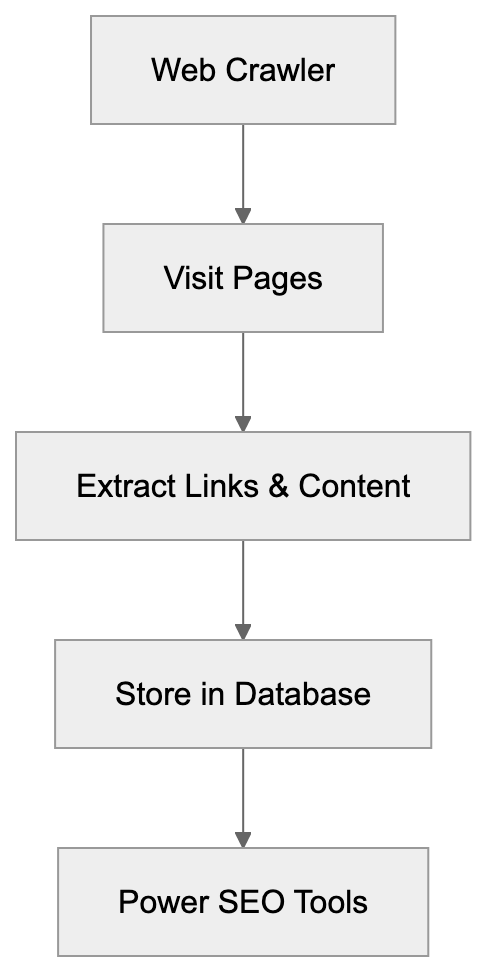
Web crawlers, also known as web spiders or web robots, are automated programs designed to visit websites and gather information. They traverse from page to page via links, much like a human browsing the web but at a rapid pace. Search engines like Google deploy crawlers to index the internet, while SEO tools employ them for competitive intelligence gathering.
Web Crawler Data Collection Process:
The primary role of SEO crawlers is data collection. They map website links, document page content, and analyze site structure. This information is stored in massive databases, enabling companies to improve their search rankings using detailed analysis.
AhrefsBot is categorized as a commercial SEO crawler. Unlike search engine crawlers, it doesn’t index content for search purposes, focusing instead on backlink analysis. Instead, it collects vital link data and page information for the Ahrefs platform. When you engage in backlink analysis or competitor benchmarking with Ahrefs, you’re accessing data curated by AhrefsBot, which has crawled billions of web pages.
Businesses harness this data for various purposes, such as tracking who links to their content, discovering new link-building opportunities, and scrutinizing competitor strategies. Without continuous updates from crawlers, the data would quickly become obsolete for SEO efforts.
How Ahrefs Company Uses AhrefsBot
Ahrefs, a software company established in 2010, provides a comprehensive suite of SEO tools and resources. The company, headquartered in Singapore, serves a global clientele. Ahrefs engineered AhrefsBot to create its own independent web index rather than relying on third-party data sources.
AhrefsBot crawls approximately 8 billion pages every 24 hours, making it one of the most active web crawlers following major search engines. This activity supports a database encompassing over 35 trillion links, attesting to the scale required to deliver actionable SEO insights.
The Ahrefs platform leverages AhrefsBot to power key features. The Site Explorer tool showcases backlink profiles using crawled data, the Content Explorer identifies popular content through bot-discovered pages, and the Rank Tracker evaluates search positions by comprehending the competitive landscape via crawling.
AhrefsBot Operation Overview:

Additionally, Ahrefs utilizes AhrefsBot to maintain fresh indexes, accounting for evolving websites with new content, removed pages, and updated links. Sites of greater significance are crawled more frequently compared to less critical pages.
Technical Details About AhrefsBot
AhrefsBot identifies itself via its user-agent string, which appears as follows: Mozilla/5.0 (compatible; AhrefsBot/7.0). Website operators can manage the bot’s behavior using robots.txt directives. Website operators can pinpoint the bot in server logs using this identifier, which updates with enhancements in Ahrefs’ crawler technology.
AhrefsBot adheres to robots.txt files, which dictate the sections of a website that are accessible to crawlers. If you prefer AhrefsBot not to visit your site, you can restrict it using robots.txt directives. Many website proprietors opt to allow the bot since having backlinks captured in Ahrefs is advantageous for SEO monitoring.
For those wishing to control crawl speed, Ahrefs offers rate-limiting options. Contact Ahrefs support to request slower crawling if needed due to excessive server resource consumption. The company strives to respect server capacity and will work with site owners to adjust crawl rates.
The bot crawls both followed and nofollowed links and processes JavaScript to some extent, though not as comprehensively as Google’s crawler. This capability is crucial for documenting links and content on modern, JavaScript-heavy websites. AhrefsBot also collects metadata, HTTP headers, and other technical details about pages.
Comparing AhrefsBot to Alternative SEO Crawlers
Several companies operate web crawlers for SEO purposes, each possessing unique strengths and crawling behaviors. Here’s a comparison of AhrefsBot with key competitors:
| Crawler | Daily Pages Crawled | Index Size | Primary Use | Rate Limiting |
|---|---|---|---|---|
| AhrefsBot | 8 billion | 35 trillion links | Backlink analysis, SEO research | Available on request |
| SemrushBot | 3 billion | 25 trillion links | Keyword research, competitor analysis | Available on request |
| MJ12bot | 5 billion | Proprietary | Link intelligence for Majestic | Automatic adaptive |
| DotBot | 2 billion | Moz Link Explorer | Domain authority, link data | Available on request |
| PetalBot | 4 billion | Aspiegel search | General web indexing | robots.txt compliance |
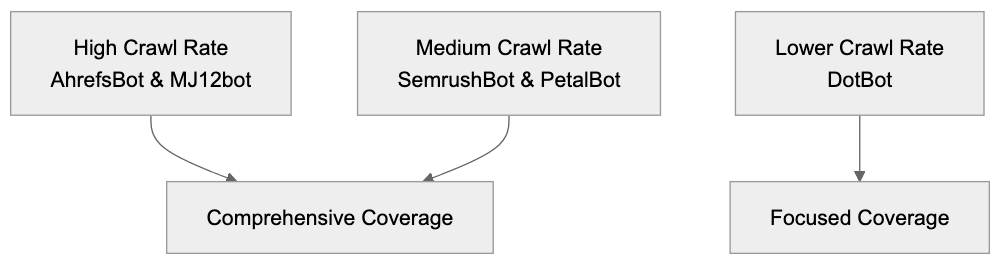
AhrefsBot is often regarded as one of the most comprehensive tools for backlink data, providing insights into link building strategies. Ahrefs frequently updates its index, ensuring fresher data than some alternatives. Its high crawl rate translates to comprehensive web coverage.
SemrushBot, AhrefsBot’s closest competitor, emphasizes keyword data alongside backlinks. MJ12bot by Majestic has accumulated a vast historical link database over time. Both serve as viable alternatives depending on specific SEO metrics that are most important for your needs.
DotBot, powering the Moz suite, is less aggressive in crawling compared to AhrefsBot. Meanwhile, PetalBot is relatively new and primarily supports a search engine rather than dedicated SEO tools. Each crawler presents different trade-offs related to data freshness, index size, and server impacts.
Managing AhrefsBot on Your Website
Website owners have multiple options for managing interactions with AhrefsBot. Utilizing robots.txt is a common method to set crawl permissions, where you can either completely block the bot or restrict its access to specific site sections.
To entirely block AhrefsBot, include these lines in your robots.txt:
User-agent: AhrefsBot
Disallow: /
This directive advises the bot not to crawl any part of your site. While the bot respects these guidelines, blocking it means your backlink data won’t appear in Ahrefs reports, potentially limiting your SEO monitoring capabilities.
If the bot’s crawling is overly aggressive, impacting server performance, you do have recourse. Verify through server logs that AhrefsBot is causing the issue, then contact Ahrefs support with details of your domain and the encountered problems. Ahrefs can manually adjust crawl rates for your site.
Crawler Comparison by Activity Level:
 Some website owners opt to allow AhrefsBot due to the advantages outweighing potential costs. Being indexed by Ahrefs means tracking backlinks becomes feasible, and competitors analyzing your site have access to accurate data. With most modern servers, bot traffic is manageable and typically doesn’t cause significant problems.
Impact on the SEO Industry
AhrefsBot has transformed SEO work by providing independent link data. Prior to the existence of tools like Ahrefs, SEO heavily relied on data from search engines themselves. Third-party crawlers like AhrefsBot introduced greater transparency in the industry.
The bot’s extensive activity enables Ahrefs to compete with much larger companies. Smaller SEO tools cannot create such expansive indexes without substantial crawling infrastructure. Ahrefs’ dedication to AhrefsBot has propelled it to become one of the top three SEO platforms worldwide, alongside Semrush and Moz.
For content marketers and link builders, AhrefsBot makes tasks quantifiable. It’s possible to track new backlinks, monitor the disappearance of links, and analyze competitor link profiles. This data-centric approach to link building became industry-standard partly due to crawlers like AhrefsBot making data readily accessible.
The crawler also influences how businesses perceive their online presence. Companies now continuously monitor their backlink profiles via tools powered by AhrefsBot, informing decisions about content strategy and partnerships based on link data. This signifies a shift toward more data-driven SEO methods, moving away from older, guesswork-based approaches.
Server Resources and Bot Traffic Considerations
AhrefsBot contributes substantial traffic to many websites, making it important to understand its resource impact for effective server planning and improvement. The bot generates HTTP requests similar to human visitors, but with much higher frequency and speed.
Most websites encounter AhrefsBot requests daily or even hourly, depending on the site’s size. Large sites with millions of pages will experience increased crawling activity. The bot prioritizes popular pages and frequently updated content, meaning your homepage and main sections are crawled more often than less visited pages.
Server administrators should vigilantly monitor bot traffic using log analysis tools such as AWStats or Google Analytics to differentiate bot traffic from human visitors. If performance degrades during peak AhrefsBot crawling times, consider this a sign that rate limiting might be necessary.
For most sites, the bandwidth consumed by AhrefsBot is nominal compared to human traffic. However, on websites with large pages or media-heavy content, crawler bandwidth can accumulate. Implementing proper caching headers ensures the bot avoids re-downloading unchanged content unnecessarily.
Small business websites on shared hosting might face issues due to aggressive crawling. If problems arise, verify if your hosting plan is adequate. Next, explore robots.txt restrictions or request crawl rate adjustments from Ahrefs before opting to block the bot entirely.
Privacy and Data Collection Aspects
AhrefsBot collects publicly available web pages and link data without attempting to bypass authentication or penetrate private content. It adheres to the rules followed by other legitimate crawlers regarding access to public content.
The data collected by AhrefsBot is integrated into the Ahrefs commercial database, which means information about your public web pages, links, and site structure is included in a product accessible by others. For public websites, this aligns with expectations similar to how Google indexes content.
Website owners with privacy concerns have limited options because the content is publicly available. Blocking the crawler won’t erase existing data from Ahrefs’ database. Since the information remains publicly accessible, Ahrefs does not offer a mechanism to delete collected data for public sites.
For pages you wish to keep unindexed, utilizing proper authentication measures is crucial, as relying solely on obscurity is insufficient. AhrefsBot and other crawlers will discover public pages even if they are not prominently listed. Implement password protection or access controls for sensitive content.
Data collected by AhrefsBot is dedicated solely to the Ahrefs platform. While the company doesn’t sell raw crawl data to third parties, Ahrefs customers can access information about your public website through various platform tools. This reflects the trade-off of maintaining a public web presence.
End
AhrefsBot functions as the data collection engine underpinning one of the most utilized SEO platforms. This crawler examines billions of pages daily to sustain and expand a comprehensive link database, making Ahrefs instrumental for backlink analysis, competitor research, and SEO monitoring.
Understanding AhrefsBot aids website owners in managing server resources efficiently. The bot respects robots.txt directives, and Ahrefs provides rate-limiting options for sites facing challenges. Permitting the crawler typically yields advantages through enhanced visibility within SEO tools.
Compared to alternatives like SemrushBot and MJ12bot, AhrefsBot maintains one of the largest and frequently updated indexes. SEO professionals depend on data from these crawlers to make informed decisions about their improvement strategies. The crawler’s influence on the industry has been profound by rendering link data more accessible and transparent.
Frequently Asked Questions
What kind of data does AhrefsBot collect?
AhrefsBot gathers data about web pages, backlinks, and site structures. It documents page content and analyzes links to provide comprehensive insights for its SEO tools.
How can I prevent AhrefsBot from crawling my website?
You can control AhrefsBot’s access using the robots.txt file. To block it entirely, include the directives: User-agent: AhrefsBot in your robots.txt file.
Disallow: /
What should I do if AhrefsBot is slowing down my website?
If AhrefsBot’s crawling is impacting your site’s performance, you can request rate limiting from Ahrefs. Contact their support team with details about your domain and the issues you're experiencing.
How does AhrefsBot compare to other SEO crawlers?
AhrefsBot is known for its large index size and high daily page crawl rate, surpassing many competitors. While others like SemrushBot focus on keyword research, AhrefsBot specializes in backlink analysis and SEO research.
Is the data collected by AhrefsBot private?
No, the data collected by AhrefsBot consists of publicly available content. While you can manage access through robots.txt, once data is collected, it cannot be erased from Ahrefs' database.
How often does AhrefsBot crawl my website?
The frequency of AhrefsBot's visits depends on your site's size and the frequency of updates. More popular and frequently updated sites are crawled more often compared to less critical pages.
What advantages does allowing AhrefsBot bring?
Permitting AhrefsBot to crawl your site allows you to be included in their backlink database, which is beneficial for SEO monitoring. It can help in tracking backlinks, discovering link-building opportunities, and enhancing visibility in SEO tools.