Understanding Daumoa: Kakao's Search Crawler
Learn about Daumoa, Kakao's search bot that indexes Korean web content. Discover its purpose, user-agent string, and blocking options.
What is Daumoa and Why It Matters
Daumoa is the web crawler used by Kakao Corporation to index websites for their Daum search engine. This Kakao search bot scans and collects web content from the internet, with a strong focus on Korean language websites and the Korean search market. Web indexing tools like Daumoa are essential for powering search engines by continuously visiting sites, reading their content, and updating search indexes, ensuring users find relevant information when they search.
The Daum search engine, operating in South Korea since 1999, remains a major search platform in the Korean market alongside Naver. Kakao Corporation acquired Daum Communications in 2014, forming what is now Kakao. The company offers multiple services, including KakaoTalk messaging, Kakao Maps, and the Daum portal. The Daumoa crawler ensures Daum search results remain current by regularly scanning websites for fresh and updated content.
The Purpose and Function of Daumoa Crawler
Daumoa exists to keep Daum search engine results fresh and accurate. When you publish new content on your website, Daumoa visits your pages, reads the text and metadata, follows links to other pages, and sends all this information back to Daum’s servers. The search engine then processes this data and adds it to its index.
Web Crawling Process Overview:
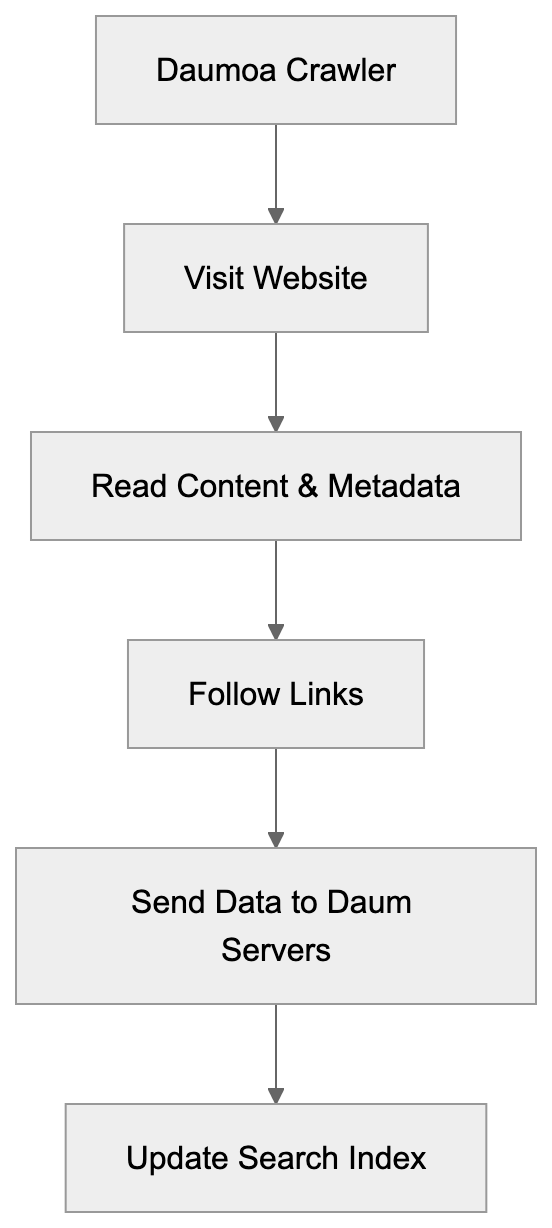
The crawler works automatically and continuously, following a schedule to revisit websites based on their frequency of content updates, similar to how Googlebot works for Google or Bingbot for Microsoft Bing. Sites publishing new material daily are crawled more often than static ones. This process is similar to how Googlebot works for Google or Bingbot for Microsoft Bing.
For website owners in South Korea or those targeting Korean audiences, having Daumoa successfully crawl your site means your content can appear in Daum search results. The Korean search market is distinct from Western markets; while Google dominates globally, South Korea has strong domestic search engines preferred by many users.
How Businesses and Webmasters Deal with Daumoa
Website owners can identify Daumoa visits by checking their server logs. The crawler uses a specific user-agent string that looks like: “Mozilla/5.0 (compatible; Daumoa/4.0; +https://cs.daum.net/faq/15/4118.html)”. Though the version number might change over time, the Daumoa identifier remains consistent.
Many businesses want Daumoa to crawl their sites as it translates to visibility in Daum search results. Korean e-commerce sites, news portals, blogs, and corporate websites benefit from being indexed by search engines like Daum. Some webmasters specifically optimize their content for the Korean search market.
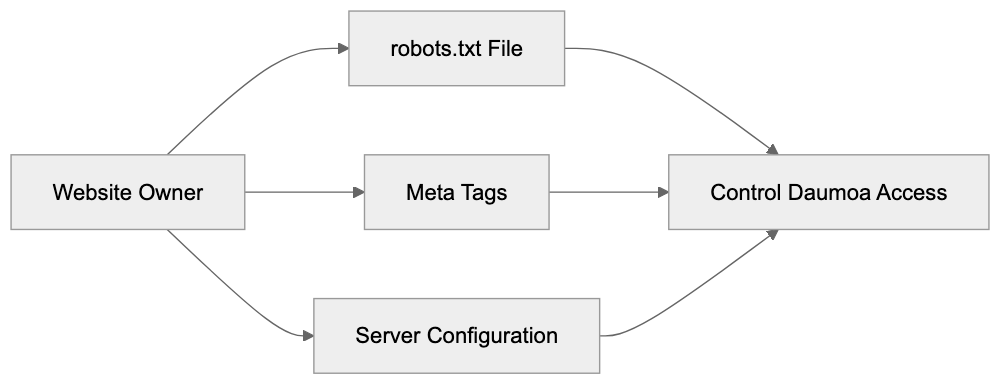
Server administrators monitor crawler activity to ensure it doesn’t overwhelm their systems. While most crawlers consider server resources, sometimes management of their visit frequency is necessary. Website owners can control Daumoa’s behavior through the robots.txt file, a standard method of communicating rules to web crawlers.
Blocking or Controlling Daumoa Access
You can block Daumoa from crawling your website if you don’t want your content indexed by the Daum search engine. This might be relevant for websites targeting non-Korean audiences, sites with sensitive information, or pages that consume significant server resources when crawled.
To block Daumoa completely, add these lines to your robots.txt file:
User-agent: Daumoa
Disallow: /
This tells Daumoa not to crawl any part of your website. If you want to block only specific sections while allowing others, specify paths:
User-agent: Daumoa
Disallow: /private/
Disallow: /admin/
You can also control crawl rate and timing through server configuration. Some webmasters set up rate limiting for specific user-agents if noticing excessive requests. Remember, blocking search engine crawlers means your content won’t appear in those search results.
Another option is using meta tags in your HTML to prevent indexing of specific pages while still allowing the crawler to visit. The robots meta tag can instruct Daumoa not to index a page or follow its links.
Daumoa Compared to Other Search Crawlers
Different search engines use various crawlers, each with its own characteristics and market focus. Here’s how Daumoa compares to other major web crawlers:
| Crawler | Search Engine | Primary Market | User-Agent Identifier | Market Share |
|---|---|---|---|---|
| Daumoa | Daum (Kakao) | South Korea | Daumoa | ~3-5% in Korea |
| Googlebot | Global | Googlebot | ~90% globally | |
| Yeti | Naver | South Korea | Yeti | ~65-70% in Korea |
| Bingbot | Microsoft Bing | Global (Western) | bingbot | ~3% globally |
| Baiduspider | Baidu | China | Baiduspider | ~70% in China |
Crawler Access Control Methods:
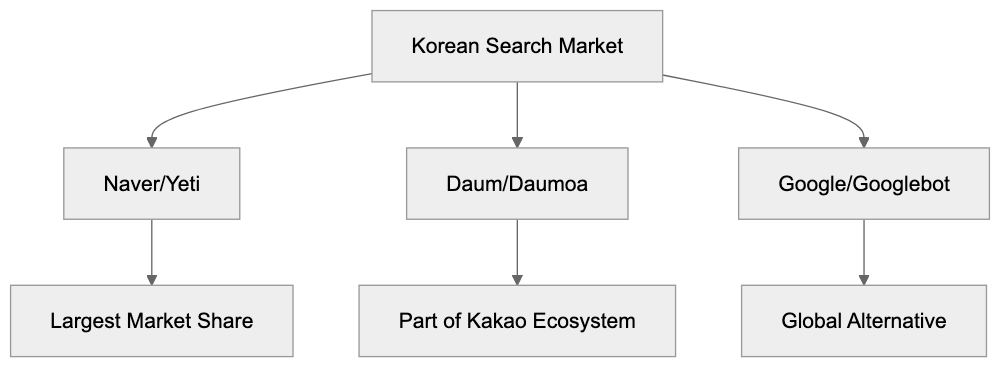
Naver’s Yeti crawler is Daumoa’s main competitor in the Korean search market. Naver holds a larger share of Korean search traffic compared to Daum. Both crawlers focus heavily on Korean language content and websites serving Korean users.
While Googlebot is crucial for most websites globally due to Google’s dominant market position, for businesses targeting Korean customers, Daumoa and Yeti are vital for visibility.
Baiduspider serves a similar role in China that Daumoa and Yeti serve in Korea. Regional search engines often understand local language details and user preferences better than global alternatives. This is why domestic search engines maintain strong positions in markets like Korea, China, and Russia.
Technical Details About Daumoa Operations
Daumoa respects standard web protocols including robots.txt directives and crawl-delay instructions. The crawler typically identifies itself clearly in server logs, simplifying tracking and analysis of its behavior.
Korean Search Market Landscape:
 The crawler follows HTTP status codes properly. If a page returns a 404 error, Daumoa notes that the page is gone. A 301 redirect tells the crawler the page has moved permanently to a new location. Proper usage of these codes helps maintain clean search indexes.
Daumoa processes JavaScript to some extent, but like most crawlers, it handles static HTML content more reliably. For sites relying heavily on client-side rendering, server-side rendering or pre-rendering might be necessary to ensure Daumoa indexes content correctly.
The frequency of Daumoa visits depends on multiple factors. Sites with frequent updates, strong authority signals, and good technical health are crawled more often. New or smaller sites might see Daumoa visits less frequently until they establish more presence.
Webmasters can request crawling through Daum’s webmaster tools. These tools also provide data about indexing status, crawl errors, and search performance, similar to Google Search Console.
The Kakao Ecosystem and Daum’s Role
Kakao Corporation operates one of South Korea’s largest internet ecosystems. KakaoTalk is the dominant messaging platform in Korea, with over 53 million monthly active users. Kakao also runs services in banking, transportation, entertainment, and commerce.
The Daum portal is one piece of this ecosystem. The portal includes search, news, email, cafes (community forums), and various other services. Many Korean internet users have Daum accounts integrated with their Kakao services.
The search function powered by Daumoa helps Kakao provide value to users within their ecosystem. When someone searches on Daum, they might find content leading them to use other Kakao services. This integrated approach is common among large tech companies.
Kakao’s acquisition of Daum in 2014 created synergies between mobile-first services like KakaoTalk and the established web portal. Daumoa continues to maintain search quality as part of this larger strategic picture.
Privacy and Data Collection Considerations
Web crawlers like Daumoa gather publicly available information from websites. This differs from personal user data collection. The crawler reads what you publish on your website and makes it searchable, akin to how a library catalogs books.
However, be aware that anything Daumoa crawls can appear in Daum search results. Use proper access controls and robots.txt directives to prevent crawling of pages with sensitive information. Don’t rely on obscurity as a security measure.
Some website owners worry about content scraping and unauthorized use. While Daumoa is a legitimate search crawler, blocking it won’t prevent malicious scrapers. Bad actors often ignore robots.txt.
For sites operating in Korea or handling Korean user data, understanding local data protection regulations is important. The Personal Information Protection Act (PIPA) in South Korea has specific requirements about data handling and user privacy.
Conclusion
Daumoa is Kakao’s web crawler that powers the Daum search engine, focusing primarily on the Korean web market. The crawler serves the essential function of indexing websites so they appear in Daum search results. For businesses targeting Korean audiences, Daumoa represents an important pathway to visibility alongside Naver’s Yeti crawler.
Webmasters can identify Daumoa through its user-agent string and control its access using robots.txt directives. While Daum holds a smaller market share compared to Naver in Korea, it remains part of the larger Kakao ecosystem that millions of Korean users engage with daily.
The crawler operates similarly to other search engine bots, respecting standard web protocols and indexing publicly available content. Website owners can choose to accept Daumoa for Korean market visibility or block it if their content doesn’t target that audience. Understanding how Daumoa works helps you make informed decisions about your website’s search engine strategy in the Korean market.
Frequently Asked Questions
How can I ensure my website is indexed by Daumoa?
To ensure your website is indexed by Daumoa, regularly publish new and relevant content. Monitor Daumoa's visits through your server logs and optimize your site for the Korean market, including proper use of metadata and internal linking. Utilize Daum's webmaster tools to monitor indexing status and request crawling if necessary.
What should I do if Daumoa is overwhelming my server resources?
If Daumoa is overwhelming your server, you can manage its behavior through your robots.txt file to control crawl frequency. Consider implementing rate-limiting measures for specific user agents or controlling the access to certain sections of your site. This ensures your site remains responsive while still getting indexed for important pages.
Can I block Daumoa from crawling my site?
Yes, you can block Daumoa by adding specific lines to your robots.txt file, thereby preventing it from indexing your entire website or specific sections. However, keep in mind that blocking Daumoa will also remove your content from Daum search results, which can reduce your visibility among Korean audiences.
How does Daumoa compare to Googlebot and Yeti?
Daumoa is specifically tailored for the Korean market, while Googlebot predominantly serves global users, and Yeti is focused on Korean language content like Daumoa. Each crawler has its unique user-agent identifiers and varying market shares, with Daumoa capturing around 3-5% of the search market in Korea. When targeting Korean audiences, optimizing for both Daumoa and Yeti is essential to maximize visibility.
What data does Daumoa collect from my website?
Daumoa collects publicly accessible information from your website, primarily focusing on your published content to index it for search results. It's important to manage what you make available online, as anything crawled by Daumoa can potentially appear in search results. Implement proper access controls if you want to protect sensitive information.
How often does Daumoa crawl websites?
The frequency of Daumoa's visits to your website depends on several factors, including content update frequency and overall site authority. Websites that regularly publish new content, such as news portals or e-commerce sites, are crawled more often compared to static sites. Over time, as your site's presence grows, Daumoa may increase its crawling frequency.
What measures can I take for data protection regarding Daumoa?
To protect sensitive data, use robots.txt directives to restrict Daumoa from accessing specific pages. Familiarize yourself with the Personal Information Protection Act (PIPA) in South Korea to ensure compliance regarding data collection. Utilizing meta tags to prevent indexing on sensitive pages while still allowing crawler visits is also a strategic approach.
Track Your AI Visibility
See how AI chatbots like ChatGPT, Claude, and Perplexity discover and recommend your brand.