How DuckAssistBot Powers DuckDuckGo's AI Answers
Learn about DuckAssistBot's role in DuckDuckGo's AI-generated answers, its privacy features, and how to manage its interactions with your site.
What DuckAssistBot Does for DuckDuckGo Search
DuckAssistBot is the web crawler behind DuckDuckGo’s AI-generated answers feature, DuckAssist. Within the first 100 words, it’s essential to understand that DuckAssistBot powers DuckDuckGo AI by crawling websites to collect data for the AI-powered answers shown directly in search results. Unlike traditional search engines that merely display links, DuckAssist provides direct answers from trusted sources like Wikipedia. This aligns with DuckDuckGo’s privacy-focused AI philosophy by respecting user privacy and standard blocking mechanisms like robots.txt. For webmasters, it’s crucial to understand how the DuckAssist crawler operates for effective server resource management.
Understanding DuckDuckGo’s Background and AI Strategy
DuckAssist Architecture Overview:
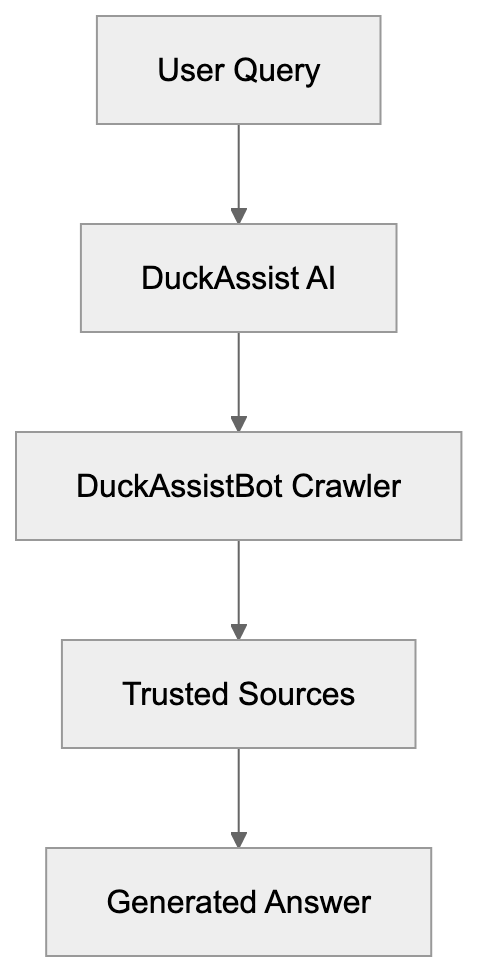
DuckDuckGo, a privacy-focused search engine, launched in 2008 and gained its reputation by not tracking users. By 2023, it processed around 100 million searches daily. The introduction of DuckAssist in 2023 was a strategic shift to AI-powered answers to stay competitive with Google and Bing, which offer similar features. DuckAssist uses natural language processing to understand queries and generate precise answers from reliable encyclopedic sources. This method helps avoid the hallucination issues prevalent in AI language models. Importantly, DuckDuckGo maintains that no personal data is stored from searches triggering DuckAssist answers, a testament to its privacy-first approach.
Technical Details of the DuckAssistBot User Agent
DuckAssistBot identifies itself using the user-agent string: Mozilla/5.0 (compatible; DuckAssistBot/1.0; +https://duckduckgo.com/duckassistbot). DuckAssistBot User Agent - DuckDuckGo Bot Details This identification assists website administrators in recognizing the bot in server logs. The DuckAssist crawler adheres to robots.txt, allowing website owners to block or limit its access. Operating from DuckDuckGo’s infrastructure, the bot uses HTTP requests identical to standard web browsers, following redirects and handling web technologies. Although it crawls moderately to prevent server overload, website owners can use the Crawl-delay directive in robots.txt for rate control.
How Websites and Developers Can Block DuckAssistBot
DuckAssist Answer Generation Process:

To block DuckAssistBot, modify your site’s robots.txt file in the root directory. Robots.txt Guide To prevent the bot from crawling any pages, include:
User-agent: DuckAssistBot
Disallow: /
For blocking specific directories, specify them:
User-agent: DuckAssistBot
Disallow: /private/
Disallow: /admin/
This stops crawling of private and admin directories. Alternatively, server-level blocking such as .htaccess for Apache or appropriate configurations for nginx can prevent bot access before it reaches your site, thus saving resources. However, blocking DuckAssistBot also means your content won’t appear in DuckDuckGo AI-generated answers, potentially decreasing visibility among users seeking quick information through DuckAssist.
Privacy Features That Set DuckAssistBot Apart
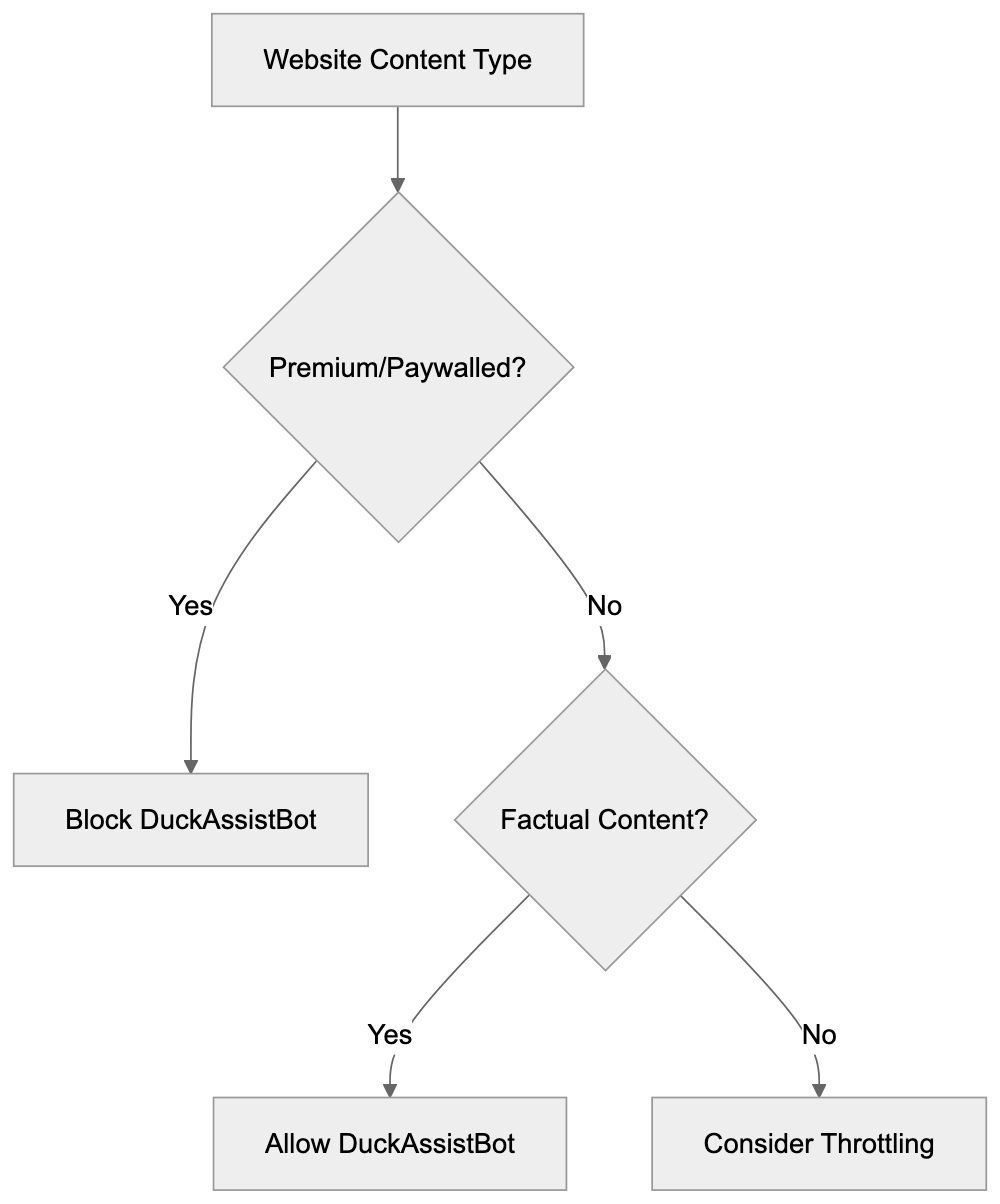
Blocking DuckAssistBot Decision Flow:
 DuckAssistBot embodies DuckDuckGo’s privacy-first approach by not tracking individuals or building user profiles. When crawling, it gathers content data but no personal information, uses no cookies, and employs no tracking pixels, unlike other search crawlers that collect extensive analytics data. DuckDuckGo processes this content for answers without storing personally identifiable search query data and doesn’t sell it to advertisers. For website owners, visits from DuckAssistBot don’t contribute to user profiling, affirming DuckDuckGo’s commitment to privacy and transparency.
Comparing DuckAssistBot to Other AI Search Crawlers
Multiple search engines employ specialized crawlers for AI features. Here’s how DuckAssistBot stands out:
| Crawler | Company | Use | Privacy Focus | Blocking Method |
|---|---|---|---|---|
| DuckAssistBot | DuckDuckGo | AI answers | High | robots.txt, server config |
| Google-Extended | AI overviews | Low | robots.txt (limited) | |
| GPTBot | OpenAI | Training data | Medium | robots.txt, user-agent block |
| Bingbot | Microsoft | AI chat, answers | Low | robots.txt, server config |
| CCBot | Common Crawl | Dataset creation | Low | robots.txt, IP blocking |
DuckAssistBot’s main differentiator is its dedication to privacy and its specific use case for generating search answers.
Business and Developer Use Cases for DuckAssistBot
Website owners weigh the benefits of allowing or blocking DuckAssistBot. Allowing it can boost content visibility in DuckDuckGo AI answers, attracting traffic from privacy-focused users. Sites with factual content gain most, such as Wikipedia or news outlets. However, sites with premium content behind paywalls or frequently updated information might prefer blocking the crawler to safeguard content access and prevent outdated answers. For small businesses or high-traffic sites, throttling via Crawl-delay instead of outright blocking may optimize server resources.
Future Developments and What to Expect
DuckDuckGo plans to enhance its AI capabilities while adhering to privacy standards. This may include increasing DuckAssistBot’s crawling frequency and refining answer generation with structured data or metadata integration. As the AI-powered search market evolves, DuckDuckGo will continue to appeal to users concerned about data privacy. Web professionals must monitor how DuckAssistBot impacts server load and traffic, utilizing analytics tools to evaluate its value. Understanding various web crawlers remains critical for effectively managing web properties in this advancing AI age.
Conclusion
DuckAssistBot is pivotal for DuckDuckGo’s AI-powered search answers, closely aligned with privacy commitment. With transparent operations, including clear identification and standard blocking mechanisms, website owners can manage access via robots.txt or server configuration. Businesses and developers must decide on allowing or restricting DuckAssistBot based on content type, strategy, and resources. Its privacy-focused approach uniquely positions it among AI crawlers, offering a distinct AI search model compared to larger competitors. Whether allowing or blocking the crawler, understanding its functions ensures effective online presence management in the era of AI search.
Frequently Asked Questions
How does DuckAssistBot ensure user privacy?
DuckAssistBot operates under DuckDuckGo's privacy-first philosophy, meaning it does not track individual users or build user profiles. It gathers content data without collecting personal information or using cookies, ensuring that searches triggering DuckAssist answers remain anonymous.
What are the benefits of allowing DuckAssistBot to crawl my website?
Allowing DuckAssistBot to crawl your website can enhance your content's visibility in DuckDuckGo's AI-generated answers, attracting privacy-focused users. Websites with factual information, such as encyclopedias or news outlets, stand to gain the most from this exposure.
Can I block DuckAssistBot without losing visibility in search results?
Blocking DuckAssistBot means your content will not be included in DuckDuckGo's AI-generated answers, potentially reducing your visibility to users seeking quick information. However, if your content is sensitive or frequently updated, it may be more beneficial to block the bot or use the Crawl-delay directive for resource optimization.
What is the difference between DuckAssistBot and other AI crawlers?
DuckAssistBot stands out for its high privacy focus, generating AI search answers without tracking individuals. Unlike other crawlers, it collects data solely for producing answers and does not retain personally identifiable information, making it a more trustworthy option for users concerned about privacy.
How can website owners manage DuckAssistBot's crawling frequency?
Website owners can manage DuckAssistBot's crawling frequency by using the Crawl-delay directive in their robots.txt file. This option allows you to specify how long the bot should wait before making additional requests, helping to alleviate server load while still permitting access.
What should I consider before blocking DuckAssistBot?
Before blocking DuckAssistBot, consider the nature of your content and your target audience. If you offer valuable, factual information, blocking the bot could hinder your discovery by users. Evaluate whether the benefits of visibility outweigh any potential concerns about content control.
Will DuckDuckGo continue to develop DuckAssistBot?
Yes, DuckDuckGo plans to enhance DuckAssistBot's capabilities while maintaining its privacy standards. Future developments may include improved crawling efficiency and better integration of structured data to refine the answers generated, ensuring it remains competitive in the AI search market.
Track Your AI Visibility
See how AI chatbots like ChatGPT, Claude, and Perplexity discover and recommend your brand.