Understanding Perplexity-Ads-Bot: Ad Crawler Guide
Learn about Perplexity-Ads-Bot, its crawling patterns, user-agent details, and how to manage or block this advertising crawler effectively.
What is Perplexity-Ads-Bot
Perplexity-Ads-Bot is a web crawler operated by Perplexity AI, designed for Perplexity advertising purposes. This ads crawler gathers data to support advertising operations within the Perplexity platform. While Perplexity is known as an AI-powered search and answer engine, the company also runs advertising services. The Perplexity-Ads-Bot specifically collects information to aid these advertising functions. Web crawlers like this one play a crucial role in the digital advertising ecosystem. They help ad platforms understand website content, categorize pages, and match relevant ads to suitable content.
For website owners and developers, knowing about Perplexity-Ads-Bot is important as it affects server resources and data collection practices. The ads bot operates separately from Perplexity’s main search crawler, PerplexityBot. Understanding the distinction between these two web crawlers aids in making informed decisions about bot management, like blocking through robots.txt.
Why Perplexity-Ads-Bot Exists
Perplexity-Ads-Bot powers Perplexity’s advertising business model. Like many AI services seeking revenue beyond subscriptions, Perplexity advertising relies on this bot for gathering crucial data. To show relevant ads, Perplexity requires web content data, gathered by this crawler. The bot visits and analyzes websites, categorizing pages by topic, industry, and relevance. This process enables Perplexity to match ads to fitting contexts.
How Perplexity-Ads-Bot Works:
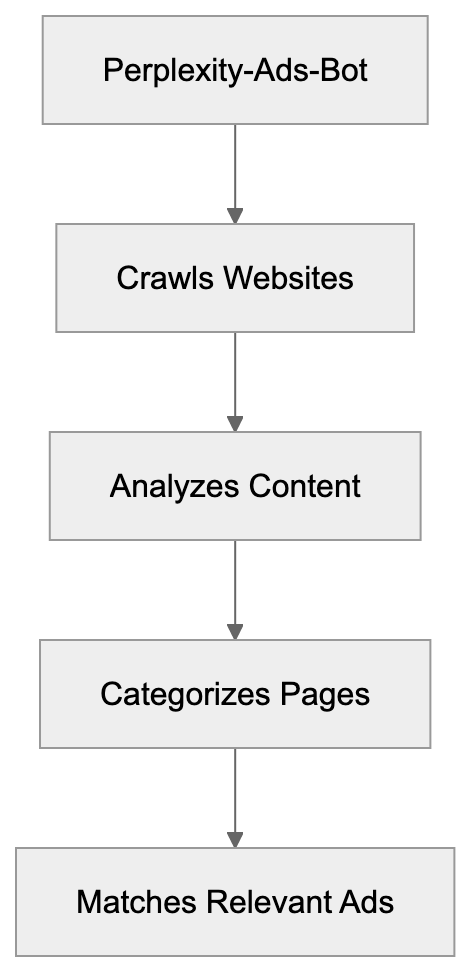
For instance, if a user searches for cooking recipes, relevant food-related ads are shown. Many companies operate similar advertising crawlers. Google employs AdsBot for its ad services, and Facebook uses crawlers for its ad network. Similarly, by using the Perplexity-Ads-Bot, Perplexity builds its advertising data infrastructure to compete with these established industry players.
User-Agent Details and Technical Information
The Perplexity-Ads-Bot identifies itself through a specific user-agent string. Website servers recognize the bot by checking for this user-agent in incoming requests:
PerplexityBot-Ads/1.0 (+https://perplexity.ai/bot)
The bot respects standard web protocols and follows robots.txt directives set by website owners. It operates from IP addresses related to Perplexity’s infrastructure. Website administrators can detect the bot through server logs, looking for this user-agent string. The crawler requests publicly accessible web pages but avoids bypassing login screens or accessing restricted content.
Like most legitimate bots, it maintains reasonable crawling rates to prevent server overload. However, website owners have reported varying frequency depending on site popularity and content updates. The bot processes standard HTML content across both HTTP and HTTPS protocols, adhering to common web page structures.
How to Block or Manage Perplexity-Ads-Bot
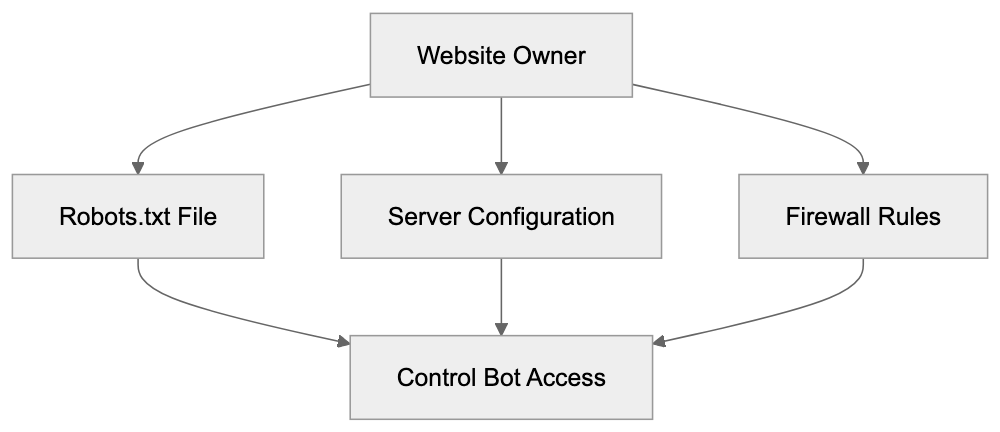
Website owners can block or manage Perplexity-Ads-Bot using various methods. The most common is modifying the robots.txt file located in your website’s root directory. To block the crawler completely, include these lines in robots.txt:
User-agent: PerplexityBot-Ads
Disallow: /
Crawler Management Methods:
To control access further, specify paths:
User-agent: PerplexityBot-Ads
Disallow: /private/
Disallow: /admin/
Alternatively, use server-level blocking through .htaccess files or server configurations to block by user-agent string or IP ranges. Some web application firewalls offer advanced bot management features to identify and block crawlers.
For redundancy, some owners prefer both robots.txt and server-level blocks. Note that blocking Perplexity-Ads-Bot does not impact Perplexity’s main search crawler, which requires separate blocking rules if desired. Many content management systems provide plugins to simplify bot management.
Comparison with Other Advertising Crawlers
Perplexity-Ads-Bot operates in a competitive field of advertising crawlers. Understanding how it compares to similar options helps website owners decide on crawler management.
| Crawler Name | Company | Primary Purpose | Respects robots.txt | Common Crawl Rate |
|---|---|---|---|---|
| Perplexity-Ads-Bot | Perplexity AI | Ad targeting data | Yes | Medium |
| AdsBot-Google | Ad quality verification | Yes | High | |
| facebookexternalhit | Meta | Link preview and ads | Yes | High |
| Twitterbot | Twitter/X | Link previews | Yes | Medium |
| LinkedInBot | Content previews | Yes | Medium | |
| BingPreview | Microsoft | Ad and preview data | Yes | Medium |
Google’s AdsBot is the most established, with many websites allowing it by default. Facebook’s crawler serves dual purposes, both for link previews and advertising data collection. These established crawlers often come with well-documented behaviors. Comparatively, Perplexity-Ads-Bot is newer and has less public documentation but follows similar protocols.
Server log reports suggest a moderate crawl rate. Some website owners note requests several times weekly, depending on content update frequency and site authority. Perplexity-Ads-Bot respects robots.txt directives, facilitating management through standard methods.
Impact on Website Performance and Resources
Every request by Perplexity-Ads-Bot consumes server resources, using bandwidth and processing power. Generally, this impact is minor. A few requests per week are negligible for most websites, but high traffic sites might observe a cumulative effect.
Monitoring server logs helps discern crawler activity patterns. If performance issues arise, blocking might become necessary. Some developers implement rate limiting for bots, permitting crawling while conserving resources. Many content delivery networks offer bot management features, filtering or limiting requests before reaching origin servers.
Data collection is another consideration. Each crawler visit means sharing your content with another company’s dataset. Some businesses see this data sharing as beneficial for visibility, while others prefer limitations. The choice greatly depends on your business model and data policies.
Privacy and Data Collection Considerations
Bot Management Strategy:

Perplexity-Ads-Bot collects publicly accessible web content without breaching security measures. However, “publicly accessible” doesn’t always mean intended for data collection. Website owners must consider how their information is exposed.
Collected data supports Perplexity’s advertising operations, including content categorization, topic analysis, and potentially AI model training. Detailed usage of this data remains undisclosed, concerning some operators. Unlike search crawlers enhancing traffic, ad crawlers prioritize benefits to platform operators without boosting SEO.
If privacy is vital to your content strategy, blocking advertising crawlers could be advisable, while still allowing search bots. Remember, robots.txt is a request, not enforcement. While legitimate companies respect it, malicious actors might ignore it, necessitating more robust measures like server-side blocking.
Best Practices for Managing Advertising Crawlers
Developing a crawler management strategy protects resources and healthfully balances beneficial relationships. Start by auditing which crawlers access your site, checking server logs for user-agent strings and patterns. Categorize crawlers by purpose.
Ensure you have a robots.txt file specifying your crawling preferences. Clearly state which bots can access which content, updating regularly as new crawlers appear. Document decisions for clarity among team members.
Monitor server performance metrics related to bot traffic, setting alerts for unusual activity. High request volumes from a single bot might signal problems. Use analytics tools to track bot interactions with your content, identifying areas of focused crawling.
Consider a tiered approach: allow search crawlers that drive traffic but block or rate-limit data-extractive advertising crawlers. Maintain a blocklist of known malicious crawlers. Test your rules to ensure correctness, catching syntax errors that could inadvertently permit or block access.
Stay informed about new crawlers. Join webmaster communities for information sharing. Staying proactive prevents surprises in server logs from unannounced bot activities.
Technical Implementation Examples
Below are practical examples for developers wanting to implement crawler blocking in common web server configurations:
Robots.txt blocking:
User-agent: PerplexityBot-Ads
Disallow: /Apache .htaccess blocking:
RewriteEngine On
RewriteCond %{HTTP_USER_AGENT} PerplexityBot-Ads [NC]
RewriteRule .* - [F,L]
Nginx configuration blocking:
if ($http_user_agent ~* (PerplexityBot-Ads)) {
    return 403;
}
These examples demonstrate different setup levels. Robots.txt is the simplest and most widely supported method. Server-level blocking gives stronger enforcement. Choose the technique suiting your technical infrastructure and requirements. Always test configuration changes in a staging environment first, as incorrect syntax can disrupt site functionality.
The Future of Advertising Crawlers
The advertising crawler landscape is rapidly evolving. More AI companies are deploying their own crawlers for advertising and data collection, increasing server loads and data usage considerations. Website owners must remain vigilant about bot access.
Perplexity-Ads-Bot exemplifies the growing category of specialized crawlers. As AI-driven advertising platforms expand, expect an increase in their number. Each company aims to establish its data collection pipeline, complicating crawler management.
Regulatory scrutiny on data practices may impact crawler operations. Privacy laws impose constraints on automated data collection, and how these regulations apply to crawlers is continuously evolving. Industry standards might emerge for crawler behavior, promoting a balanced web ecosystem. Website owners should engage in discussions regarding crawler governance and best practices.
Conclusion
Perplexity-Ads-Bot is an advertising crawler operated by Perplexity AI to support its advertising platform. The bot collects publicly accessible web content for ad targeting and content categorization. It identifies itself through a specific user-agent string and respects robots.txt directives. Website owners can block or manage the crawler using standard web protocols. The decision to allow or block depends on resource considerations and data sharing preferences. Compared to established advertising crawlers from Google or Meta, Perplexity-Ads-Bot is relatively new but follows similar operating patterns. Understanding how this crawler works helps developers and website administrators make informed decisions about bot management. As advertising crawlers proliferate, having a clear strategy for managing them becomes increasingly important for maintaining server performance and controlling data usage.
Frequently Asked Questions
What data does Perplexity-Ads-Bot collect?
Perplexity-Ads-Bot collects publicly accessible web content to support its advertising operations, including content categorization and topic analysis. This data is used to match relevant ads to specific website content.
How can I check if Perplexity-Ads-Bot is visiting my site?
Website administrators can check server logs for the user-agent string "PerplexityBot-Ads/1.0" to identify requests from this crawler. Monitoring these logs can help you understand the frequency and patterns of visits.
What should I do if Perplexity-Ads-Bot slows down my website?
If you notice performance issues, you can block or rate-limit Perplexity-Ads-Bot using the robots.txt file or server-level configurations. Implementing these measures can help manage server resources effectively.
Do I need to block Perplexity-Ads-Bot if I already have a robots.txt file?
A robots.txt file provides a request for bots to follow, but it is not enforceable. If privacy or server load is a concern, and you wish to prevent this bot from accessing your site, consider blocking it through server rules as well.
How does Perplexity-Ads-Bot compare to other advertising crawlers?
Perplexity-Ads-Bot operates similarly to other advertising crawlers like Google’s AdsBot and Facebook’s crawler, all respecting robots.txt directives. However, Perplexity-Ads-Bot is newer and has less public documentation regarding its specific operations.
What are the best practices for managing web crawlers?
Best practices include regularly auditing which crawlers access your site, maintaining an up-to-date robots.txt file, and monitoring server performance metrics. A tiered approach may involve allowing search engines while blocking data-extractive advertising crawlers.
Is there a risk in allowing Perplexity-Ads-Bot access to my site?
Allowing access means sharing your content with Perplexity's dataset, which can be beneficial for visibility but may raise concerns about data sharing. Evaluate your business model and data policies to determine if this aligns with your goals.
Track Your AI Visibility
See how AI chatbots like ChatGPT, Claude, and Perplexity discover and recommend your brand.