Understanding Proximic: Comscore's Content Classification Crawler
Complete guide on Proximic crawler by Comscore. Learn about content classification, brand safety, blocking methods, and advertising implications.
What is Proximic and Why Does it Matter
Proximic is a web crawler operated by Comscore, known for its crucial role in advertising technology. This Comscore crawler regularly visits websites to classify content for contextual targeting and brand safety purposes. By scanning topics, themes, and sentiment, it helps advertisers decide ad placements, ensuring brands don’t appear next to inappropriate content.
Content classification bots like Proximic are vital because digital advertising demands context, as highlighted by Comscore’s AI-powered Data Partner Network. Advertisers need their messages on relevant pages to avoid problematic content. The brand safety crawler analyzes text, images, and page structure to categorize site content, with Comscore selling this data to advertising platforms. Thus, Proximic directly impacts your monetization potential and advertisers’ perception of your content.
What Exactly is the Proximic Crawler
Proximic’s Role in Digital Advertising:
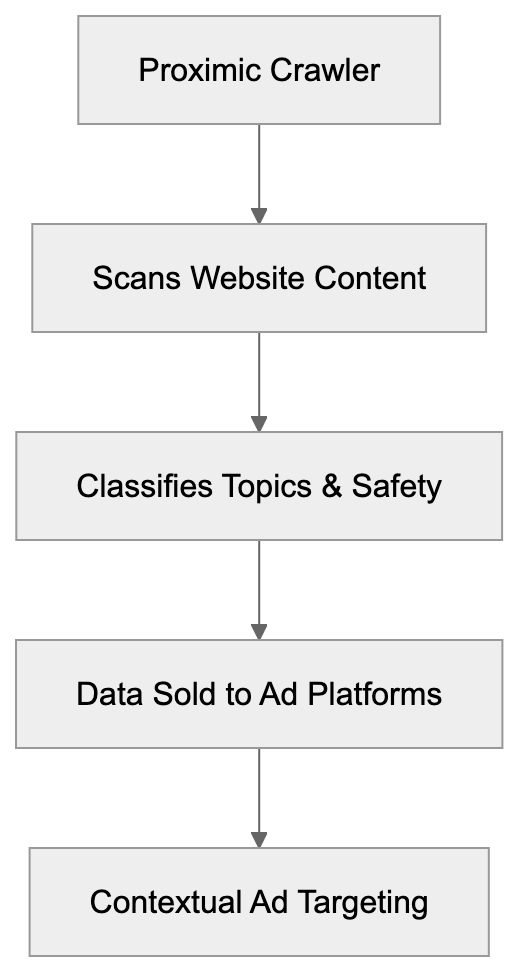
Proximic functions as an automated bot, identifying itself through a specific Proximic user agent string. Upon visiting your page, it downloads HTML content and uses machine learning algorithms for analysis. These algorithms detect topics, sentiment, and categorize content into advertising-friendly segments.
The technology employs natural language processing for a deep understanding of page context. It goes beyond keyword detection to analyze overall meaning and tone. Proximic can identify if a page discusses finance, health, or entertainment, while also assessing content quality and brand safety risks. Pages with flagged content like profanity or controversial topics are distinguished from family-friendly content.
Comscore acquired Proximic to enhance its advertising and media measurement services. The data feeds into contextual advertising platforms, allowing ads to be placed based on page content rather than user tracking, which gained importance as privacy regulations limited cookie-based tracking.
Why Proximic Exists and Its Core Purpose
Content Classification Process:

Proximic’s core purpose is facilitating contextual advertising at scale. With privacy regulations phasing out third-party cookies, advertisers shifted back to contextual targeting—placing ads based on content rather than behavior.
Proximic simplifies advertisers’ challenges by automating page content classification. For example, a fitness equipment advertiser can target health pages, while financial services can find investment-related content. Without Proximic, contextual targeting at internet scale is impossible.
Proximic also addresses brand safety, assisting companies in protecting their reputation by avoiding risky content like adult themes or hate speech, as discussed in Comscore’s acquisition of Proximic. Advertisers use these safety scores for creating exclusion lists.
The shift towards privacy-focused advertising increases Proximic’s value, as it offers a privacy-compliant solution without needing personal data.
How Companies and Users Interact with Proximic
Comscore sells Proximic data to various sectors. Advertising platforms integrate this data for contextual targeting, demand-side platforms find relevant inventory, and supply-side platforms categorize publisher inventory. Ad exchanges use it to enhance marketplace effectiveness.
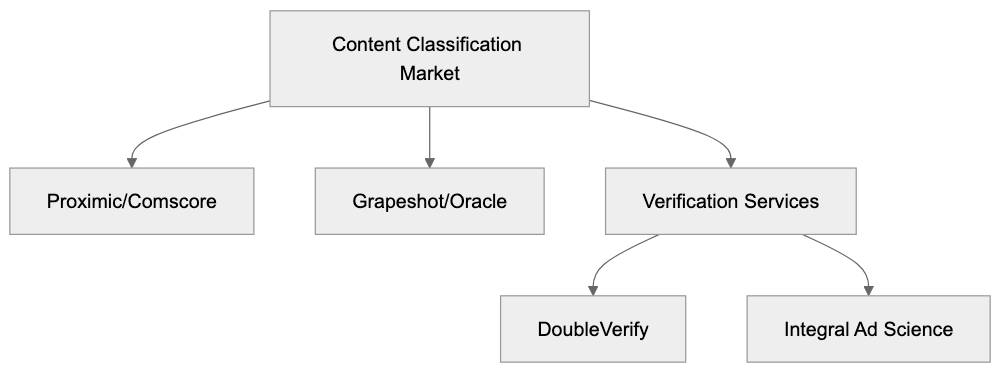
Brand safety vendors frequently use Proximic data. Firms like DoubleVerify and Integral Ad Science combine it with their scanning for comprehensive brand safety solutions, enabling advertisers to avoid placing ads on problematic pages.
Publishers may not directly use Proximic, but its classifications impact how platforms value their inventory. Brand-safe sites with premium categories get higher ad rates, while questionable ones struggle. Developers encounter Proximic through server logs, as the crawler uses a distinctive user agent string. Site owners can block or allow it via robots.txt files or server settings.
Identifying and Managing Proximic Crawler
The Proximic content classification bot identifies itself with specific user agent strings, such as “Mozilla/5.0 (compatible; proximic; +https://www.comscore.com/Web-Crawler).” It respects standard crawling protocols and seldom overloads servers.
To block Proximic, you can modify your robots.txt with:
User-agent: proximic
Disallow: /
Key Market Players Comparison:
This directive tells the brand safety crawler not to access any pages, though blocking might reduce ad revenue by excluding your site from contextual campaigns.
Server-level configurations also block Proximic using .htaccess in Apache or configuration files in Nginx, though IP range changes require maintenance. Alternatively, selective blocking allows site participation in contextual advertising by blocking only sensitive sections.
Proximic Compared to Similar Crawlers
Proximic is not the only player in this space. Here’s a comparison:
| Crawler | Owner | Primary Purpose | Brand Safety Focus | Market Position |
|---|---|---|---|---|
| Proximic | Comscore | Content classification, contextual targeting | High | Strong in US and Europe |
| Grapeshot | Oracle | Contextual intelligence, brand safety | High | Integrated with Oracle Advertising |
| Peer39 | Peer39 (acquired by Oracle) | Page-level targeting, brand safety | Very High | Enterprise-focused |
| DoubleVerify Bot | DoubleVerify | Brand safety verification | Very High | Verification leader |
| IAS Bot | Integral Ad Science | Quality and safety measurement | Very High | Competes with DoubleVerify |
Proximic stands out through Comscore’s broader measurement capabilities, combining crawling data with audience measurement and analytics for a comprehensive view.
Grapeshot, now part of Oracle, offers contextual classification in real-time, while Peer39 focuses on pre-bid classifications for premium publishers. They prioritize accuracy over scale compared to broader crawlers.
DoubleVerify and Integral Ad Science emphasize verification, offering some contextual targeting data, but their core business remains verification. The industry sees consolidation around major advertising technology companies like Oracle and IBM acquiring other players.
Industry Implications and Technical Considerations
The rise of content classification crawlers like Proximic stems from broader advertising shifts toward contextual methods due to privacy regulations limiting user tracking, as noted in Comscore’s announcement of a new US patent for livestream contextual intelligence technology.
Web developers must consider site architecture as it affects crawler content interpretation. Proper HTML and server-side rendering ensure accurate classification, while SEO teams should understand how language and topics affect advertising value.
Server performance is another factor, as multiple crawler visits can increase load. Monitoring activity and implementing rate limiting for bots helps mitigate issues.
Machine learning improvements make classification more sophisticated, distinguishing better between controversial topics and actual risky content. Image and video analysis are expanding, with continued investments from companies like Proximic.
Transparency remains a point of discussion, as detailed classification criteria are often proprietary. Industry groups advocate for openness to help publishers understand and influence classifications.
Conclusion
Proximic is essential in modern advertising infrastructure, operating as a brand safety crawler within Comscore’s arsenal for content classification and contextual targeting. As privacy regulations restrict user tracking, the reliance on contextual solutions like Proximic grows. The crawler aids advertisers in finding appropriate inventory while safeguarding brands.
Understanding Proximic’s impact is crucial for website owners, as classifications influence advertising revenue and inventory valuation. Blocking it has implications, but for advertising-driven sites, allowing classification crawlers generally benefits the business.
Competitors like Oracle, IBM, and DoubleVerify offer similar services, all serving the core goal of privacy-compliant advertising. The industry favors contextual approaches, making knowledge of these systems key for content strategy and technical setup.
Frequently Asked Questions
What types of data does Proximic analyze on my website?
Proximic analyzes HTML content, images, and page structure to determine the topics, sentiment, and overall context of your site. This helps create a contextual profile that informs ad placements while assessing brand safety risks.
Can I prevent the Proximic crawler from accessing my website?
Yes, you can block the Proximic crawler by modifying the robots.txt file or through server-level configurations. However, be aware that blocking it may limit your participation in contextual advertising opportunities, potentially impacting ad revenue.
How does Proximic impact my site's advertising revenue?
Proximic's content classifications influence how advertising platforms value your site's inventory. Sites that are deemed brand-safe with quality content tend to attract higher ad rates, while those with flagged content may struggle to secure lucrative advertising deals.
What are the benefits of allowing Proximic to access my site?
Allowing Proximic to classify your site's content can enhance your visibility in advertising networks, leading to better-targeted ad placements and potentially increased revenue. It supports the trend towards privacy-compliant advertising while helping brands ensure placements align with their values.
How does Proximic compare to other content classification crawlers?
Proximic is distinguished by its integration with Comscore's advertising and media measurement services. It provides robust content classification and brand safety capabilities, while competitors like Grapeshot and Peer39 focus specifically on contextual intelligence and brand safety verification.
What should I consider to optimize my site for Proximic's classification?
To optimize your site for Proximic, ensure your HTML is well-structured and content is clear and relevant. Engaging in SEO best practices can enhance how your site is interpreted by crawlers, ultimately benefiting your advertising value.
How frequently does Proximic crawl websites?
The frequency of Proximic's crawling can vary based on your site's content updates and its importance in the ad marketplace. Regularly updated content might lead to more frequent crawling, impacting how promptly your site's classifications reflect new information.
Track Your AI Visibility
See how AI chatbots like ChatGPT, Claude, and Perplexity discover and recommend your brand.