Qwantify: French EU Privacy Search Crawler Explained
Complete guide to Qwantify, the privacy-first French search crawler. Learn its features, purpose, and EU data sovereignty approach.
Qwantify: A Privacy-Focused Search Crawler
Search engines rely on crawlers to index the web. Qwantify is the web crawler developed by Qwant, the French privacy-focused search engine. Unlike Google or Bing crawlers that collect extensive user data, Qwantify operates with a privacy-first philosophy. It was built to support European data sovereignty and offer an alternative to US-based search technology. The tool respects user privacy by not tracking personal information or building advertising profiles, as emphasized by Qwant’s privacy policy. For web developers and SEO experts, understanding how Qwantify works is crucial, as it represents a different approach to web indexing. The crawler follows standard protocols like robots.txt and operates under strict EU privacy regulations, including GDPR. Small business owners targeting European markets should know about this crawler, as Qwant is gaining traction in France and other EU countries.
What is Qwantify?
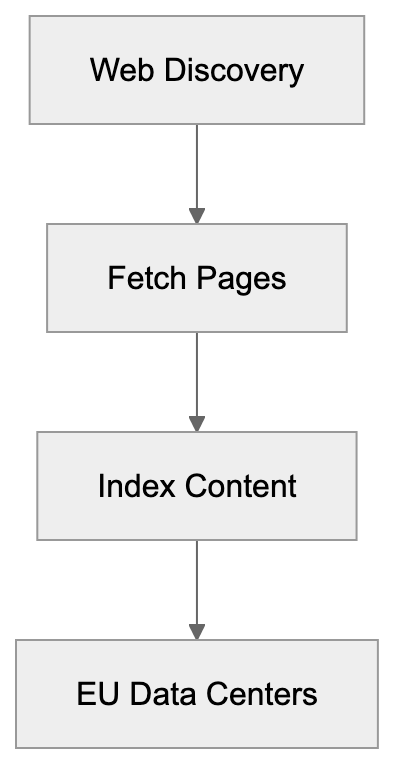
Qwantify is the web crawler operated by Qwant, a French search engine company founded in 2013. The crawler identifies itself with a user agent string containing “Qwantify” when visiting websites. Its primary job is to find, fetch, and index web pages for Qwant’s search engine database. Similar to Googlebot or Bingbot, it follows links from page to page and analyzes content. However, Qwantify was designed with privacy as a core principle from the start, avoiding the collection of personal data about website visitors or tracking user behavior across sites. Web servers see Qwantify requests coming from IP addresses owned by Qwant’s infrastructure. The bot respects standard web protocols, including robots.txt files and crawl-delay directives. Website owners can control how Qwantify accesses their content using these standard methods. While the crawler primarily focuses on indexing content for users in France and Europe, it also crawls international websites.
Qwantify Crawler Operation:
Why Qwantify Exists and Its Purpose
Qwant created Qwantify to build an independent European search engine infrastructure. The main purpose is to reduce EU dependence on American tech companies for search services, addressing data sovereignty concerns that many European governments and citizens have. When users search on Google or Bing, their data often gets processed on US servers under US laws. Qwant offers an alternative where European user data stays within the EU legal jurisdiction. Supported by the French government as part of broader digital sovereignty initiatives, Qwantify enables Qwant to build its own search index rather than relying on other companies’ APIs or data. This independence is crucial for offering a truly private search experience. The crawler helps Qwant discover new content, update existing pages in their index, and understand web structure. For content marketers and SEO experts targeting French or European audiences, this represents an alternative search engine to optimize for. The purpose extends beyond technical functionality to represent a political and social stance on digital privacy rights.
How Qwantify is Used
Qwant uses Qwantify to continuously scan and index web content for its search engine. The crawler regularly visits websites to identify new pages and detect changes to existing content. When someone searches on Qwant.com, results derive from the index built by Qwantify. The company processes crawled data in data centers located within the European Union, intentionally complying with GDPR and keeping data under EU privacy laws. Website owners can verify Qwantify visits by checking their server logs for the Qwantify user agent. The crawler frequency depends on various factors, including website authority, update frequency, and crawl budget allocation. High-traffic news sites might encounter Qwantify frequently, while smaller sites get crawled less often. Businesses targeting French-speaking markets should ensure Qwantify can access their content properly by avoiding robots.txt blocks and ensuring pages load correctly for the crawler. Marketing professionals focused on European search should monitor Qwantify crawl patterns, similar to tracking Googlebot. Web developers can use standard SEO practices like XML sitemaps to help Qwantify find important pages. The crawler supports JavaScript rendering, though static HTML gets processed faster.
Key Facts About Qwantify
- Launch: Qwant launched publicly in 2013 and has been developing Qwantify since then.
- Headquarters: Paris, France; operating under French and EU law.
- User Focus: Does not use tracking cookies or build user profiles for advertising.
- User Base: Claims over 10 million monthly users, a smaller number compared to Google’s billions.
- Index Size: Crawls billions of web pages, but with a smaller index than major competitors like Google or Bing.
- Clearness: Clearly identifies itself in user agent strings for easy webmaster recognition.
- Funding: Received investments from the French government and European investors.
- Indexing Approach: Previously partnered with Microsoft Bing for some search results but now focuses on independent indexing.
- Webmaster Tools: Allows website owners to submit sitemaps and request recrawls, respecting standard meta tags like noindex and nofollow.
- Crawl Rates: Operates with lower crawl rates than Googlebot, leading to longer indexing times for new content.
Comparison with Alternative Search Crawlers
Privacy-Focused Search Architecture:

Several privacy-focused and alternative search engines exist alongside Qwant. Here’s how Qwantify compares to other crawlers:
| Crawler | Company | Privacy Focus | Index Size | Primary Market |
|---|---|---|---|---|
| Qwantify | Qwant (France) | Very High | Medium | EU, France |
| Googlebot | Google (USA) | Low | Very Large | Global |
| Bingbot | Microsoft (USA) | Medium | Large | Global |
| DuckDuckBot | DuckDuckGo (USA) | High | Small | Global |
| Yandex Bot | Yandex (Russia) | Low | Large | Russia, CIS |
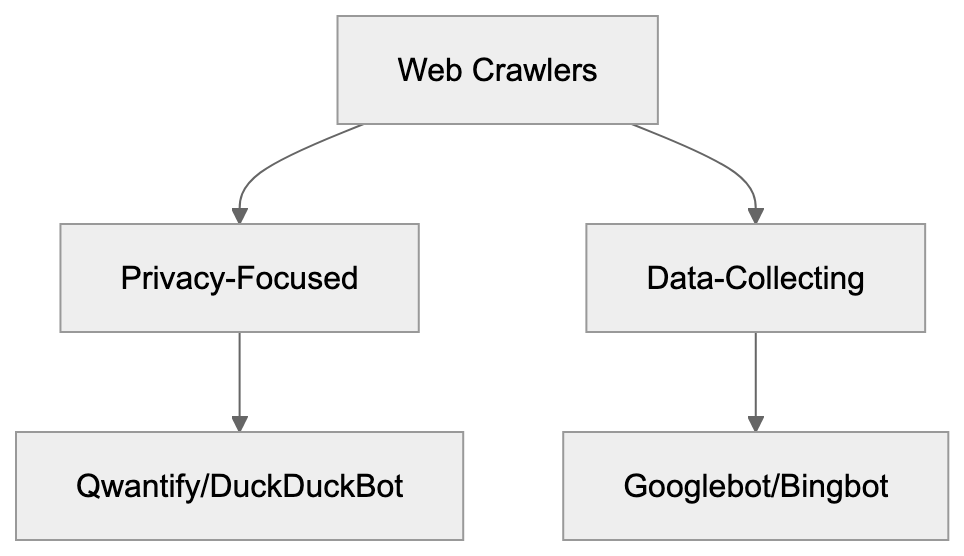
Googlebot remains the most comprehensive crawler with the largest index and fastest discovery times, but it collects significant amounts of data for Google’s advertising business. Bingbot is the second-largest, powering several search engines, including Yahoo. Microsoft has improved privacy features, but still collects substantial user data. DuckDuckBot, like Qwantify, focuses on privacy but relies heavily on Bing’s index. Yandex Bot is dominant in Russian-language content but offers minimal privacy protections. Qwantify’s unique position as the only major EU-based privacy-focused crawler makes it significant for businesses targeting European markets. It may be less sophisticated than Googlebot in understanding complex JavaScript or processing certain content types, but its privacy approach and EU focus are strategically important for content marketers in Europe.
Technical Specifications and Webmaster Guidance
Qwantify follows robots.txt directives and standard exclusion protocols. Webmasters can block or allow the crawler using the “Qwantify” user agent name in their robots.txt file. The crawler respects crawl-delay settings, though specific delay values should be tested. Qwant offers a verification method for website owners through its webmaster tools platform. Website owners can submit sitemaps in XML format to enhance content discovery. The crawler processes standard HTML, CSS, and JavaScript, though rendering may differ from Google’s capabilities. Page speed affects crawl effectiveness, so faster-loading pages typically get crawled more thoroughly. Qwantify assigns crawl budgets based on factors like domain authority and content freshness. Sites with frequent updates and good user engagement signals may receive higher crawl rates. The crawler originates from IP ranges published by Qwant for webmaster reference. Blocking these IPs will prevent Qwantify from accessing your content. For international sites, hreflang tags help Qwantify understand language and regional targeting. Structured data markup using Schema.org formats can improve how Qwantify interprets page content. Although it does not support all the advanced features of Googlebot, it covers essential indexing needs. Server errors like 500 status codes prompt Qwantify to retry later, while 404 errors signal content removal.
Privacy Implications and EU Data Sovereignty
Qwantify represents a practical application of EU data sovereignty principles. When the crawler indexes content, all processing occurs within EU borders under GDPR jurisdiction. This is critical because European data protection laws are stricter than those in other regions. User searches on Qwant are not linked to personal profiles or advertising identifiers. The company’s privacy policy explicitly states it does not track users or sell data to third parties. For website owners, this implies that Qwantify crawl data remains within a privacy-compliant infrastructure. The EU has raised concerns about dependence on US tech companies for vital digital infrastructure. Search engines are strategic assets as they control information access. Qwant and Qwantify are part of France’s response to these sovereignty concerns, financially supported by the French government to ensure a European alternative exists. Other EU countries have shown interest in promoting Qwant as a privacy-respecting option. From a business perspective, companies handling sensitive European data may prefer search visibility through privacy-focused engines. Marketing professionals should recognize that Qwant’s user base tends to be more privacy-conscious. This demographic may respond differently to certain types of content or advertising approaches. The privacy focus also means less data is available to webmasters compared to Google Analytics or Search Console.
Improving Content for Qwantify
SEO experts should apply standard improvement practices for Qwantify with some adjustments. The crawler values quality content, clear site structure, and mobile responsiveness like other search engines, but may weigh certain signals differently than Google. Given Qwant’s European focus, content in French, German, Italian, and other EU languages performs particularly well. Local relevance for European markets can boost visibility in Qwant results. The crawler seems to prioritize informational content over commercial pages in some cases. Technical SEO basics like proper heading structure, meta descriptions, and title tags all apply. Improving site speed benefits user experience and crawl effectiveness. Qwantify may have less sophisticated understanding of complex JavaScript applications compared to Googlebot. Using server-side rendering or static HTML for important content ensures better indexing. Internal linking helps Qwantify find pages and understand site hierarchy. Clean URL structures without excessive parameters make crawling more effective. Since Qwant emphasizes privacy, avoiding aggressive tracking scripts may align better with their philosophy. Website owners should monitor their server logs to verify Qwantify is crawling important sections. If crawl rates seem low, submitting an updated sitemap can help. The crawler may take longer to index new content than Google, so patience is necessary. Content marketers should not expect immediate visibility after publishing.
Comparison of Search Crawler Approaches:
Market Position and Future Outlook
Qwant holds a small but growing share of the European search market. In France, the search engine has achieved roughly 0.5-1% market share, depending on measurement methods. While this is significantly behind Google’s dominant position, it represents millions of searches monthly. The French government and some French companies have made Qwant their default search option. European institutions have shown interest in supporting independent search technology. Qwantify’s development continues with regular updates to enhance crawling capabilities. The crawler faces challenges competing with Google’s massive infrastructure and AI capabilities. Building a complete web index requires enormous computational resources and ongoing investment. Although Qwant has faced financial challenges and restructuring, it continues to operate with investor backing. Growing concerns about big tech dominance may drive more users toward privacy-focused alternatives. Regulations like GDPR and potential future EU digital sovereignty laws could boost Qwant’s position. For businesses and developers, Qwantify offers a hedge against complete dependence on Google. Having visibility in alternative search engines provides traffic diversification. The crawler’s importance may grow if EU regulatory pressure on US tech companies increases. Marketing professionals targeting European audiences should, at minimum, ensure Qwantify can access their content properly. Active improvement may be sensible for businesses heavily focused on French or EU markets.
Conclusion
Qwantify is the web crawler for Qwant, the French privacy-focused search engine. The crawler was built to support European data sovereignty and provide an alternative to US-based search technology. It operates under strict EU privacy regulations and does not track users or collect personal data for advertising. Website owners can manage Qwantify access using standard protocols like robots.txt and sitemaps. While the crawler has a smaller index and lower crawl rates compared to Googlebot, it fills an important niche for privacy-conscious users. For SEO experts and content marketers targeting European markets, understanding Qwantify is valuable. The tool represents both a technical crawler and a broader movement toward digital independence in Europe. Web developers should make sure their sites are accessible to Qwantify using standard improvement practices. Although Qwant’s market share remains small, its strategic importance for EU data sovereignty continues to grow. Businesses with European audiences should monitor Qwantify crawl patterns and maintain visibility in Qwant’s search results alongside major search engines.
Frequently Asked Questions
What makes Qwantify different from other web crawlers?
Qwantify is designed with a strong focus on user privacy, unlike most crawlers that track user data. It operates under EU privacy laws, ensuring that search data stays within the EU and complies with GDPR. This structure appeals to users who prioritize data sovereignty and privacy.
How can website owners ensure Qwantify can properly access their site?
Website owners can control Qwantify's access using standard protocols like the robots.txt file, which specifies which pages can be crawled. Ensuring that important content is not blocked and that the site loads quickly can improve crawl rates.
What types of content does Qwantify prioritize for indexing?
Qwantify tends to prioritize informational content over commercial pages, especially in languages common in the EU, such as French. Providing quality, relevant content along with clear site structures helps improve visibility in Qwant's search results.
How does Qwantify's crawl rate compare to that of Googlebot?
Qwantify usually operates with lower crawl rates than Googlebot, which may lead to slower indexing times for new content. However, the focus is more on quality and compliance with EU privacy standards rather than the speed of data collection.
Is there a way for webmasters to verify if Qwantify has crawled their site?
Yes, webmasters can check their server logs for requests that come from the Qwantify user agent string. This can help confirm whether and how frequently Qwantify is accessing their website.
What are the implications of using Qwantify for businesses handling sensitive data?
For businesses operating within the EU or dealing with sensitive data, using Qwantify can enhance compliance with local data protection laws. Since it does not track users or collect personal data for advertising, it provides a more privacy-focused alternative for search visibility.
How can marketers optimize content specifically for Qwantify?
Marketers should focus on creating quality and relevant content with clear structures, avoiding complicated JavaScript applications that could hinder indexing. Ensuring mobile responsiveness and fast loading times, along with submitting updated sitemaps, can also improve optimization for Qwantify.
Track Your AI Visibility
See how AI chatbots like ChatGPT, Claude, and Perplexity discover and recommend your brand.