Exa AI: Complete Guide to Neural Search Engine for Developers
Learn how Exa AI's neural search engine works, its key features, API integration, and how it helps build better AI applications with semantic search.
What is Exa AI?
Exa AI, formerly known as Metaphor Systems, is a sophisticated neural search engine, as reported by Y Combinator. Designed with an API-first approach, it enables developers to easily incorporate smart search capabilities into their applications. Unlike traditional search engines that merely focus on keyword matching, Exa AI excels in semantic search by understanding the context and meaning behind content, as detailed in Exa’s official documentation.
Key Features of Exa AI:
- Neural search technology
Visual Overview of Exa AI Features
Here is a visual representation of the key features that make Exa AI a leader in neural search technology.

- API-first design
- Real-time web search
- Support for AI agents
- RAG application tools
How Exa AI Works
Exa AI employs neural networks to comprehend web content, interpreting text much like a human would, as explained in Exa’s blog post. This capability results in more refined search results aligned with user intent.
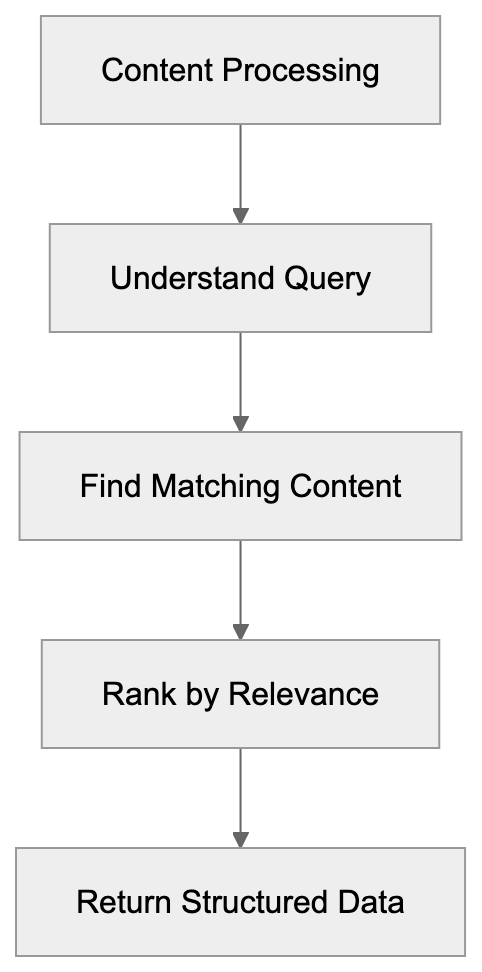
Search Process Steps:
- Content processing with neural networks
- Understanding the meaning of search queries
- Finding matching content based on meaning
- Ranking results by relevance
- Returning structured data via API
Simplified Search Process in Exa AI
The diagram below outlines the main steps involved in Exa AI’s search process.
The API provides clean, structured data, which is easily integrable into applications, as described in Exa’s API documentation. Developers receive search results in JSON format, complete with all necessary metadata.
Use Cases and Applications
Exa AI is versatile, supporting a variety of applications:
AI Agents
AI agents leverage Exa AI to access up-to-date information, allowing them to provide more accurate responses to users. The real-time search feature ensures information remains current.
RAG Applications
RAG (Retrieval-Augmented Generation) applications benefit from Exa AI’s ability to retrieve relevant content. This enhances AI responses with the most current and pertinent data available through semantic search.
Content Research
Content teams utilize Exa AI for discovering related articles and researching topics. The neural search capability aids in understanding context and locating pertinent sources.
How AI Agents Utilize Exa AI
A diagram explaining how AI agents leverage Exa AI for accessing real-time information.

Market Analysis
Businesses use Exa AI to monitor market trends and competitors’ content, supported by real-time search capabilities to maintain updated market data.
API Integration
Integrating Exa AI into your project is straightforward using the REST API, which accepts JSON and returns structured data.
Basic Integration Steps:
- Obtain an API key from Exa AI
- Add the API key to your requests
Diagram of Exa AI Integration
Here is a basic diagram showing the integration steps for Exa AI via REST API.
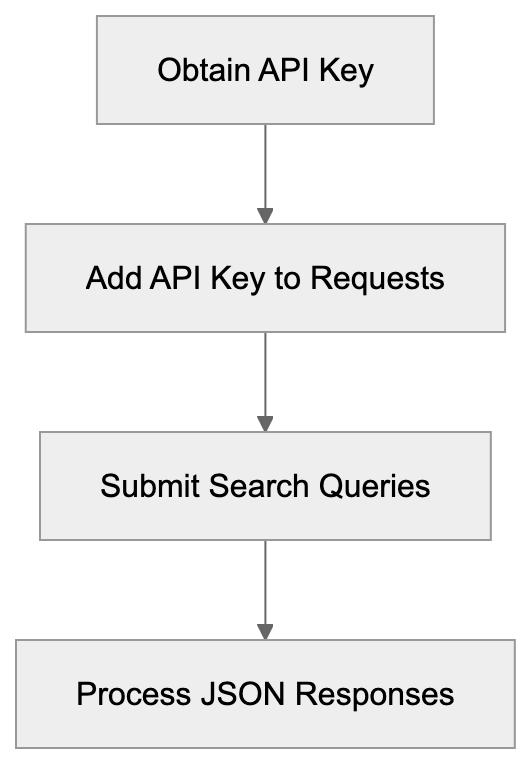
- Submit search queries via POST requests
- Process JSON responses within your application
import requests

headers = {'x-api-key': 'your-api-key'}

response = requests.post(
    'https://api.exa.ai/search',
    headers=headers,
    json={'query': 'your search query'}
)
Pricing and Plans
Exa AI offers distinct plans to suit various requirements:
Free Tier:
- 100 searches per month
- Basic API access
- Standard response time
Pro Plan:
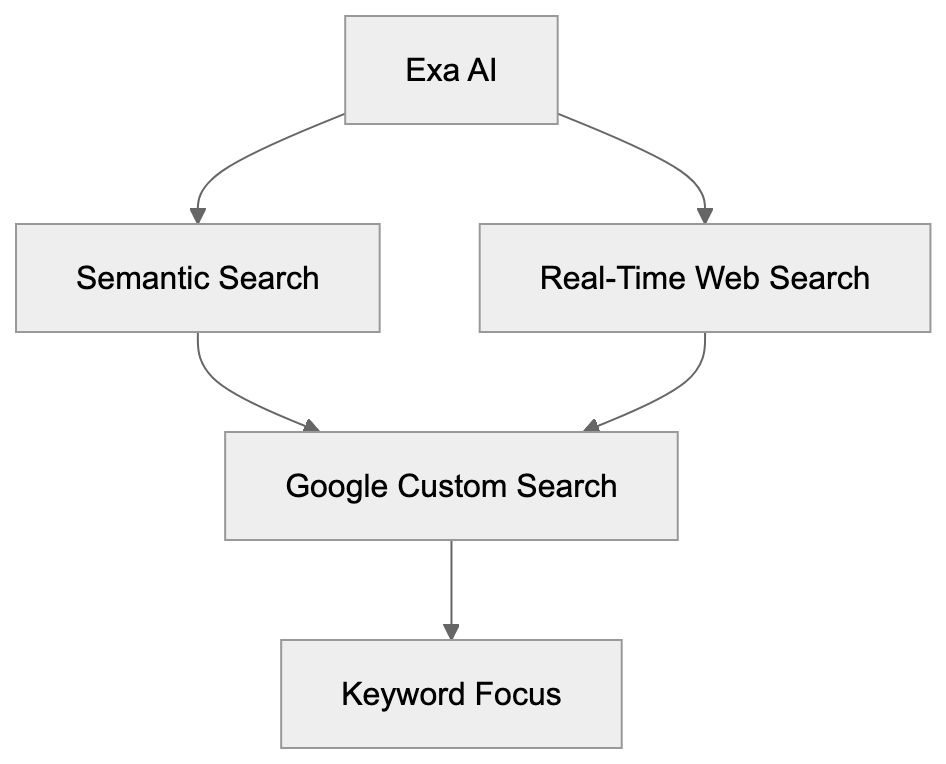
Comparison of Search APIs
The following diagram compares the main features of Exa AI with other popular search APIs.
- 10,000 searches per month
- Full API features
- Fast response time
- Priority support
Enterprise:
- Custom search limits
- Dedicated support
- Custom features
- SLA guarantees
Comparison with Other Search APIs
Google Custom Search:
- Focused on keyword search
- Larger index, but less semantic understanding
- Higher costs for large volumes
Algolia:
- Ideal for website searches
- Limited to owned content
- Does not support real-time web search
Elasticsearch:
- Self-hosted option
- Requires own content index
- More setup work necessary
Best Practices
Maximize Exa AI’s effectiveness with these best practices:
-
Use specific queries:
- Write clear search terms
- Include essential context
-
Handle responses well:
- Check status codes
- Manage rate limits
- Cache results when possible
-
Monitor usage:
- Track API calls
- Observe rate limits
- Review search patterns
-
Optimize costs:
- Cache common searches
- Batch related queries
- Use filters effectively
Technical Details
Important technical details about Exa AI:
API Specs:
- REST API
- JSON responses
- HTTPS required
- Rate limits apply
- Pagination support
Response Format:
- Structured JSON
- Metadata included
- Error handling
- Status codes
- Rate limit information
Security:
- API key required
- HTTPS only
- Rate limiting
- Usage monitoring
Summary
Exa AI offers powerful neural search capabilities through a user-friendly AI API. Its semantic understanding delivers more accurate results than traditional search engines. Ideal for AI development, RAG applications, and content research, Exa AI’s features include smart semantic search, easy API integration, real-time data, and cost-effective plans. The API-first approach simplifies integration into existing applications. Choose Exa AI for projects demanding advanced neural search and AI search engine features.
Frequently Asked Questions
What are the main advantages of using Exa AI over traditional search engines?
Unlike traditional search engines that rely on keyword matching, Exa AI uses neural search technology to understand the context and meaning behind user queries. This results in more relevant and accurate search results aligned with user intent.
How do I get started with integrating Exa AI into my application?
To start integrating Exa AI, you need to obtain an API key from their service. After that, follow the steps to include the API key in your requests and submit search queries using the provided REST API documentation.
What are the limitations of the free tier of Exa AI?
The free tier allows for 100 searches per month with basic API access. This plan is designed for evaluation and learning but may not be sufficient for larger applications requiring more frequent searches.
Can Exa AI be used for real-time data retrieval?
Yes, Exa AI's real-time web search capability allows applications to access the most current information available, making it suitable for use cases that rely on timely data.
What types of applications can benefit from Exa AI?
Exa AI is versatile and can enhance AI agents, support RAG applications, assist in content research, and provide insights for market analysis. Its semantic search capability makes it valuable across various domains.
How can I optimize my usage of Exa AI to control costs?
To optimize costs, consider caching common searches, batching related queries, and using filters effectively. Monitoring your API calls and observing rate limits can also help in managing expenses.
Is Exa AI secure to use for application development?
Exa AI is designed with security in mind, requiring an API key for access and using HTTPS for data transmission. Additionally, it has rate limiting and usage monitoring to prevent abuse.
Track Your AI Visibility
See how AI chatbots like ChatGPT, Claude, and Perplexity discover and recommend your brand.