Glean Enterprise AI Search Platform Guide for 2024
Complete guide to Glean AI search platform. Learn about $4.6B valuation, 100+ integrations, Fortune 500 clients, security features and pricing.
What is Glean and Why Enterprise Search Matters
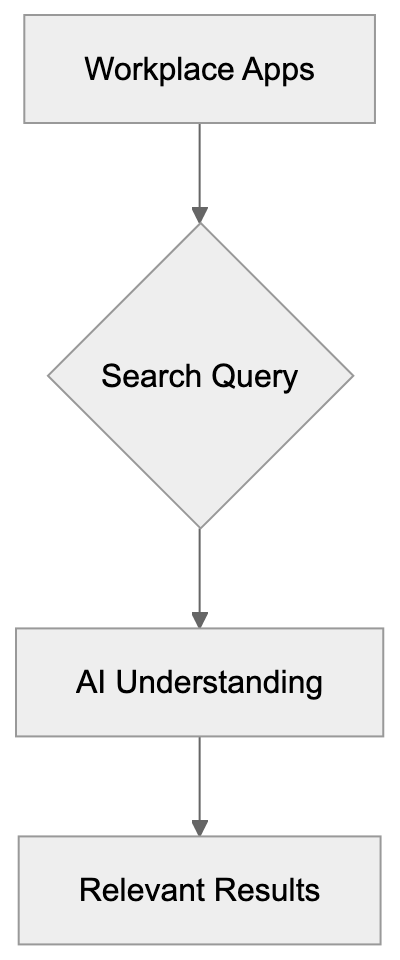
Glean is an enterprise AI search platform that helps companies locate information across all workplace apps and data sources, offering a unified search experience across multiple enterprise tools and platforms. Think about how many tools your company uses daily: Slack for messaging, Google Drive for documents, Salesforce for customer data, and Jira for project tracking. Each tool stores crucial information, but finding what you need gets harder as companies grow.
Traditional enterprise search solutions have failed to solve this problem effectively. Employees waste hours searching for documents, messages, and data scattered across different platforms. Glean addresses this by connecting to over 100 workplace applications, using AI search tools to understand what users are actually looking for. With a $4.6 billion valuation in 2024, Glean works with Fortune 500 companies that need better enterprise knowledge management solutions, as reported by Reuters.
Why Enterprise Search Platforms Like Glean Exist
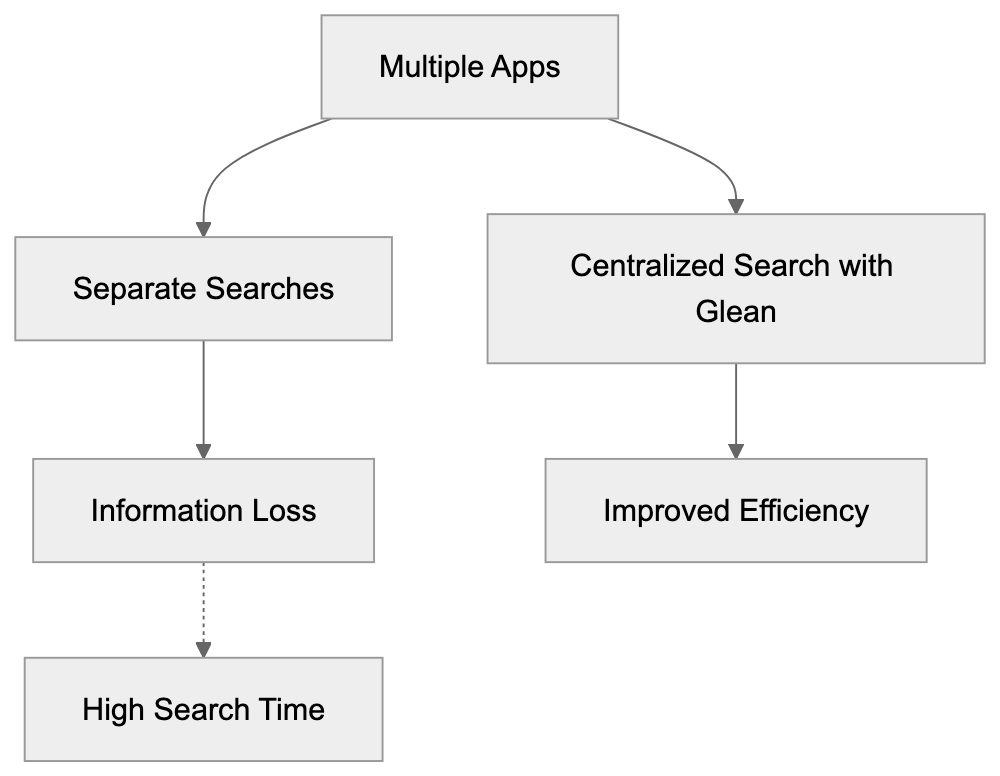
The average employee uses 9 to 10 different applications at work. Each application has its own search function, but they don’t communicate with each other. When someone needs information, they often don’t remember where it was saved or shared—email, Slack, Google Doc, or a Confluence page?
This fragmentation costs companies real money. Studies show employees spend nearly 2 hours each day searching for information and documents, which is 20% of the work week spent just looking for things instead of doing actual work, according to a report by Forrester Consulting.
Glean exists to fix this exact problem. Instead of searching in 10 different places, employees search once, and Glean looks everywhere. The platform uses AI to understand context, ranking results based on what’s most relevant to each specific user. Someone in sales sees different results than someone in engineering when they search for the same term.
Enterprise Search Environment:
How Glean Works and Its Core Features
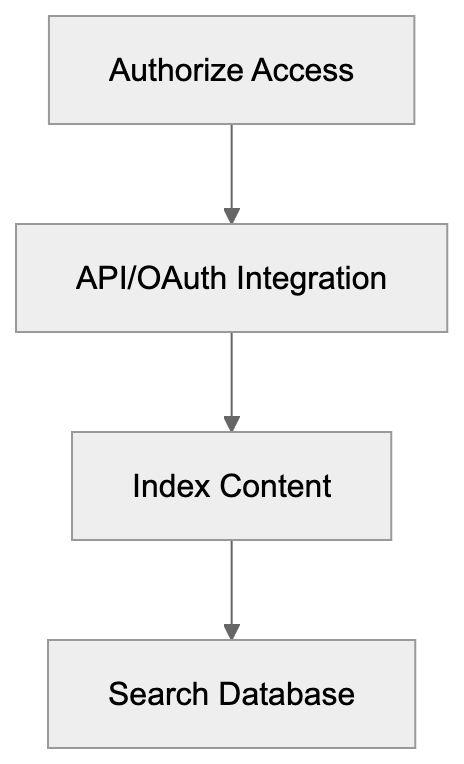
Glean connects to your company’s existing tools through pre-built Glean integrations. Once connected, it indexes all content from these sources, creating a searchable database while respecting existing permissions. If you don’t have access to a document in Google Drive, you won’t see it in Glean search results either.
The search uses natural language processing to understand queries, allowing you to ask questions like a normal person instead of using specific keywords. The enterprise AI assistant feature goes beyond basic search. It can summarize documents, answer questions by pulling information from multiple sources, and help with tasks like drafting emails based on company knowledge.
Glean also learns from usage patterns. When someone searches for something and clicks on a specific result, the system learns that this result was helpful. Over time, the platform gets better at predicting what each person is looking for, personalizing results based on your role, team, and the content you typically work with.
The platform includes features like automatic topic extraction and knowledge graph creation, identifying important concepts and how they relate to each other across all your company data. When you search for a customer name, you might see related projects, support tickets, sales conversations, and product feedback all in one view.
Glean’s Integration Ecosystem
Glean supports over 100 integrations with popular workplace applications. The major categories include:
- Communication tools: Slack, Microsoft Teams
- Document storage: Google Drive, Dropbox
- Project management: Jira, Asana
- Customer relationship management: Salesforce, HubSpot
- Code repositories: GitHub, GitLab
Each integration is pre-built, meaning IT teams don’t need to write custom code to connect their tools. The setup process involves authorizing Glean to access the application through OAuth or API keys. Glean syncs content automatically and keeps it updated in real time or near real time, depending on the source.
The platform respects the permissions and access controls from each connected application, critical for security. If a document is marked private or shared with only specific people, those same restrictions apply in Glean. The system doesn’t create a backdoor to access restricted information.
Fragmented Search and Solution:
Popular integrations allow searching Slack messages and channels, Google Workspace services like Gmail, Docs, and Drive, Salesforce data, Confluence wiki pages, Jira information, GitHub repositories, Notion databases, and Zoom meeting transcripts.
Fortune 500 Adoption and Use Cases
Glean focuses on serving large enterprises and Fortune 500 companies, which have the most complex information sprawl problems, as highlighted in a Business Wire article. With thousands of employees and hundreds of thousands of documents, finding the right information becomes nearly impossible without proper tools.
Companies use Glean for several specific workflows:
- Customer support teams: Search for product documentation and previous support cases.
- Sales teams: Find relevant case studies, proposals, and Glean pricing information when preparing for client meetings.
- Engineering teams: Search code repositories, technical documentation, and past architecture decisions.
- HR teams: Help employees find policies, benefits information, and internal resources.
The platform aids employee onboarding. New hires can search for information about processes, tools, and company knowledge instead of constantly asking colleagues for help, reducing the burden on existing team members and helping new employees become productive faster.
Glean also surfaces information proactively. The AI assistant can suggest relevant documents based on what you’re working on or upcoming meetings on your calendar. If you have a client meeting scheduled, it might surface recent emails, support tickets, and the latest sales proposals.
Security, Compliance, and Data Privacy
Enterprise companies require strict security standards, and Glean is built with security as a core requirement. The platform uses encryption for data in transit and at rest, protecting information when moving between systems and stored on Glean’s servers.
The system maintains permission parity with source applications. When someone’s access is revoked in the original tool, they immediately lose access to that content in Glean as well. The platform doesn’t create copies that bypass existing security controls.
Glean complies with major regulatory frameworks such as SOC 2 Type 2, GDPR, and HIPAA, crucial for companies in regulated industries like healthcare and finance. The platform undergoes regular security audits and penetration testing.
For data residency requirements, Glean offers deployment options. Some customers need data to stay within specific geographic regions for compliance reasons. The company provides detailed information about where data is stored and processed.
The platform includes admin controls for IT teams, enabling administrators to see connected data sources, access levels, and audit logs of search activity. Tracking who accessed sensitive information is important for compliance purposes.
Glean vs Traditional Enterprise Search Solutions
Traditional enterprise search tools like Microsoft SharePoint Search or Elastic Enterprise Search approach this differently. They focus on indexing documents and files but struggle with understanding context and natural language.
SharePoint Search works well if all content is in the Microsoft ecosystem. But if your company uses tools from multiple vendors, SharePoint isn’t effective at searching Slack messages, Salesforce records, or GitHub code, resulting in fragmented search across different systems.
Elastic Enterprise Search is more flexible and can connect to various sources through custom development but requires significant technical resources to set up and maintain. Each new integration needs custom coding, and search relevance needs manual tuning.
Google Cloud Search is another competitor, integrating well with Google Workspace, but connecting third-party applications demands development work. Its AI capabilities are basic compared to Glean’s natural language understanding and personalization.
Glean differentiates itself through pre-built integrations, AI-powered relevance, and enterprise AI assistant features. Setup time is faster because integrations are ready to use. Search quality is better because the AI understands context and adapts from usage. The assistant can answer questions and summarize information in addition to returning links.
Traditional tools typically charge based on the number of documents indexed. Glean employs a different pricing model based on users, which makes costs more predictable for companies where document volumes change frequently.
Pricing Model and Enterprise Considerations
Glean doesn’t publish standard pricing on their website and uses an enterprise sales model with custom quotes for each customer, as noted in a review by Siit. Pricing is typically based on the number of users accessing the platform.
This approach is common for enterprise software targeting Fortune 500 companies. Each deployment has different requirements for integrations, data volume, and support needs. The sales process involves understanding the customer’s specific situation and providing a tailored proposal.
Factors influencing pricing include the number of licensed users, required integrations, data volume being indexed, deployment needs like data residency, and the level of support needed.
For small businesses and startups, Glean might be too expensive or complex. The platform is designed for larger organizations with significant information sprawl problems. Smaller companies might get better value from simpler tools or by improving information organization in existing applications.
Companies interested in Glean typically go through a demo and trial period, testing the platform with real data to see if it solves their specific problems. The trial helps justify the investment by showing measurable improvements in how quickly employees find information.
The ROI calculation for enterprise search platforms focuses on time savings. Saving each employee even 30 minutes per week adds up quickly across thousands of employees. Companies also consider the value of better decisions made with access to complete information and reduced risk from employees not finding critical documents or policies.
Implementation and Getting Started
Glean Integration Process:
Implementing Glean starts with identifying which data sources to connect. Most companies begin with their most critical applications like email, documents, messaging, and customer data, adding more integrations over time as users become comfortable with the platform.
The technical setup requires admin access to the applications being integrated. IT teams authorize Glean to connect through API credentials. Initial indexing can take time depending on historical data volumes. Some companies have years of emails, documents, and messages to process.
Change management is important for successful adoption. Employees need to learn about the new tool and how it helps them. Companies that invest in training and internal communication see better usage rates. Some organizations designate power users to help colleagues and provide feedback for implementation improvements.
Glean provides analytics for administrators to track adoption, including search volume, the most used integrations, and frequently accessed content. This data helps refine the implementation and identify areas where more content sources should be connected.
Ongoing maintenance is relatively low compared to traditional search solutions. The pre-built integrations automatically update when APIs change. AI models improve continuously as usage increases. IT teams mainly manage user access and monitor integration issues.
Conclusion and Key Takeaways
Glean represents the next generation of enterprise AI search tools. The company achieved a $4.6 billion valuation by solving a real problem for large organizations: finding information across 100+ workplace applications is genuinely difficult and costly in productivity.
The platform stands out with its extensive pre-built integrations, AI-powered search that understands natural language and context, permission-aware results maintaining security, assistant features beyond basic search, and a focus on enterprise security and compliance requirements.
For Fortune 500 companies and large enterprises dealing with information sprawl, Glean offers a comprehensive solution. The pricing reflects its enterprise focus and isn’t published publicly, with smaller companies potentially finding better value in simpler tools or by optimizing their existing information architecture.
Compared to traditional enterprise search solutions like SharePoint or Elastic, Glean requires less technical work to implement and delivers better search relevance through AI. The trade-off is cost and the requirement to share company data with a third-party vendor, though security measures are in place.
Companies considering Glean should evaluate their current information access problems, calculate potential time savings from better search, review security and compliance requirements, and compare against alternatives in the enterprise AI assistant space. The platform is ideal for organizations where employees regularly struggle to find information across multiple systems, impacting business outcomes.
Frequently Asked Questions
What types of companies benefit most from using Glean?
Glean primarily serves large enterprises and Fortune 500 companies that struggle with information sprawl across multiple applications. These organizations, often with thousands of employees, require robust solutions to efficiently manage and access a vast amount of documents and data.
How does Glean maintain security and data compliance?
Glean employs encryption for data in transit and at rest, ensuring protection during movement and storage. It adheres to significant regulatory standards such as SOC 2 Type 2, GDPR, and HIPAA, and maintains permission parity with source applications, ensuring users only access data they are authorized to see.
What is the implementation process like for Glean?
Implementation begins with identifying critical data sources and typically involves connecting to essential applications first. Admin access is needed for integration, and the initial indexing of historical data can take some time. Training and change management are key to ensuring successful adoption among employees.
Can Glean integrate with tools we already use?
Yes, Glean supports over 100 pre-built integrations with popular tools like Slack, Google Drive, and Salesforce, allowing seamless connection without the need for custom code. This helps companies enhance their search capabilities without disrupting existing workflows.
How does Glean differ from traditional enterprise search solutions?
Unlike traditional solutions that often require manual setup and struggle with context understanding, Glean uses AI to offer a more intuitive search experience. It features pre-built integrations that facilitate quicker deployment and provides a personalized search experience based on user behavior.
What factors influence the pricing of Glean?
Glean's pricing is typically based on the number of users, required integrations, data volume, and support needs. As it does not publish standard pricing, companies usually receive customized quotes to reflect their specific organizational requirements and conditions.
How does Glean improve over time after implementation?
Glean utilizes machine learning to enhance its search capabilities by analyzing usage patterns. As employees interact with the search results, Glean learns from their preferences, improving the relevance of future search results and personalizing user experiences based on their roles and the content they frequently access.
Track Your AI Visibility
See how AI chatbots like ChatGPT, Claude, and Perplexity discover and recommend your brand.