Google AI Overviews Guide: SGE Search Summaries Explained
Complete guide to Google AI Overviews (formerly SGE). Learn how AI summaries work in search results, opt-out options, and SEO impact for websites.
What Are Google AI Overviews
Google AI Overviews are AI-generated search summaries that appear at the top of Google search results. When you search for something, instead of just seeing a list of links, you might see a text box with an AI-written answer. This answer consolidates information from multiple websites into one response. Google’s Gemini AI model is used to comprehend your question and generate these summaries. You’ll see these AI-generated summaries for complex queries where Google decides an AI search summary would be helpful. Simple searches, like looking for a specific website or checking the weather, typically won’t trigger AI Overviews. The summaries include citations with links to the sources used, similar to traditional featured snippets but more comprehensive. Google designed this feature to save time for users who need quick information without visiting multiple sites. The AI analyzes content from various web pages and creates a new summary in its own words rather than simply copying text from one source.
The Evolution from SGE to AI Overviews
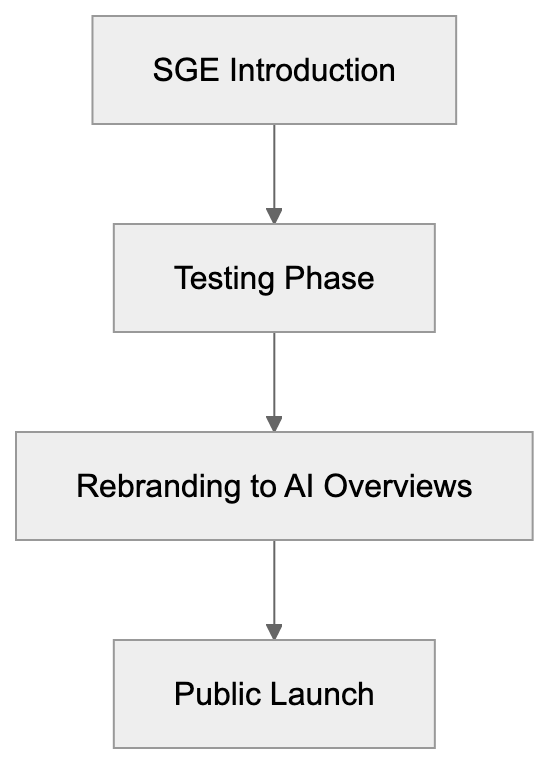
Google first introduced this feature as Search Generative Experience (SGE) in May 2023. It started as an experimental feature available only through Google Labs, requiring users to manually opt in during the testing phase. The initial version was limited to users in the United States and required signing up for early access. Throughout late 2023 and early 2024, Google expanded SGE testing to more countries and refined how the AI summaries appeared. In May 2024, Google rebranded SGE to AI Overviews and began rolling it out more broadly, marking the wider public launch in the United States. By removing the experimental label, Google signaled that this was becoming a permanent feature rather than just a test. The transition from SGE to AI Overviews brought interface improvements and faster response times. Google expanded availability to additional countries throughout 2024, though rollout speed varied by region and language. The rebranding helped clarify that these AI summaries were now a core part of Google Search rather than an optional experiment.
How Google AI Overviews Work
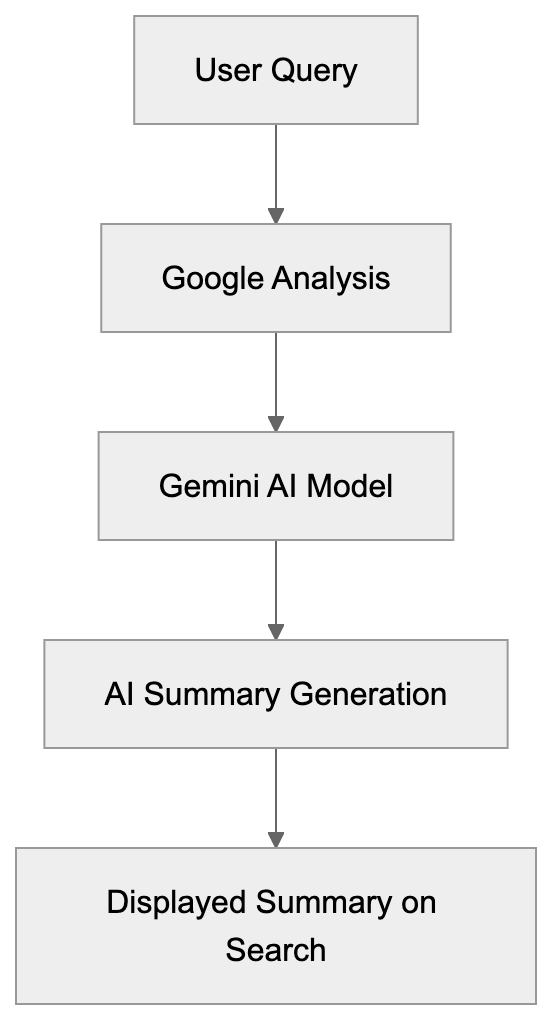
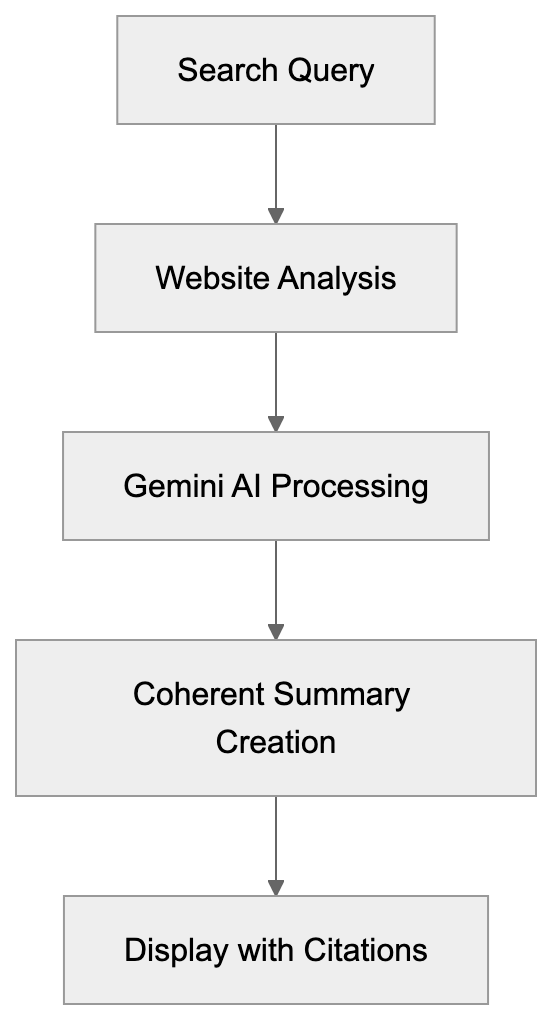
When you enter a search query, Google’s systems first determine if an AI Overview would be useful for that specific search. The Gemini AI model then analyzes top-ranking web pages related to your query. It extracts relevant information from multiple sources and synthesizes it into a coherent AI-generated summary. The AI doesn’t just copy text; it rewrites information in its own language. Citations appear as expandable links within or below the overview, showing which websites contributed to the answer. The generation process happens in real time, with each AI Overview created fresh for the query. Google’s ranking algorithms still determine which sources the AI considers, meaning SEO fundamentals still matter. The system looks for authoritative, relevant content just like traditional search. After generating the summary, Google displays it in a colored box at the top of search results, above traditional organic listings. Users can expand the overview to see more details or click citations to visit source websites. The entire process takes just seconds from query to displayed overview.
Integration with Google Gemini
Google AI Overviews are powered by Gemini, Google’s large language model. Gemini replaced earlier AI models like PaLM 2, which powered the initial SGE experiments. The switch to Gemini improved answer quality and generation speed. Gemini 1.5 specifically handles most AI Overview generation as of late 2024. This model excels at understanding complex questions and synthesizing information from long documents. The integration means AI Overviews benefit from Gemini’s multimodal capabilities, although most overviews currently focus on text. Google can update the underlying Gemini model without changing how AI Overviews appear to users. This backend flexibility lets Google improve accuracy and reduce errors over time. The Gemini integration also enables features like follow-up questions within the search interface. Users can ask additional related questions and get contextual answers based on the original query. This conversational element distinguishes AI Overviews from static featured snippets. The connection to Gemini means improvements in Google’s core AI technology directly enhance Google search results.
Can You Opt-Out of AI Overviews
As a user, you cannot completely disable AI Overviews in standard Google search results. Google doesn’t provide a settings toggle to turn off this feature. Your search results will include AI Overviews when Google determines they’re relevant to your query. However, some workarounds exist for users who prefer traditional search results. Using Google Search in a private or incognito window sometimes reduces AI-generated summaries frequency, though this isn’t guaranteed. Switching to different search engines like Bing, DuckDuckGo, or Brave Search avoids Google AI Overviews entirely. Some browser extensions claim to hide AI Overviews, but these require third-party software. For website owners, there’s currently no way to opt your content out of being used in AI Overviews while remaining in search results. Google treats AI Overview sourcing similarly to featured snippets. If your content ranks well, it may be used in AI summaries. The lack of opt-out options has been controversial among content creators and publishers who worry about reduced traffic to their sites.
AI-Generated Search Summary Process:
SEO Impact and Traffic Considerations
AI Overviews fundamentally change how users interact with search results. When an AI summary answers a question completely, users may not click through to any website. This potential traffic reduction concerns website owners and SEO professionals. Early data from May-June 2024 showed mixed results. Some sites reported traffic decreases for informational queries that triggered AI Overviews, while others saw minimal impact because their content was cited in the overviews, generating click-throughs. The actual impact varies by query type and industry. Transactional searches, where users want to buy something, still generate clicks even with AI Overviews present. Pure informational queries, like definitions or quick facts, see higher zero-click rates. For SEO strategy, creating complete, authoritative content remains important. AI Overviews pull from top-ranking pages, so traditional SEO fundamentals still apply. Including clear, concise answers to specific questions may increase chances of citation in overviews. Structured data and proper heading usage help Google’s AI understand your content. Diversifying traffic sources beyond Google becomes more important as AI Overviews expand. The long-term SEO impact is still developing as the feature becomes more widespread.
AI Overviews vs Featured Snippets
Featured snippets have existed in Google Search since 2014. These are short excerpts from a single webpage displayed at the top of results. AI Overviews differ in several key ways. Featured snippets pull text directly from one source, while AI Overviews synthesize information from multiple sources. The snippet shows exact text from the source page, whereas overviews are AI-generated rewrites. Featured snippets are shorter, typically 40-60 words, while AI Overviews can be several paragraphs long. Snippets always show the source website prominently, but overviews list multiple citations less prominently. Both appear at the top of search results in a special box format. Featured snippets can coexist with AI Overviews on the same search results page. Google may show a featured snippet for part of a query and an AI Overview for a related aspect. The selection criteria differ too. Snippets favor pages that directly answer a specific question, while overviews work for broader, more complex queries. For website owners, being featured in a snippet typically drives more traffic than being one of several citations in an AI Overview. However, Google appears to be gradually favoring AI Overviews for complex queries where snippets previously appeared.
Accuracy and Error Concerns
AI-generated content carries inherent accuracy risks. Google AI Overviews have displayed incorrect information in several documented cases. During the initial May 2024 launch, social media highlighted various errors. Some overviews recommended putting glue on pizza or suggested eating rocks for minerals. These errors came from the AI misinterpreting satirical content or Reddit jokes as factual information. Google quickly addressed the most viral mistakes and refined its systems. The company stated that these cases represented a small percentage of total overviews. However, the errors raised questions about relying on AI for factual information. Unlike traditional search results where users evaluate sources themselves, overviews present AI-synthesized information as authoritative. Users may not check the citations or question the accuracy. For topics requiring precision, like medical information, legal advice, or financial guidance, AI errors pose real risks. Google has implemented additional safety measures for sensitive topics. The system is more conservative about generating overviews for health and finance queries. Despite improvements, no AI system is perfect. Users should verify important information by checking original sources. Website owners have limited recourse if their content is misrepresented in an overview.
Comparing Google AI Overviews to Other AI Search Tools
Several search engines and tools now offer AI-generated search summaries. Microsoft integrated ChatGPT technology into Bing Search as Bing Chat, later rebranded to Copilot in Bing. Bing’s AI features launched in February 2023, predating Google’s public SGE release. Perplexity AI built an entire search engine around AI-generated answers with citations. Unlike Google, Perplexity focuses exclusively on conversational AI search without traditional link results. Brave Search introduced an AI summarizer that users can optionally enable. The key difference is that Brave makes this opt-in rather than default. OpenAI launched SearchGPT testing in late 2024, combining ChatGPT’s conversational abilities with web search. Each approach handles citations differently. Google AI Overviews integrate citations within the summary text. Perplexity displays numbered citations more prominently. Bing Copilot includes chat-style footnotes. For accuracy, independent testing shows varying results across platforms. Some queries get better answers from Google, while others do better with Perplexity or Bing. Google’s advantage is its integration with the world’s largest search index and existing ranking systems. Competitors often provide more transparent citations and clearer source attribution. The competitive landscape continues evolving rapidly as companies refine their AI search features.
Future Development and Expansion
Google continues expanding AI Overviews to more countries and languages. After the May 2024 US launch, rollout extended to the United Kingdom, India, and other English-speaking markets. Support for additional languages is ongoing throughout 2024 and 2025. Google also tests new features within AI Overviews. Some users see images and videos embedded in overviews, not just text. Shopping-related overviews may display product images and prices directly. The interface continues evolving based on user feedback and testing data. Google experiments with making overviews more conversational, allowing follow-up questions without new searches. The company invests heavily in improving accuracy and reducing errors. This includes better source evaluation and fact-checking mechanisms. Integration with other Google services may deepen over time. Overviews could pull from Google Maps for location queries or YouTube for how-to questions. The balance between providing helpful summaries and maintaining website traffic remains a key challenge. Google faces pressure from publishers concerned about reduced clicks. Future development likely involves ongoing adjustments to address these competing interests while improving user experience. The technology will continue improving as Gemini and other AI models advance.
Conclusion
Google AI Overviews represent a significant evolution in search technology. The transition from Search Generative Experience to the broadly launched AI Overviews marks Google’s commitment to AI-powered search results. Powered by the Gemini AI model, these summaries synthesize information from multiple sources into single complete answers. For users, this means faster access to information without clicking through multiple websites. For website owners and SEO professionals, the impact requires careful monitoring and strategy adjustment. While traditional SEO fundamentals remain important, the rise of AI Overviews changes how traffic flows from search results. Accuracy concerns persist despite Google’s improvements, making source verification important for users. The lack of opt-out options for both users and website owners remains controversial. Compared to competitors like Bing Copilot and Perplexity AI, Google AI Overviews leverage the world’s largest search index but face similar challenges around accuracy and publisher relationships. As the feature expands globally and adds new capabilities, its influence on web search and content creation will only grow.
How Google AI Overviews Generate Answers:
Transition from SGE to AI Overviews:
Frequently Asked Questions
What types of queries are most likely to trigger Google AI Overviews?
AI Overviews are usually generated for complex queries where users are seeking summarized information on a topic. Simple searches, like checking the weather or looking for a specific site, generally do not prompt an AI Overview.
How can website owners optimize their content for inclusion in AI Overviews?
Website owners should focus on creating comprehensive and authoritative content that answers specific questions clearly. Utilizing structured data and ensuring proper heading usage can enhance content visibility to Google's AI, increasing the chances of being cited in AI Overviews.
Is there a way to measure the impact of AI Overviews on website traffic?
Yes, website owners can use analytics tools to monitor changes in traffic patterns and user engagement. Comparing traffic data before and after the rollout of AI Overviews can provide insights into whether this feature has caused a decrease in visits for certain types of queries.
What should users do if they encounter inaccuracies in AI Overviews?
If users come across incorrect information in an AI Overview, they should verify the facts by checking the cited sources linked within the summary. Reporting inaccuracies to Google can also help improve the accuracy of future AI-generated content.
How do Google AI Overviews differ from traditional search results?
AI Overviews synthesize information from multiple sources into a single AI-generated answer, whereas traditional search results provide a list of links to individual webpages. The goal of AI Overviews is to offer quicker answers, potentially reducing the need to click through to various sites.
Can I use other search engines to avoid AI Overviews?
Yes, using alternative search engines like Bing, DuckDuckGo, or Brave Search will allow you to avoid Google AI Overviews entirely. These platforms may have their own methods of presenting search results, often without AI-generated summaries.
What future developments can we expect for Google AI Overviews?
Google plans to expand AI Overviews to more languages and countries while also exploring new features, such as integrating images and videos into the summaries. Continuous improvements in accuracy and error reduction are also on the horizon, along with potential deeper integrations with other Google services.
Track Your AI Visibility
See how AI chatbots like ChatGPT, Claude, and Perplexity discover and recommend your brand.