MediSearch Guide: AI Medical Search with Peer-Reviewed Sources
Complete guide to MediSearch AI search engine. Learn how it uses peer-reviewed medical sources to provide trustworthy health information.
What is MediSearch
MediSearch is a specialized medical AI search engine that answers health-related questions using AI. Unlike general search engines, it doesn’t just rank web pages. Instead, it reads through scientific literature and medical databases to generate informed responses. This tool was created to tackle the prevalent issue of medical misinformation online. When you ask a question, MediSearch scans peer-reviewed journals, clinical studies, and trusted medical databases. It then synthesizes this information into a readable answer with citations. The platform is free to use and doesn’t require a login for basic searches. It’s backed by a team dedicated to making scientific medical knowledge accessible to the general public. The search results show direct quotes from studies along with links to the original papers, allowing you to verify any claim by checking the source yourself.
Why MediSearch Exists and Its Purpose
The internet is flooded with health misinformation. Studies have found that nearly 40% of health content on social media contains false or misleading information. Regular search engines struggle to filter out poor-quality medical advice from genuine scientific findings. MediSearch was specifically built to prevent the spread of medical misinformation by using only verified sources. Unlike search engines that rely on SEO-optimized blogs or commercial health websites, MediSearch pulls exclusively from peer-reviewed medical journals and clinical databases. This ensures that its answers are based on actual scientific research. Another key purpose of MediSearch is making complex medical research understandable. Scientific papers are often written for other scientists and can be nearly impossible for the average person to comprehend. MediSearch translates this research into plain language while maintaining accuracy, serving as a bridge between academic medical knowledge and public understanding.
MediSearch Overview and Features:
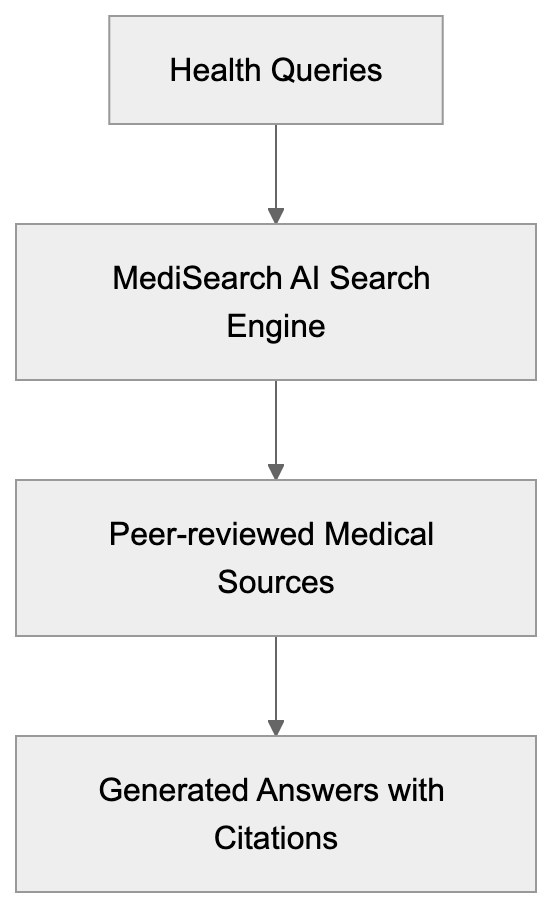
How MediSearch Uses Peer-Reviewed Sources
Peer-reviewed sources form the backbone of MediSearch’s strategy. When scientists publish research, other experts review it before publication to catch errors, biased conclusions, and flawed methodology. MediSearch specifically targets these peer-reviewed journals as its primary data sources. The AI searches through databases like PubMed, which houses over 35 million citations from biomedical literature. It also accesses journals from major medical publishers and clinical trial databases. When you ask a question, the system identifies relevant studies and extracts pertinent information. Each answer includes direct citations showing which paper the information came from. You’ll see the study title, authors, publication date, and journal name, offering transparency that lets you evaluate the quality of sources yourself. For specific topics, a 2023 study may be more relevant than one from 1995. MediSearch also weighs the strength of evidence, giving more importance to systematic reviews and meta-analyses over smaller studies.
Citation Strategy and Transparency
Transparency distinguishes MediSearch from typical AI chatbots. Every claim in an answer is linked directly to a specific scientific paper. Citations are visible with the text, not buried at the bottom of a page. When MediSearch states a fact, you can click the citation number to see the exact study it originated from. This approach addresses a major issue with AI-generated content—the lack of verifiable sources. Many AI tools generate confident-sounding answers without showing where the information originated. MediSearch reverses this trend by making citations a central feature. The citation format includes the paper title, authors, journal name, and publication year. When available, you get a direct link to the abstract or full paper. This is significant because not all medical studies are created equal. A randomized controlled trial with 10,000 participants carries more weight than a case study with 5 people. By showing citations, MediSearch lets you judge the quality of evidence yourself. The system typically provides multiple sources for each major claim, indicating consensus across various studies. If research is limited or conflicting, MediSearch states this clearly rather than giving a false sense of certainty.
Limitations and Not a Medical Professional Substitute
MediSearch clearly states it is not a replacement for professional medical advice. This is crucial to understand. The tool provides information based on published research, but it cannot diagnose conditions or recommend treatments for your specific situation. Every person’s health situation is unique, with different medical histories, medications, and risk factors. MediSearch doesn’t know your personal health details and cannot account for them. The platform displays warnings reminding users to consult healthcare professionals for medical decisions. Published research shows general patterns and findings from studies, but applying them to individual cases requires medical expertise. A doctor considers your complete health picture, runs appropriate tests, and monitors your response to treatments. MediSearch can help you understand health topics and prepare informed questions for your doctor. It can explain what current research says about a condition or treatment. But the final medical decisions should always involve qualified healthcare providers. The tool also has limitations in accessing the very latest research, as there’s often a delay between study publication and database indexing.
Comparison with Google Health Search
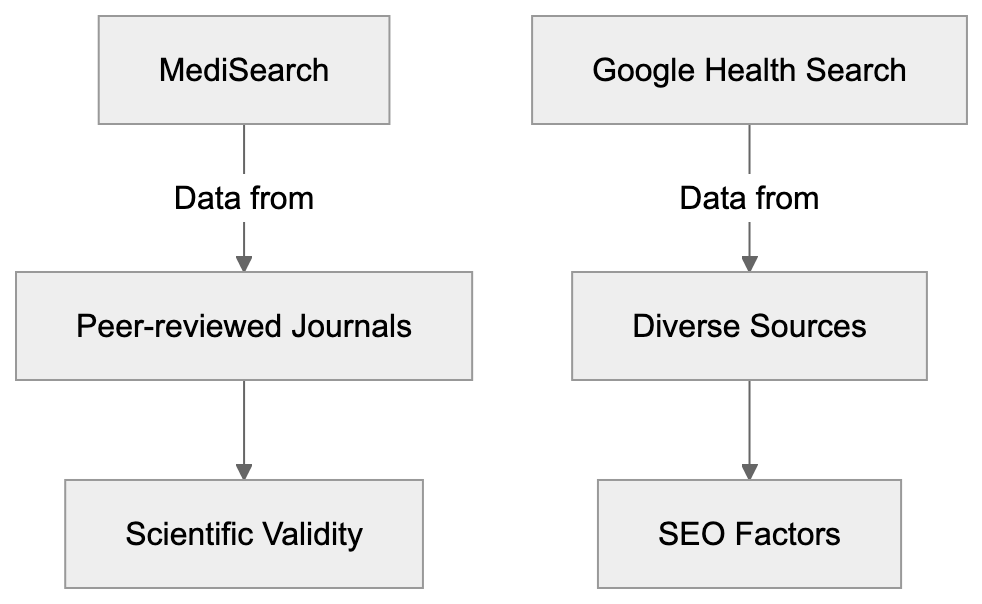
Google has made efforts to improve health search results with features like health panels and verified sources. However, its fundamental approach differs from that of MediSearch. Google search results include a mix of sources such as news articles, commercial health websites, forums, and some medical journals. The ranking is influenced by SEO factors and not solely by scientific validity. MediSearch restricts itself to peer-reviewed literature exclusively. Google’s health panels show basic information about conditions, symptoms, and treatments sourced from medical databases. These panels are helpful but limited in scope. MediSearch generates comprehensive answers to specific questions by synthesizing multiple research papers. Google provides links for users to click and read, while MediSearch reads the papers for you and summarizes findings. For commercial health topics, Google often displays ads and sponsored content in top results. MediSearch has no advertising or commercial incentives affecting search outcomes. Google’s advantage is breadth, covering all types of health content, including patient experiences and practical advice. MediSearch’s advantage is depth and reliability for scientific medical information. Both tools can be useful for different purposes, with Google being better for general health topics and MediSearch stronger for research-based medical questions.
Practical Use Cases for MediSearch
MediSearch serves several practical purposes for different users. Patients researching their diagnosed condition can find evidence-based information about treatment options and outcomes. Instead of reading random forum posts, they get actual study results. Someone considering a medical procedure can search for success rates and potential complications from clinical research. The tool is valuable for people seeking second opinions or wanting to understand their doctor’s recommendations better. Healthcare students and professionals use MediSearch for quick literature reviews. Medical writers and health journalists utilize it to fact-check information and find source citations. SEO experts and content marketers in the health space can verify claims before publishing content. Small business owners running health-related companies can stay informed about current research in their field. Parents researching children’s health issues find it useful for distinguishing between myths and evidence-based practices. The tool helps prepare for doctor appointments by providing background on symptoms or conditions. It’s effective for understanding lab results, medication mechanisms, and lifestyle interventions backed by research. Developers building health apps can use MediSearch to ensure their content aligns with current medical evidence.
How MediSearch Works Behind the Scenes
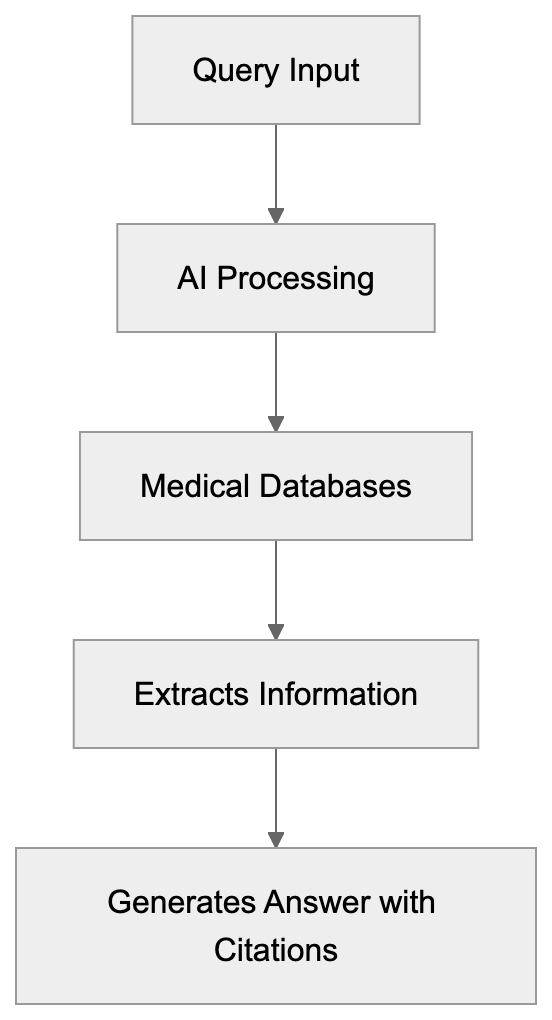
The workflow begins when you enter a medical question. The AI processes your query to identify key medical terms and concepts. It then searches through indexed medical literature databases for relevant papers. The system uses natural language processing to understand both your question and the content of research papers. It identifies papers that address your specific query and extracts relevant information from them. The AI reads abstracts, methods sections, results, and conclusions to find answers. It synthesizes information from multiple papers to provide a clear and understandable response. The answer generation process involves summarizing complex medical language into easier terms. At the same time, the system maintains accuracy by keeping citations linked to specific claims. MediSearch ranks sources based on relevance, publication date, study quality, and citation count. More recent systematic reviews and meta-analyses receive priority over older single studies. The AI checks for consensus across multiple papers and notes when research findings conflict. It avoids making definitive claims when evidence is weak or limited. The final answer includes the synthesized information, inline citations, and links to source papers. Users can expand citations to see more details about each referenced study.
Conclusion
MediSearch represents a focused way to tackle medical misinformation online. By restricting sources to peer-reviewed scientific literature, it provides a trustworthy health information search. The platform’s citation strategy ensures transparency and allows users to verify every claim. This matters in an era where AI-generated content often lacks verifiable sources. The tool serves practical purposes for patients, healthcare professionals, students, and content creators. It bridges the gap between complex medical research and public understanding. However, it’s essential to remember the limitations. MediSearch provides information but cannot replace professional medical consultation. Your doctor knows your specific health situation and can apply research findings to your individual case. The tool works best as an educational resource and research aid. Compared to general search engines like Google, MediSearch offers deeper scientific accuracy but a narrower scope. Both tools have their place depending on what you need. For evidence-based medical information directly from research papers, MediSearch delivers reliable results with full transparency about sources.
MediSearch vs Google Health Search:
Peer-Reviewed Sources and AI Usage Flow:
Frequently Asked Questions
What types of questions can I ask MediSearch?
MediSearch is designed to handle a wide range of health-related queries. You can ask about symptoms, treatment options, research findings, and general medical knowledge. However, it’s important to remember that it is not a substitute for professional medical advice.
How can I verify the information provided by MediSearch?
Each response from MediSearch includes direct citations to the scientific studies from which the information is derived. You can click on the citation links to view the original studies, including details such as authors, publication date, and journal name, allowing you to verify the claims made.
Is there a cost associated with using MediSearch?
MediSearch is free to use for basic searches and does not require users to create an account. There may be limitations on certain advanced features or prioritization in services, but general access remains cost-free.
Can MediSearch help me prepare for a doctor's appointment?
Yes, MediSearch can be an excellent resource to gather information about your condition before a doctor's visit. It can help you understand current research and terminology, enabling you to ask informed questions and articulate your concerns more effectively.
How does MediSearch ensure the accuracy of its information?
MediSearch exclusively utilizes peer-reviewed studies and clinical research to generate responses. By focusing on scientific literature, it minimizes the risk of misinformation found in general online content, thus enhancing reliability and accuracy.
What are the limitations of using MediSearch?
While MediSearch provides evidence-based information, it cannot diagnose conditions or recommend personalized treatments. The tool is intended to supplement, not replace, professional medical advice. Additionally, there may be a delay in indexing the very latest research.
How does MediSearch compare to traditional search engines for health queries?
MediSearch offers more focused and reliable information as it pulls exclusively from peer-reviewed sources, while traditional search engines like Google include varied types of content, which may include misinformation. MediSearch synthesizes information from multiple sources to provide comprehensive answers tailored to specific questions.
Track Your AI Visibility
See how AI chatbots like ChatGPT, Claude, and Perplexity discover and recommend your brand.