Exploring Tavily: AI Search API for LLM Apps
Discover Tavily, an AI Search API optimized for LLM applications, exploring its features, pricing, and integrations.
TL;DR
Tavily is an AI search API designed for large language models. It enhances LLM applications through structured search results and integrates seamlessly with LangChain. This article discusses Tavily’s features, its business applications, and compares it with alternatives like Exa and SerpAPI.
Introduction
Tavily is a pioneering AI search API aimed at developers utilizing large language models (LLMs), offering real-time web access and high rate limits for accurate and relevant content snippets. It is designed for easy integration with AI systems and aids developers by providing structured search results. Tavily is highly compatible with LLMs and boasts features like Retrieval Augmented Generation (RAG), enabling AI agents to perform comprehensive web searches with deep mode, LLM answers, and filtering. In this article, we explore Tavily’s features, its usage by companies, and comparisons with alternatives such as Exa and SerpAPI.
What is Tavily?
Tavily Search API Architecture:
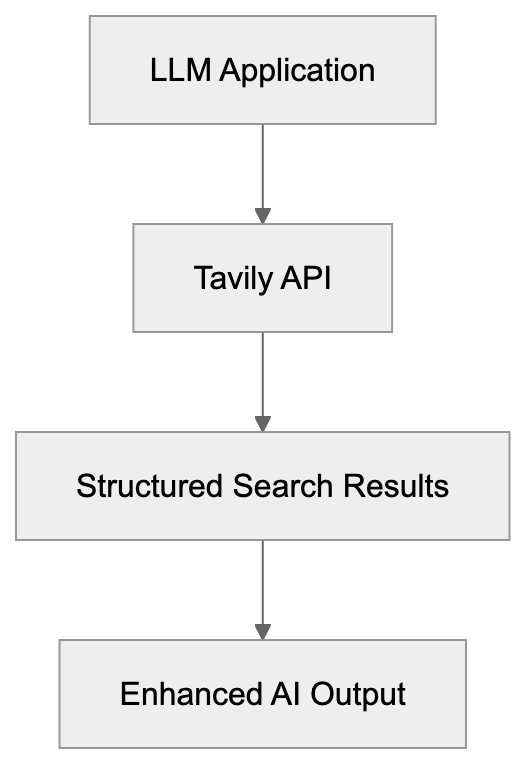
Tavily is an API-first tool crafted for developers and AI systems. It plays a crucial role in AI-powered applications, assisting in the rapid retrieval of pertinent information. By delivering structured search results, Tavily enables systems to comprehend and utilize data more effectively. Renowned for its detailed search outcomes and LLM enhancement, Tavily is an invaluable tool for developers.
Why Tavily Exists
As AI models evolve, they demand increasing amounts of data. Tavily addresses this need, supplying comprehensive search results that facilitate data application in AI models. Targeted at AI projects, it expedites information retrieval, thus saving time. Tavily’s seamless compatibility with various AI models makes it indispensable for efficient data processing, offering real-time web access and high rate limits for accurate and relevant content snippets.
Business Use Cases
Numerous tech companies leverage Tavily to enhance their AI models, benefiting from its real-time web access and high rate limits for accurate and relevant content snippets. From chatbots to advanced analytics, these businesses depend on Tavily for swift and useful data acquisition. Its straightforward integration with tools like LangChain makes it a go-to option for teams seeking dependable search capabilities for their projects, enabling AI agents to perform comprehensive web searches with deep mode, LLM answers, and filtering.
How Tavily Enhances LLM Applications:

Tavily Integration with LangChain
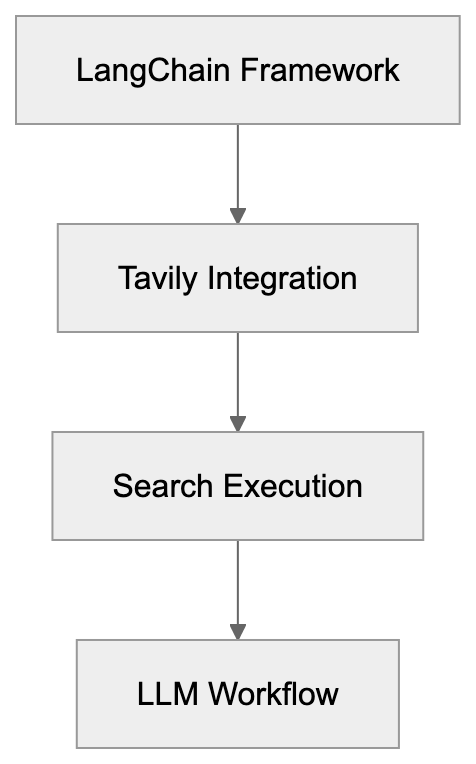
LangChain is a framework for constructing LLM applications. By integrating Tavily with LangChain, you gain significant advantages. It enables effortless inclusion of detailed search functionalities in LLM-base apps, thereby improving data quality. This robust integration simplifies the direct connection of data searches into complex AI workflows.
Compare Tavily with Exa and SerpAPI
Here’s a quick comparison of Tavily, Exa, and SerpAPI:
| Feature | Tavily | Exa | SerpAPI |
|---|---|---|---|
| Focus | LLM improvement | General search | Web scraping API |
| Integration | LangChain, AI systems | Many frameworks | Multiple search engines |
| Data Type | Structured, precise | Varied | Organic search results |
| Use case | LLM enhancement | Search tool | Complete data |
Tavily and LangChain Integration Flow:
Tavily distinguishes itself with its focus on LLM applications and precision in search results.
Conclusion
Tavily is a robust AI search API designed for modern AI applications. By concentrating on structured search results and LLM integration, it caters to developers’ data needs. Features like straightforward integration with LangChain and detailed search results position Tavily as a formidable option compared to tools like Exa and SerpAPI. Overall, Tavily fosters AI advancements by ensuring quick and accurate data access.
Frequently Asked Questions
What types of applications can benefit from using Tavily?
Tavily is particularly beneficial for applications that leverage large language models, such as chatbots, virtual assistants, and analytics tools. Its ability to provide structured and relevant search results enhances the performance of these AI-driven applications.
How does Tavily compare to traditional search APIs?
Unlike traditional search APIs, Tavily focuses on providing structured search results that are tailored for LLM applications. This specialization improves the relevance and accuracy of the data returned, making it more suitable for AI-centric projects compared to broader search APIs.
Can Tavily be integrated with existing AI frameworks?
Yes, Tavily integrates seamlessly with frameworks like LangChain, allowing developers to easily incorporate its advanced search functionalities into their existing AI workflows. This integration enhances the overall quality of data used in LLM applications.
What is Retrieval Augmented Generation (RAG) in the context of Tavily?
Retrieval Augmented Generation (RAG) is a feature offered by Tavily that allows AI agents to perform in-depth web searches. This capability enables them to generate responses based on comprehensive data, improving their accuracy and relevance.
Are there any rate limits when using Tavily?
Yes, Tavily provides high rate limits which enhance its ability to retrieve accurate and relevant data snippets in real-time. These limits are designed to support robust applications while ensuring efficient market needs are met.
How do I start using Tavily for my LLM projects?
To start using Tavily, developers should sign up for access through their official platform. Once obtained, the API can be easily integrated into existing applications, with the documentation providing guidance on implementation and best practices.
Can Tavily replace other similar APIs?
While Tavily offers unique advantages for LLM applications, the decision to replace another API depends on specific project needs. Tavily excels in structured data retrieval suitable for AI models, but users should evaluate it against their requirements compared to other APIs like Exa or SerpAPI.
Track Your AI Visibility
See how AI chatbots like ChatGPT, Claude, and Perplexity discover and recommend your brand.