
Consensus: AI-Powered Search Engine for Scientific Research
Learn how Consensus AI search engine helps researchers find and analyze peer-reviewed scientific papers with its unique features and capabilities.
What is Consensus AI and Why It Exists
Consensus AI addresses a significant challenge in scientific research. Locating relevant research papers and discerning the consensus among scientists is laborious, a problem that Consensus AI aims to solve. Conventional search engines like Google Scholar list numerous papers but fail to convey their collective meaning.
The main objectives of Consensus AI include:
- Quickly finding relevant research papers
- Displaying the level of scientific consensus on topics
- Simplifying complex research
- Saving time in scientific literature searches
Diagram: Key Objectives of Consensus AI
Key Features That Make It Useful
Consensus Meter
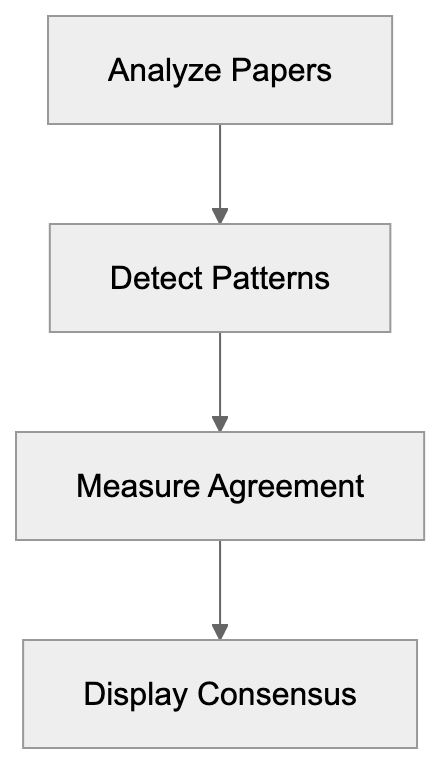
The consensus meter illustrates the degree of scientific agreement on specific topics. It analyzes numerous papers to detect patterns in their conclusions, offering a transparent view of agreement levels within scientific research, as explained in Consensus AI’s official overview.
GPT-4 Integration
Diagram: Functionality of Consensus Meter
With GPT-4 integration, Consensus AI assists users in comprehending complex research papers. It can:
- Summarize papers in simple terms
- Answer questions regarding the research
- Connect findings from distinct papers
Research Copilot
Diagram: GPT-4 Integration Benefits

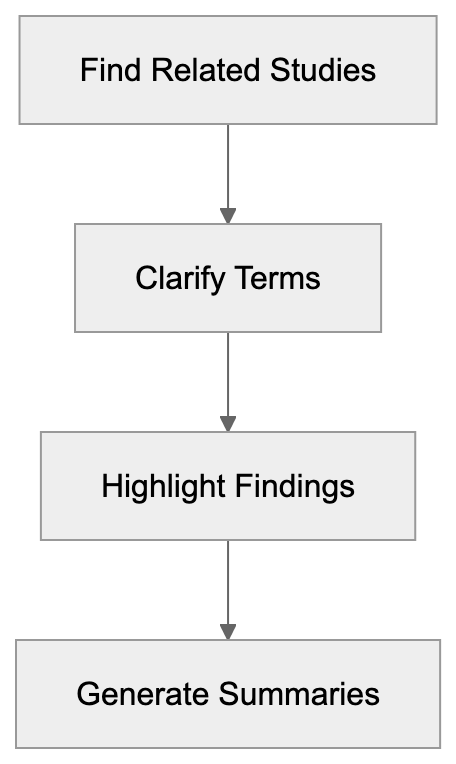
The Consensus Copilot feature acts as a smart research assistant, delving deeper into research topics. It can:
- Find related studies
- Clarify complex terms
- Highlight important findings
- Generate research summaries
How Consensus AI Works
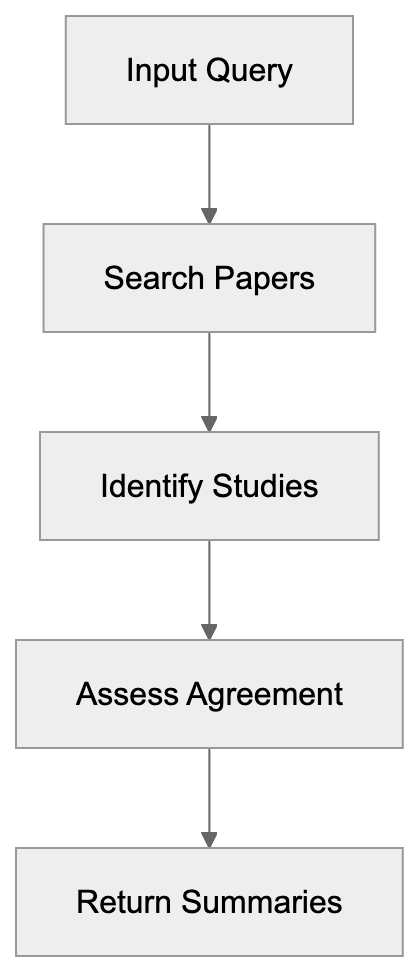
Consensus AI scans peer-reviewed papers from credible sources. Here’s the basic workflow:
Diagram: Features of Research Copilot
- User inputs a research question
- AI searches millions of papers
- System identifies relevant studies
- AI assesses agreement levels
- Results appear with summaries
Pricing Options
Consensus AI presents various plans to accommodate different users:
Basic Plan:
Diagram: Consensus AI Workflow
- Free access
- Limited monthly searches
- Basic features only
Pro Plan:
- Increased search allowance
- Full feature access
- Priority support
Enterprise Plan:
- Customized solutions
- Team accounts
- API access
Comparison with Other Research Tools
This is how Consensus AI stands against other research tools:
Google Scholar:
- Larger database
- Fewer AI features
- No consensus analysis
Semantic Scholar:
- Comparable paper database
- Superior citation tracking
- Lacks GPT-4 integration
Real World Use Cases
Consensus AI benefits a variety of users:
Researchers:
- Rapid literature reviews
- Identifying research gaps
- Grasping current agreements
Students:
- Authoring research papers
- Understanding intricate topics
- Locating reliable sources
Professionals:
- Keeping up with research
- Informing evidence-based decisions
- Identifying expert consensus
Benefits and Limitations
Benefits:
- Saves time in research analysis
- Clearly depicts scientific agreement
- Simplifies complex research
- Helps locate reliable information
Limitations:
- Newer papers may be excluded
- Some specialized fields may have less coverage
- Free plan imposes usage limits
Conclusion
Consensus AI revolutionizes the scientific literature search by leveraging AI. It enables users to find and comprehend research papers more effectively than traditional methods. This scientific research search engine illustrates scientific agreement levels and simplifies complex studies, as detailed in Consensus AI’s official overview. Despite certain limitations, it serves as an invaluable tool for anyone engaged with scientific literature.
For researchers, students, and professionals needing rapid insights into scientific topics, Consensus AI presents a modern solution, as highlighted in Consensus AI’s official overview. It merges AI technology with scientific precision to make research more accessible and beneficial.
Frequently Asked Questions
What types of users can benefit from Consensus AI?
Consensus AI is designed to assist researchers, students, and professionals. Researchers can use it for rapid literature reviews and identifying research gaps, while students can find reliable sources for their papers. Professionals may rely on it for keeping up with research to inform evidence-based decisions.
How does the Consensus Meter work?
The Consensus Meter analyzes multiple research papers to determine the level of agreement on scientific topics. It highlights the degree of concordance among studies, helping users understand the collective findings in a clear manner.
Can Consensus AI help simplify complex research papers?
Yes, with its GPT-4 integration, Consensus AI summarizes complex research papers into simpler terms. It can also answer specific questions related to the papers and connect findings from different studies.
What pricing options are available for Consensus AI?
Consensus AI offers a Basic Plan with free access and limited searches, a Pro Plan with more searches and full features, and an Enterprise Plan tailored for teams with customized solutions and API access.
How does Consensus AI compare to traditional search engines?
Unlike traditional search engines like Google Scholar, which provide only a list of papers, Consensus AI evaluates the consensus among studies and presents summaries, enhancing the research experience.
What are some limitations of using Consensus AI?
Some limitations include the potential exclusion of newer papers and less coverage in specialized fields. Additionally, the free plan imposes usage limits, which may restrict access for some users.
How does Consensus AI save time in research?
Consensus AI streamlines the process of finding relevant studies by quickly searching thousands of papers and summarizing findings. This efficiency allows users to focus on understanding the literature and identifying key insights without manual searches.