Beyond Keywords - Understanding the AI Search Revolution
Chapter 1: Beyond Keywords - Understanding the AI Search Revolution
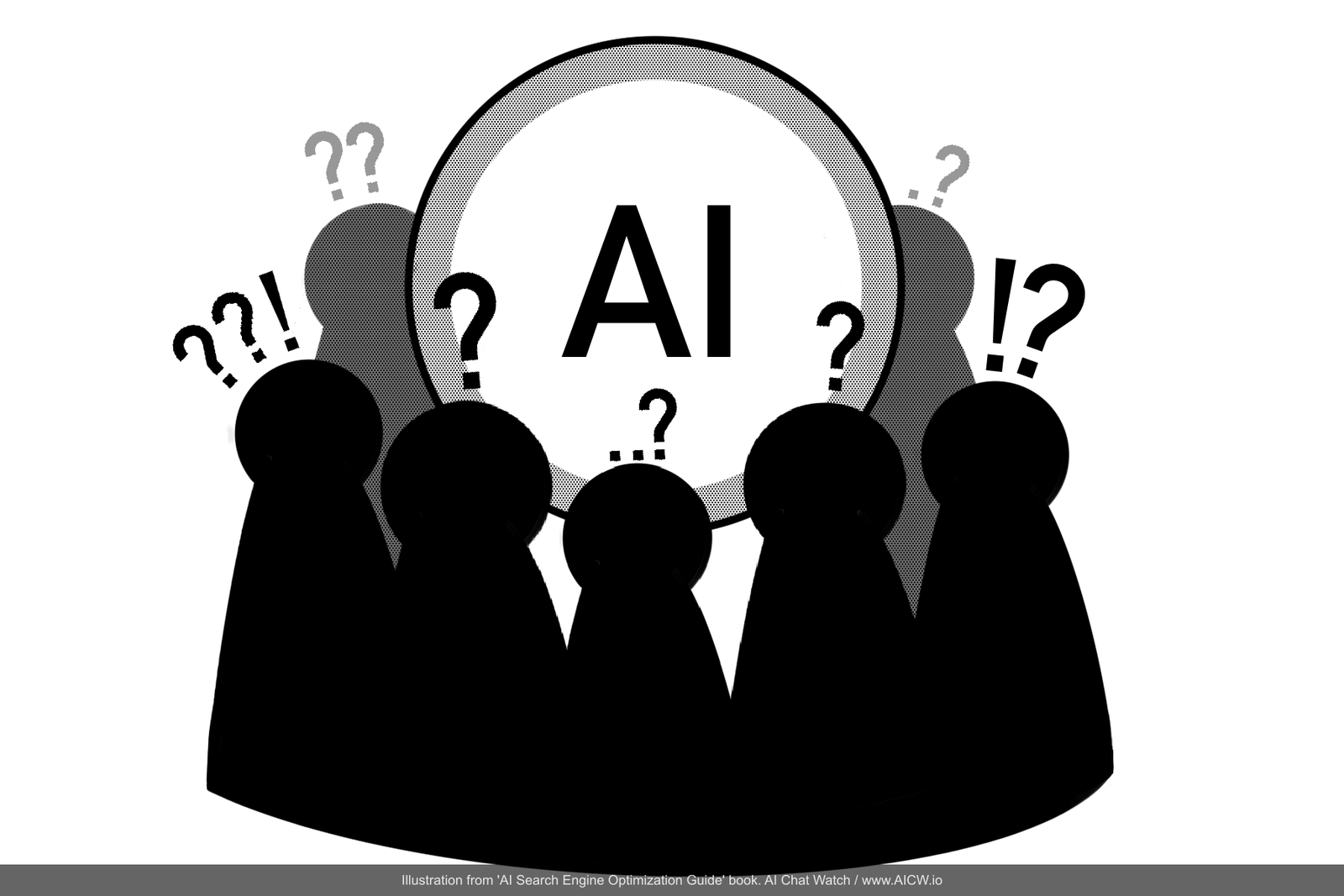
This chapter explores how traditional keyword-based search transforms into an AI-first approach that deciphers user intent and synthesizes comprehensive responses instead of just providing the list of search results.
What exactly is AI Search? It’s more than just a chatbot plugged into a search engine. Let’s look at how the leading players are defining this new paradigm:
- Google’s AI Overview is focused on providing a snapshot of key information
“AI Overviews provide a snapshot of key information about a topic or question with links so you can easily explore more on the web.”[^5]
- Google’s AI Mode - this mode is the kind of advanced version of “AI Overview” and emphasizes intelligent organization of information and answering in a simple way. As Google states:
“AI Mode intelligently organizes information and answers your question in a simple and intuitive way, with links to explore more on the web.”[^6]
- ChatGPT Search: OpenAI focuses on speed, timeliness and positions itself in contrast to “traditional” search engines:
“Get fast, timely answers with links to relevant web sources, which you would have previously needed to go to a search engine for. This blends the benefits of a natural language interface with the value of up-to-date sports scores, news, stock quotes, and more.” [^7]
- Perplexity AI: Perplexity centers its definition on the conversational and verifiable nature of the answers:
“Ask any question, and it searches the web to deliver accessible, conversational answers backed by verifiable sources. Each response includes citations and links to original sources [..]” [^8]
- Anthropic Claude built-in web-search points to its capabilities of fetching up-to-date information[^9]:
“Answer questions with up-to-date information beyond its knowledgecutoff. Claude automatically cites sources from search results as part of its answer.”
- Grok highlights its access to real-time posts on X (former Twitter):
“Access to real-time public X posts allows Grok to respond to user queries with up-to-date information and insights on a wide range of topics.” [^10]
While each platform has its nuances, a common thread emerges. The key insight, as derived from these definitions and observing the technology in action, is that AI search isn’t just about finding information because more and more users require and expect more than just a set of blue links. AI powered interaction involves a sophisticated process that aims to deeply understand the underlying intent behind your query, searching across multiple sources, synthesizing that information, and providing a consistent and comprehensive answer with references and citations. It aims to give you not just links but understanding.
| Feature | Traditional Keyword-Based Search | AI-Powered Search |
|---|---|---|
| Query Processing | Matches exact keywords to indexed documents | Understands the context and user intent even when exact keywords are missing |
| Search Results Relevance | May return irrelevant search results when keywords are ambiguous or have multiple meanings. | Provides more accurate results from interpreting intent and considering context |
| Personalization | Personalizes results using location, search history and websites previously visited. | Analyzes broader user interactions (both search and non-search) to deeply understand user preferences and intent |
| Handling Niche Queries | Niche queries often yield poor results | Breaks down niche queries into simpler sub-queries to provide detailed and relevant response |
| Refining Search Results | Suggests generic follow up questions without deep personalization | Suggests personalized follow-up questions based on user’s previous interactions and current search context |
Figure 1.1. Comparison of traditional Keyword-Based Search and AI-powered Intent Recognition Search
With this understanding of how AI search differs from traditional keywords-based search, let’s examine how big it is compared to traditional web search leaders.
Frequently Asked Questions
How is AI search different from keyword search?
Traditional search matches your exact words to documents. AI search tries to understand what you actually want, even if you phrase it differently. You get synthesized answers instead of just links, and the AI considers your conversation history.
How does AI figure out what users want?
It breaks down your question, considers context, and often runs multiple searches behind the scenes. Ask about 'puppy food vs adult' and it might search for nutritional differences, age recommendations, and transition guidelines separately, then combine the results.
Which AI search platforms matter right now?
ChatGPT Search, Google AI Mode, Perplexity, and Claude are the main ones. Each handles sources differently. ChatGPT uses Bing, Perplexity has its own index, Claude uses Brave Search. They all give conversational answers with citations.
This content is reprinted from AI Search Engine Optimization Guide by Eugene Mironichev with permission.
© 2026 Eugene Mironichev. All rights reserved.
Get the Full Book
Download for free or buy the print version