Meta Keywords Tag: History, Usage, and Why Engines Ignore It
Learn about the meta keywords tag, its history in SEO, why Google and other search engines stopped using it, and whether you should still use it today.
Table of Contents
- What Are Meta Keywords
- Why the Meta Keywords Tag Was Created
- The Abuse Problem That Killed Meta Keywords
- HTML Meta Keywords Example
- Are Meta Keywords Still Used Today
- Meta Keywords vs. Other Meta Tags That Matter
- Alternatives to Meta Keywords for Modern SEO
- What Search Engines Actually Use for Rankings
- Should You Remove Meta Keywords from Your Site
- Historical Timeline of Meta Keywords in SEO
- Comparison with Similar SEO Elements
- What Modern SEO Professionals Focus On Instead
- End
- What Are Meta Keywords
- Why the Meta Keywords Tag Was Created
- The Abuse Problem That Killed Meta Keywords
- HTML Meta Keywords Example
- Are Meta Keywords Still Used Today
- Meta Keywords vs. Other Meta Tags That Matter
- Alternatives to Meta Keywords for Modern SEO
- What Search Engines Actually Use for Rankings
- Should You Remove Meta Keywords from Your Site
- Historical Timeline of Meta Keywords in SEO
- Comparison with Similar SEO Elements
- What Modern SEO Professionals Focus On Instead
- End
What Are Meta Keywords
The meta keywords tag is an HTML element used to inform search engines about the contents of a webpage. Web developers would include it in the head section of their HTML code, featuring a list of keywords related to the page content.
In the 1990s and early 2000s, this tag was crucial for SEO. Search engines like AltaVista and the early versions of Google considered these keywords when ranking pages. Website owners would list relevant terms they hoped to rank for.
The basic HTML structure is straightforward. You place it in the head section of your webpage between the opening and closing head tags. The format follows standard meta tag syntax with a name attribute and a content attribute.
Today, the meta keywords tag holds little value for SEO. Google officially ceased its use for rankings in 2009, and most other major search engines followed suit. Nevertheless, it still appears on older websites and in some CMS templates.
Why the Meta Keywords Tag Was Created
Search engines in the 1990s were fairly basic. They required assistance to understand what webpages were about, as content analysis algorithms of the time were not very sophisticated.
Webmasters needed a way to communicate page topics directly to search engines. The meta keywords tag addressed this need, giving site owners control over how search engines categorized their content.
Early search engines like Excite, Lycos, and AltaVista relied heavily on meta tags, trusting webmasters to accurately describe their own content. This approach seemed reasonable at the time.
The tag eventually became part of the HTML standard, and organizations like W3C included it in official specifications. Web development tools and content management systems added automatic support for it.
For a few years, this system worked fairly well. Honest website owners used meta keywords appropriately, resulting in decent-quality search results that helped users find relevant information.
The Abuse Problem That Killed Meta Keywords
The downfall of meta keywords arose from widespread abuse. Website owners discovered they could easily manipulate search rankings by stuffing meta keywords with irrelevant terms.
Some sites added hundreds of keywords to their meta tag, while others included popular search terms unrelated to their actual content. This practice became known as keyword stuffing.
Competitor keywords became a common tactic, with sites selling shoes adding the brand names of competitors. Adult websites used popular celebrity names. The abuse quickly got out of control, leading to a decline in the effectiveness of meta keywords.
Search engines noticed that meta keywords were unreliable, as the data often contradicted the actual page content. Users complained about poor search result quality, and something had to change.
Google and other engines began ignoring the meta keywords tag, shifting focus to analyzing actual page content instead. Modern algorithms now consider text, links, user behavior, and hundreds of other factors.
By 2009, Google publicly announced they don’t use meta keywords for web search ranking. Bing followed with similar statements, and Yahoo also phased them out. The tag became obsolete for SEO purposes.
HTML Meta Keywords Example
The syntax for meta keywords is straightforward. Here’s what it looks like in actual HTML code:
<head>
<meta name="keywords" content="web development, html, seo, search engines">
</head>
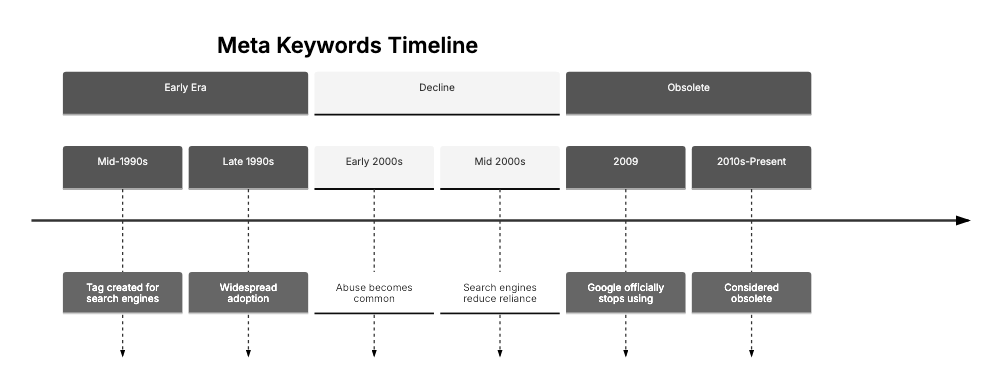
Evolution of Meta Keywords Tag:
You place this inside the head section of your HTML document. The name attribute is always set to “keywords,” and the content attribute contains your comma-separated keyword list.
Some websites used longer keyword lists, sometimes including dozens of terms:
<meta name="keywords" content="affordable shoes, running shoes, athletic footwear, sneakers, sports shoes, comfortable shoes, men’s shoes, women’s shoes">There was never an official limit on how many keywords you could include, but best practices suggested keeping it reasonable, perhaps 10 to 20 keywords maximum.
Modern HTML5 specifications still recognize the meta keywords tag. Browsers won’t throw errors if you include it, but it serves no practical SEO purpose anymore.
Some content management systems still generate this tag automatically. WordPress themes from the early 2010s often included it, and older Joomla and Drupal sites have it too.
Are Meta Keywords Still Used Today
For Google search, the answer is a clear no. They officially announced in 2009 that meta keywords have zero impact on rankings, and this hasn’t changed.
Bing also doesn’t use meta keywords for ranking and has stated this publicly multiple times. The tag offers no SEO value on Bing search either.
Yandex, the popular Russian search engine, stopped using meta keywords years ago, as their algorithms emphasize content quality and user signals instead.
Baidu in China similarly ignores the meta keywords tag, using sophisticated content analysis like other modern search engines.
However, some internal site search tools still check meta keywords. Older enterprise search software might use them, and small niche search engines could theoretically as well.
Certain catalog systems and directories accept meta keywords during submission, typically outdated platforms that haven’t modernized their processes.
For most website owners, the practical answer is simple: don’t waste time on meta keywords. Focus on actual content quality instead, writing for users, not for obsolete tags.
Some SEO professionals still add meta keywords out of habit, others leave them blank, and a few remove the tag entirely from their HTML templates.
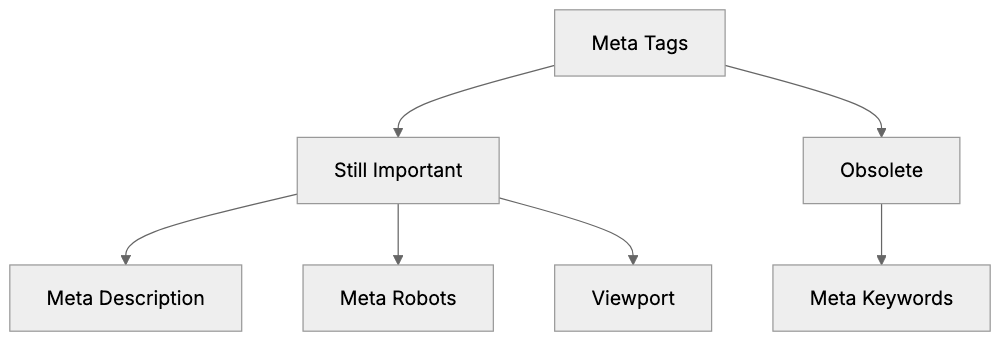
Meta Tags Comparison:
There’s a small risk that including stuffed meta keywords could appear spammy. While Google doesn’t use them for ranking, they could theoretically use them as a spam signal. It’s better to just leave them out.
Meta Keywords vs. Other Meta Tags That Matter
Not all meta tags have become obsolete. Several remain important for SEO and user experience, and understanding the difference is crucial.
- Meta Description: Still matters a lot. Google frequently uses it for search result snippets. A well-crafted description can significantly improve click-through rates.
- Meta Robots: Controls how search engines crawl and index your pages. Values like noindex, nofollow, and noarchive offer important control over search visibility.
- Viewport: Needed for mobile responsiveness, telling browsers how to scale pages on different screen sizes.
- Open Graph Meta Tags: Control how content appears on social media platforms like Facebook and LinkedIn.
- Twitter Card Meta Tags: Work similarly for Twitter, controlling link appearance on that platform.
- Charset: Specifies character encoding to prevent text display issues across different languages and symbols.
Here’s a comparison of different meta tags:
| Meta Tag | Still Used | Primary Purpose | Impact on SEO |
|---|---|---|---|
| Meta Keywords | No | Keyword list | None |
| Meta Description | Yes | Search snippet text | Indirect via CTR |
| Meta Robots | Yes | Crawl control | Direct |
| Viewport | Yes | Mobile display | Indirect via UX |
| Open Graph | Yes | Social sharing | None for search |
| Charset | Yes | Text encoding | None |
Alternatives to Meta Keywords for Modern SEO
Instead of meta keywords, focus on:
- Title Tags: These remain one of the most important on-page SEO factors. Keep them under 60 characters and include your target keyword.
- Heading Tags (H1, H2, H3): Help search engines understand content structure. Use them properly with relevant keywords naturally included.
- Page Content Quality: Write complete, useful content that answers user questions. Natural keyword usage in body text is more effective than any meta tag.
- Internal Linking: Helps search engines understand site structure and topic relationships. Link related pages together with descriptive anchor text.
- Schema Markup: Provides structured data that search engines favor, helping them understand specific content types like recipes, reviews, products, and events.
- Page Speed: Affects rankings now, with fast-loading pages ranking better than slow ones. Improve images, minimize code, and use good hosting.
- Mobile Friendliness: A confirmed ranking factor; responsive design isn’t optional anymore. Test your site on actual mobile devices.
- Backlinks: Remain important despite algorithm changes. Quality links from relevant, authoritative sites still significantly boost rankings.
- User Engagement Metrics: Metrics like bounce rate and time on page send signals to search engines. Good content that engages visitors performs better.
- Regular Content Updates: Show search engines your site is active and maintained. Fresh content often gets a ranking boost.
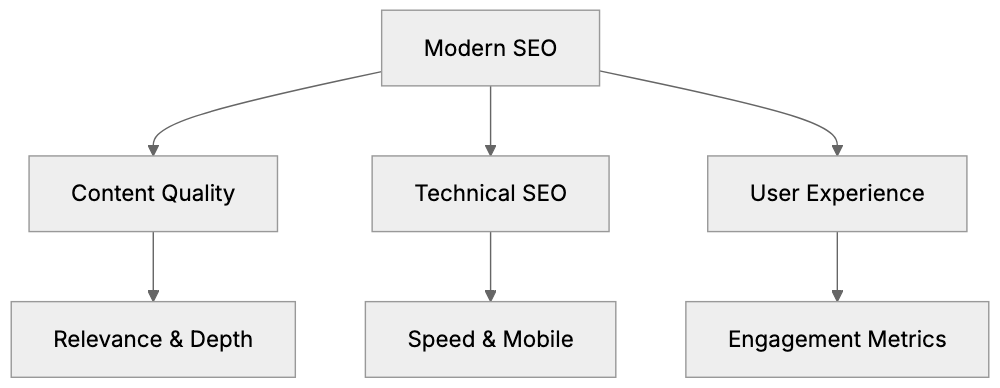
Modern SEO Focus Areas:
What Search Engines Actually Use for Rankings
Modern search algorithms are incredibly complex, considering over 200 ranking factors. Google uses over 200 ranking factors according to their statements, although the exact details remain secret. The major categories are known:
- Content Relevance and Quality: Search engines analyze actual text on pages, looking for complete coverage of topics. Thin, low-quality content gets filtered out.
- Backlink Analysis: Remains fundamental. The number and quality of sites linking to you matter, and anchor text in those links provides context about your content.
- User Experience Signals: Play a growing role. Click-through rates from search results indicate relevance, while time spent on page and bounce rates show content quality.
- Technical SEO Factors: Affect crawlability and indexing. Site speed, mobile improvement, secure HTTPS, and clean code all matter.
- Domain Authority: Builds over time, with older established sites with good track records getting some preference. New sites need to prove themselves.
- Social Signals: Have an indirect effect. While not direct ranking factors, social sharing indicates content value, often leading to backlinks and traffic.
- Local SEO Factors: Matter for location-based searches. Google My Business information, local citations, and proximity to the searcher all play roles.
- Personalization: Affects what different users see. Search history, location, and device type influence results. No two users see exactly the same rankings.
Should You Remove Meta Keywords from Your Site
Removing existing meta keywords won’t hurt your rankings, as Google and other major engines ignore them anyway. However, it won’t necessarily help.
The effort required depends on your site setup. Static HTML sites need manual editing of each page, while content management systems might have theme files to edit.
Leaving meta keywords in place is harmless for most sites. They add a tiny bit to page size, but the impact is negligible. Browsers and search engines simply skip over them.
Some SEO auditing tools flag meta keywords as outdated, recommending removal for code cleanliness. This is a minor best practice issue, not a significant problem.
If you’re rebuilding your site or updating templates anyway, go ahead and remove them. There’s no point in including obsolete code in fresh builds.
For WordPress users, many modern themes don’t include meta keywords fields. Older themes might still have them in settings, but you can leave those fields empty.
SEO plugins like Yoast and Rank Math don’t generate meta keywords tags. They focus on elements that actually matter, such as meta descriptions and title tags.
The bottom line is simple: Avoid adding meta keywords to new pages. Don’t waste time removing them from old pages unless you’re already editing that code. Focus your energy on tactics that genuinely improve SEO.
Historical Timeline of Meta Keywords in SEO
The meta keywords tag appeared in the mid-1990s, with early search engines like AltaVista and Infoseek using them for categorization and ranking.
By the late 1990s, abuse was already becoming common. Webmasters discovered they could manipulate rankings with ease, leading to the spread of keyword stuffing.
Google launched in 1998 with a different approach, emphasizing link analysis through PageRank. However, they initially considered meta keywords.
Through the early 2000s, meta keywords became less reliable. Most SEO experts knew they were losing importance as search engines started weighting them lower.
In 2002, some SEO professionals were already advising against using meta keywords. The abuse had made them nearly worthless, but many sites continued using them.
Google announced in September 2009 that they don’t use meta keywords for web ranking, marking the official death notice. Other engines followed suit.
Yahoo stopped using meta keywords around the same time, and Bing made similar statements. The major search engines had all moved on.
By 2010, most SEO guides listed meta keywords as obsolete. Professional SEOs stopped including them in improvement work, but heritage sites retained them for years.
Today, in 2024, you still find meta keywords on older websites. Government sites, educational institutions, and small business sites often have them. They’re harmless remnants of old SEO practices.
Comparison with Similar SEO Elements
Several other SEO tactics followed similar paths to meta keywords. Understanding these patterns helps avoid future wasted efforts.
- Keyword Density: Used to be recommended at specific percentages, leading to awkward, unnatural writing. Modern algorithms prefer natural language.
- Exact Match Domains: Had a ranking boost years ago, with sites with keywords in domain names ranking higher. Google reduced this advantage after abuse became rampant.
- Article Spinning: Popular in the early 2010s, low-quality auto-generated content flooded the web. Google’s Panda update crushed this tactic.
- Reciprocal Link Exchanges: Common in the 2000s, sites would trade links to boost rankings. Search engines learned to detect and devalue these schemes.
- Comment Spam on Blogs: Widespread, with automated tools posting thousands of spammy comments with backlinks. Nofollow attributes and better spam filtering stopped this.
Here’s how meta keywords compare to other deprecated tactics:
| Tactic | Peak Usage | Why It Stopped Working | Current Status |
|---|---|---|---|
| Meta Keywords | 1995-2005 | Widespread abuse and stuffing | Completely ignored |
| Keyword Density | 2000-2010 | Unnatural writing patterns | Natural usage preferred |
| Exact Match Domains | 2005-2012 | Manipulation of rankings | Advantage reduced |
| Article Spinning | 2008-2012 | Low-quality content | Penalized by algorithms |
| Link Exchanges | 2000-2008 | Artificial link schemes | Devalued or penalized |
What Modern SEO Professionals Focus On Instead
- Content Quality: Dominates modern SEO strategy. Search engines want to rank content that truly helps users. Complete, well-researched articles perform best.
- User Intent Matching: Understanding what searchers actually want matters more than exact keyword matches. Pages should answer the implied question behind searches.
- Technical Improvement: Ensures search engines can crawl and understand your site properly. Clean code, fast loading, mobile responsiveness, and proper structure all matter.
- E-E-A-T: Stands for Experience, Expertise, Authoritativeness, and Trustworthiness. Google’s quality rater guidelines emphasize these factors, and demonstrating these qualities helps rankings.
- Core Web Vitals: Measure user experience metrics like Largest Contentful Paint, First Input Delay, and Cumulative Layout Shift, affecting rankings.
- Semantic SEO: Focuses on topic coverage rather than individual keywords. Creating content clusters around topics works better than isolated keyword targeting.
- Voice Search Improvement: Grows more important as smart speakers spread. Natural language and question-based content performs well.
- Local SEO: Requires different tactics than general web search, with Google Business Profile optimization, local citations, and location pages mattering for local businesses.
- Video and Image Improvement: Opens new traffic sources, with YouTube SEO and image search improvement providing alternatives to traditional web search.
End
The meta keywords tag represents an intriguing chapter in SEO history, serving a legitimate purpose in the early days of search engines when content analysis was primitive.
Abuse and manipulation killed its usefulness, as website owners stuffed irrelevant keywords to game rankings. Search engines had to stop trusting the data.
Google officially stopped using meta keywords in 2009. Other major search engines followed suit, making the tag obsolete for SEO purposes.
You might still see meta keywords on older websites, with some content management systems including them by default, but they provide zero ranking benefit today.
Modern SEO focuses on actual content quality, user experience, and technical improvement. Meta descriptions, title tags, and heading tags remain important, but meta keywords are dead.
Don’t waste time adding meta keywords to new pages. Don’t worry about removing them from old pages unless you’re already editing code. Focus your energy on SEO tactics that actually work in 2024 and beyond.
Frequently Asked Questions
What should I focus on instead of meta keywords for SEO?
Prioritize content quality, title tags, and heading tags, as these elements significantly impact SEO today. Emphasize user experience through technical SEO practices like page speed and mobile friendliness. Additionally, internal linking and schema markup can enhance your site’s visibility.
Are there any cases where meta keywords might still be relevant?
While meta keywords are largely obsolete for major search engines, some internal site search tools or outdated systems may still check them. However, their utility is minimal, and for most modern SEO practices, focusing on content and user experience is far more beneficial.
How can I remove meta keywords from my website?
If you are using a static HTML site, you will need to manually edit each page to remove the meta keywords tag. For sites using content management systems, you might find settings in your theme’s configuration. If you’re already updating your site, removing them is a good practice.
Will leaving meta keywords tags on my site affect my SEO?
Leaving meta keywords tags on your site will not impact your SEO negatively since major search engines ignore them. However, for site cleanliness and to avoid confusing potential audits, it is often recommended to remove them if not in use.
What are some important meta tags I should still use?
Important meta tags include the meta description, which can improve click-through rates, and meta robots, which control how search engines index your pages. Additionally, viewport metadata is essential for mobile optimization, and Open Graph tags improve social media sharing.
How does Google handle SEO ranking now without meta keywords?
Google utilizes complex algorithms that consider over 200 ranking factors, focusing on content relevance and quality, user experience metrics, and backlink profiles. Modern SEO centers on actual page content rather than outdated tag systems like meta keywords.
What happened to websites that relied on meta keyword stuffing?
Websites that used meta keyword stuffing often faced penalties in search rankings as search engines developed better algorithms to detect manipulative practices. Consequently, these sites likely suffered decreases in visibility and traffic due to lower quality content being filtered out.